

A Hallmark Channel Weekend in Hiroshima: The City of Spectacular Fall Colors, Seafood, and Casual Hiking
How a fall trip to Hiroshima stole my heart
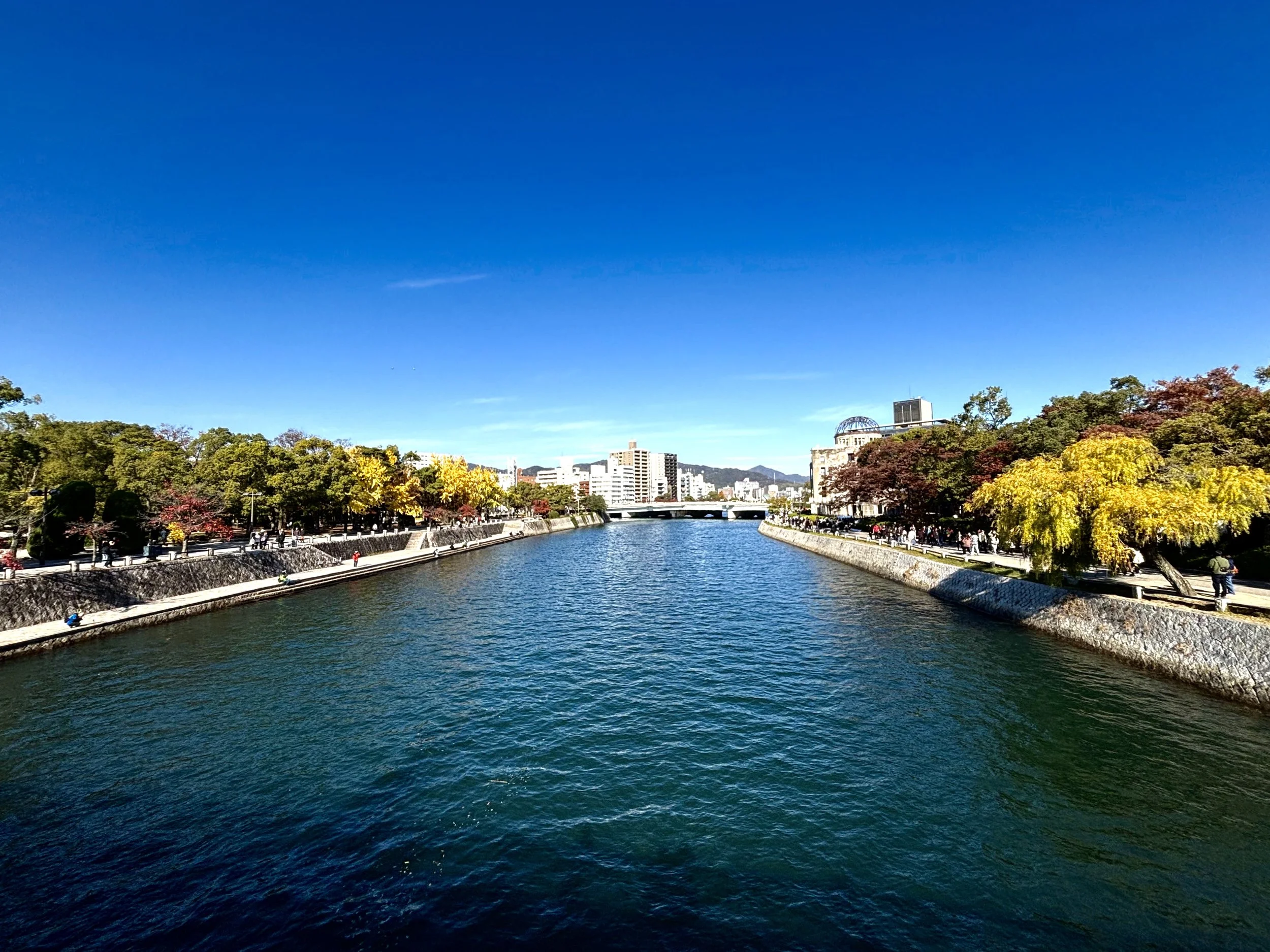
The view from the Peace Memorial Park.
It’s not often that a city gives you food poisoning and remains a top contender. While I could hardly forget that night in a hotel room spent hunched over a toilet, my time in Hiroshima was such that I’d go back in a heartbeat. But allow me to rewind to before the grisly sendoff and tell you of a glorious weekend spent in a sprawling metropolis of low mountains, spunky cuisine, and some of the best fall colors I’ve seen in Japan.
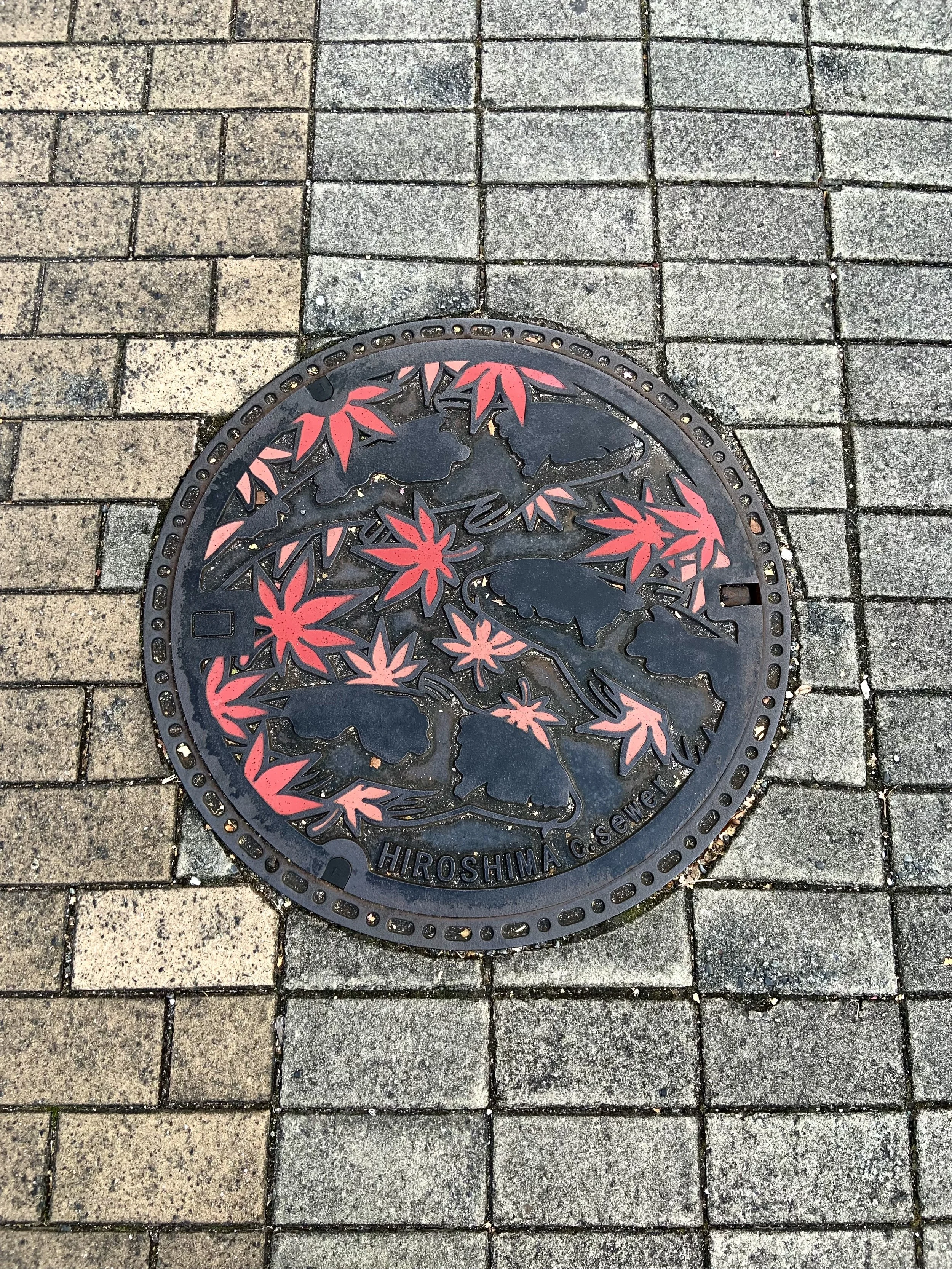

Day 1: Hurdles
I’m the first to profess the usefulness of five A.M. wake-ups on travel days. Too bad kouyou tourism delivered a fat smack across the face at my naïveté in Shin-Osaka Station; the ringing in my ears making the train station staff member’s voice sound ever so far as he delivered the news that the next few bullet trains were unavailable, and, if we had any chance of making it to Hiroshima that morning, we’d need to wait a further 30 minutes and fork over the yen for first class seats while we were at it.
My disability card for my Deafness typically affords me a 40% discount on almost all public transportation, which comes in handy when taking the Shinkansen. Sadly, the discount is void on the Green class, and because I cannot upload my shougai techou online to buy tickets in advance, we were left with no choice but to cleave into the travel budget exponentially.
After parking my behind in the plush grey chairs, two rows apart from my husband, I opened my Libby app to keep me company. Alice Wong’s passing the previous week had motivated me to pick up Disability Intimacy, a follow-up to the brilliant Disability Visibility, focusing this time on the relationships disabled contributors have with themselves and others.
I really wish there was more to say about life on the other side of the train door. Riding for the first time in the seats I have only ever booked for my clients, I found the Lazy Boy-type seats to be only moderately more comfortable and spacious than the regular seats. Besides the handing out of wet wipes, I saw no difference that would justify the price.
Regardless, my book made wonderful company.
Pulling into Hiroshima Station, I was quickly overwhelmed by the sheer scale and number of people. The line for the women’s bathroom alone stretched to the souvenir shops. Shaking my head to clear the Etch-a-Sketch that is my autistic brain, we moved on to APA Hotel Hiroshima Ekimae Ohashi to drop off our bags before making our way to the Peace Museum.
It was already going on 10 o’clock by the time we arrived, inducing panic because I’d read many complaints on Google Maps about the lack of crowd control. Initially hoping the reviewers were being dramatic, I quickly came to agree with them when my husband and I found ourselves in a gridlock in the final installation of the museum.
To paint a picture, the first few sections consist of narrow corridors with just enough room for a fast and slow lane. The final two rooms, on the other hand, have artwork covering the walls and multiple large exhibits scattered throughout the room, meaning the traffic is flowing every which way. Several wheelchair users were given to leeway to view the exhibits or even to push forward. There is little to no visibility, either, leading to lots of shoving. All the while, more people are coming in.
I began to have difficulty breathing and told my husband in no uncertain terms to get me out of there before I fainted.
I wanted so desperately to get the full value out of the Peace Museum. Its contents are of vital importance, just like the one in Nagasaki, where I choked back tears at the scorched lunchbox. But with no measures in place to allow for a limited flow of traffic, I was unable to get out of the experience what I think the people of Hiroshima deserve, and thus walked away disappointed.
My breath came back to me in the Peace Park, where I observed the A-Bomb Dome and the Peace Flame. Some visitors were lining up to pay their respects, while others were taking smiling selfies with the building’s sobering exoskeleton as a backdrop.
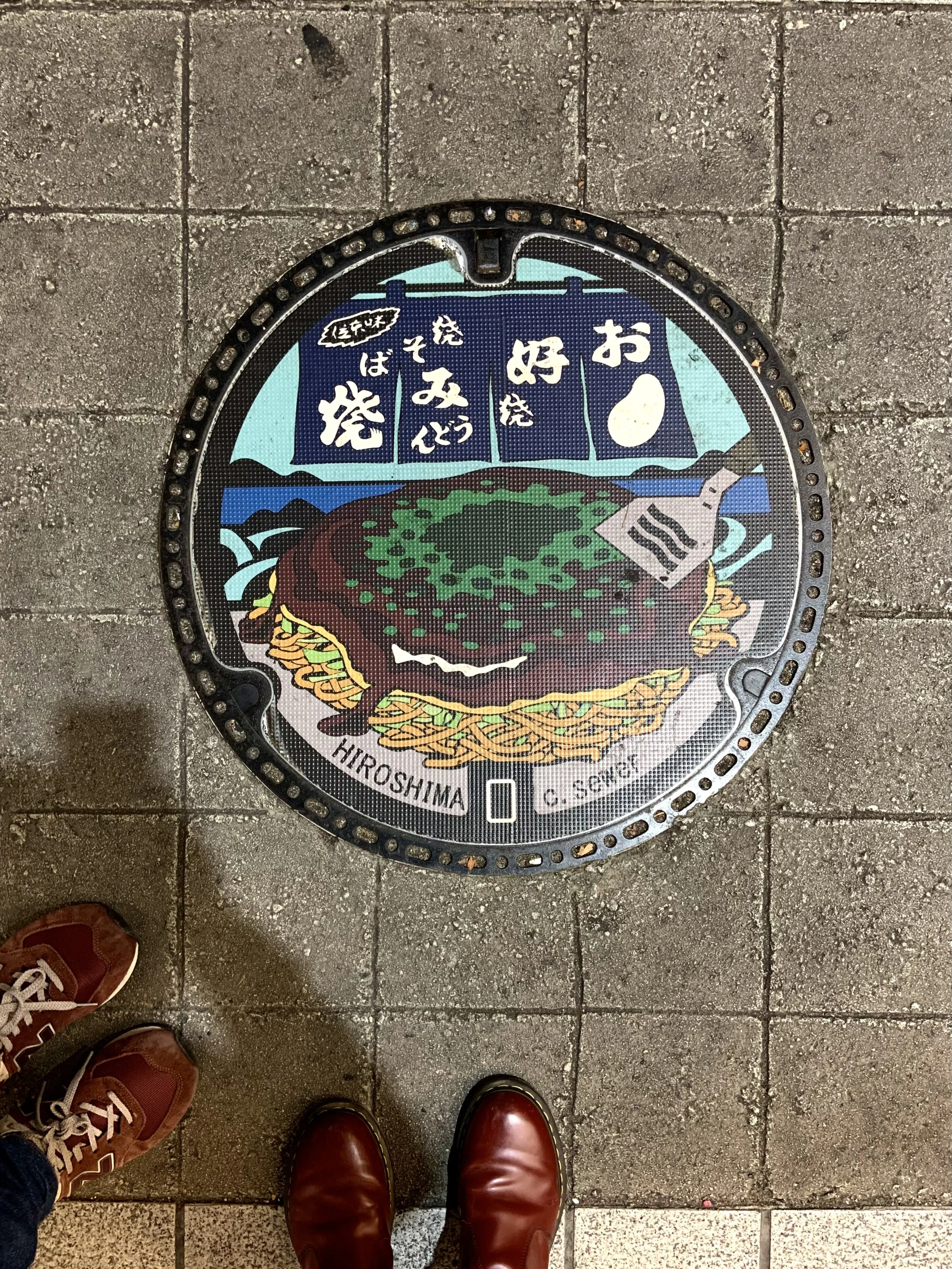
Making our way to Okonomiyaki Village for lunch, Taka and I sat down at the grill for a supposedly “Super Deluxe” version with squid, shrimp, and scallops. Neither of us had eaten since breakfast some six hours earlier, so it did the job, but at the cost of 2500 yen a pop.
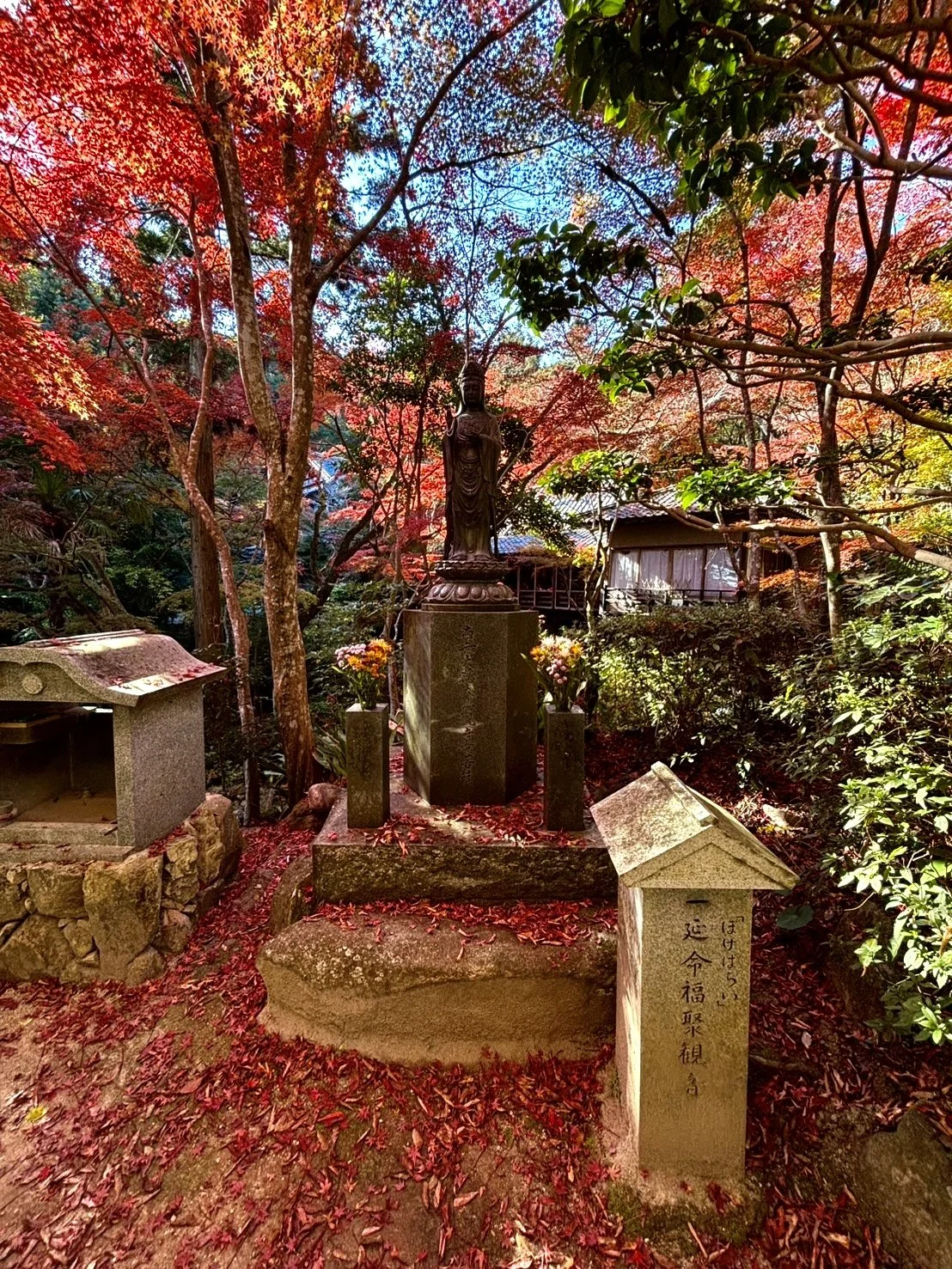
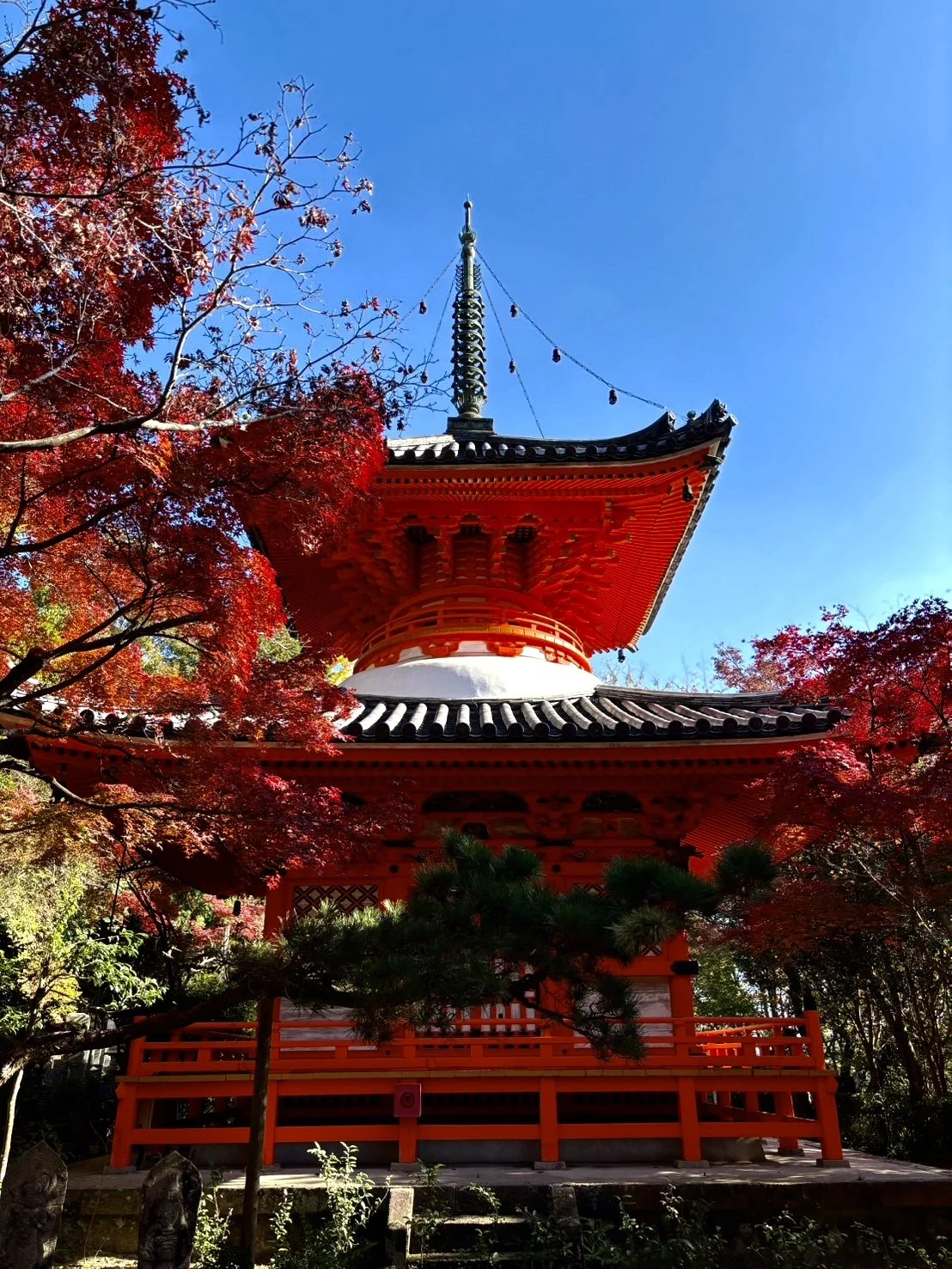
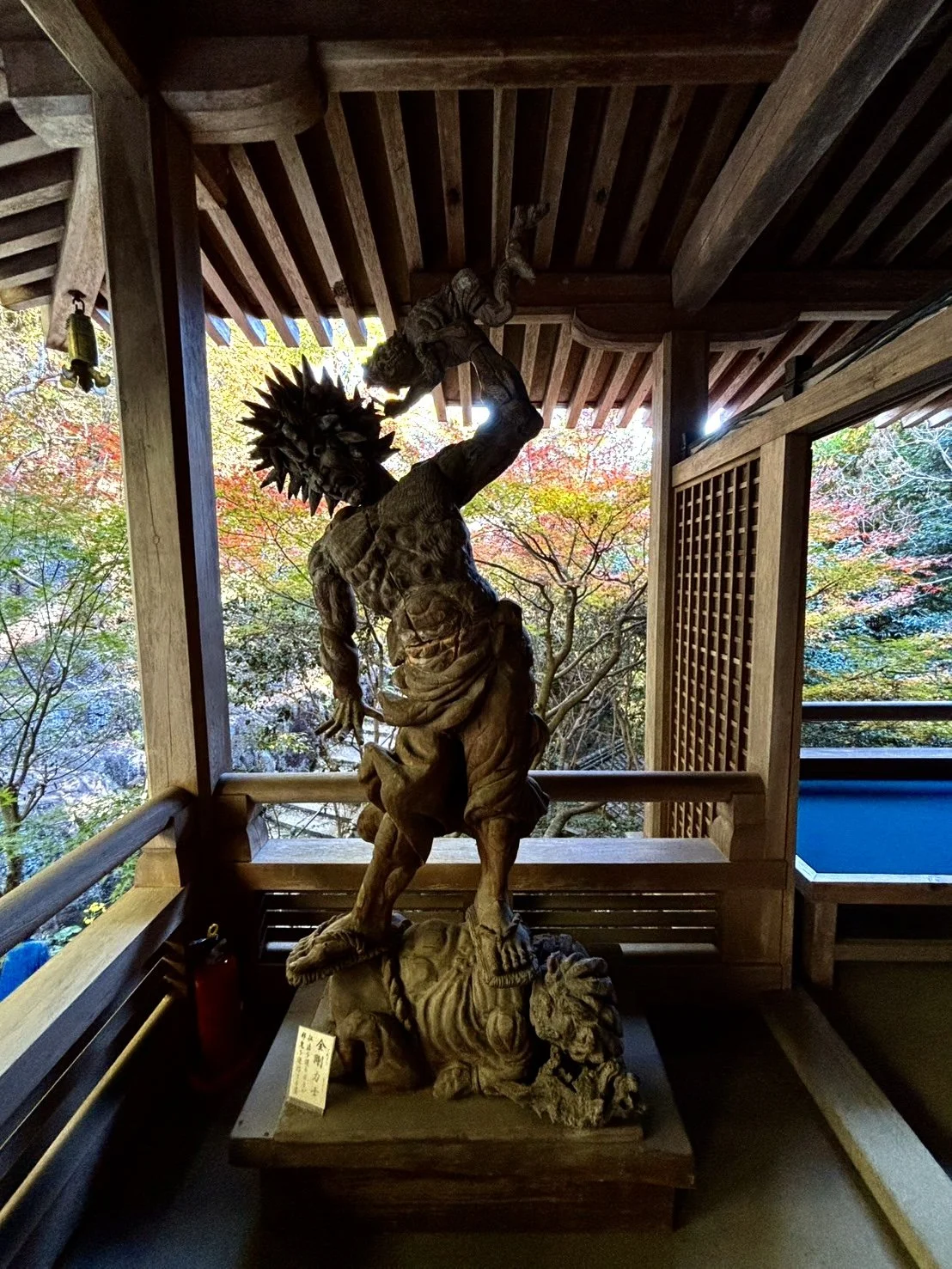
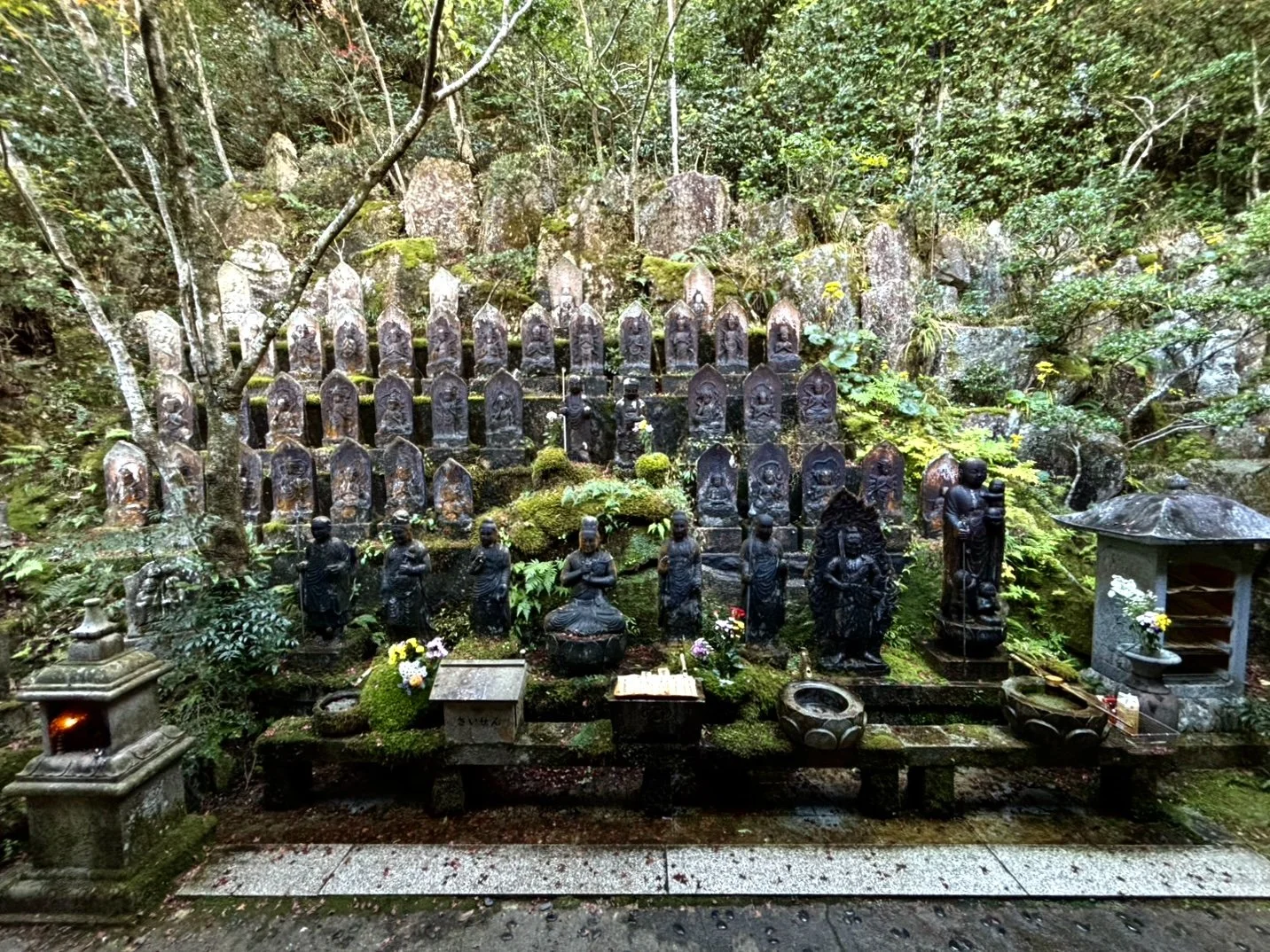
Things improved dramatically when I managed to convince Taka to venture out to Mt. Mitaki for our first hike of the weekend. In a rare bout of perfect timing, we caught a bus with seconds to spare and saved ourselves an hour’s wait until the next one.
Before stepping foot onto the grounds of Mitaki Shrine, a spot picked by yours truly for its fantastic fall foliage, two things caught my eye: a vending machine with cans of Coke for 100 yen and a swing set with a stunning view of the city below. Of course, I felt obliged to indulge in the two for a spell, to the surprise of passersby seeing how high I could go.
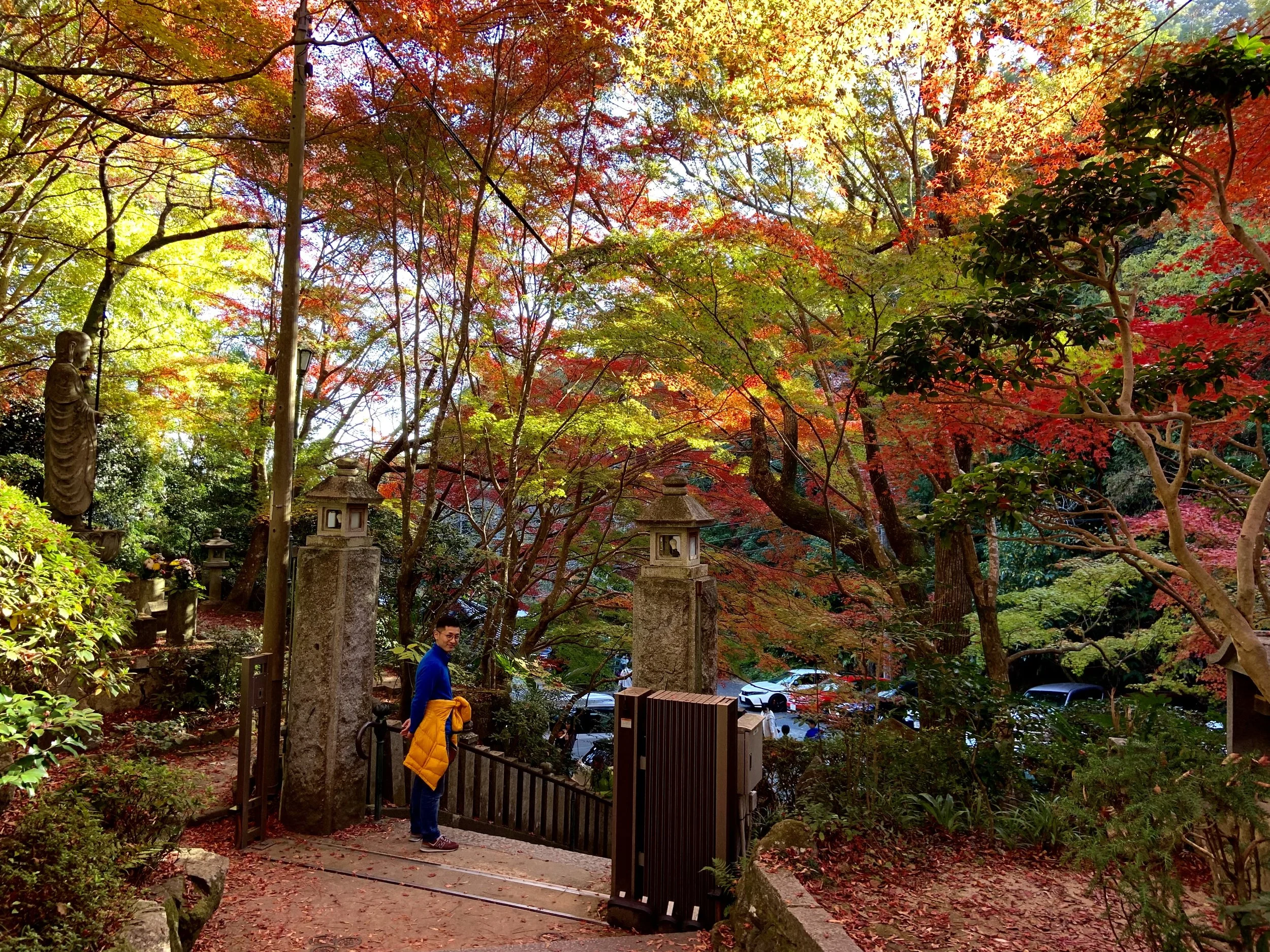
When we were all swung out, Taka and I headed into the complex, feeling immediately like we were on Molly at the sight of all that spellbinding crimson. There were so many cool statues, too, that I couldn’t resist snapping photos of them all.
Beyond Mitakidera, there is a one-hour hike you can do to the summit. Taka and I went up a little way to see if we could find a viewpoint with no success. The grounds of the shrine are more than enough to get your heart rate up, anyway.
While waiting for the bus, Taka and I passed the time with one more refreshing can of Coke and another round on the swings, utterly content.
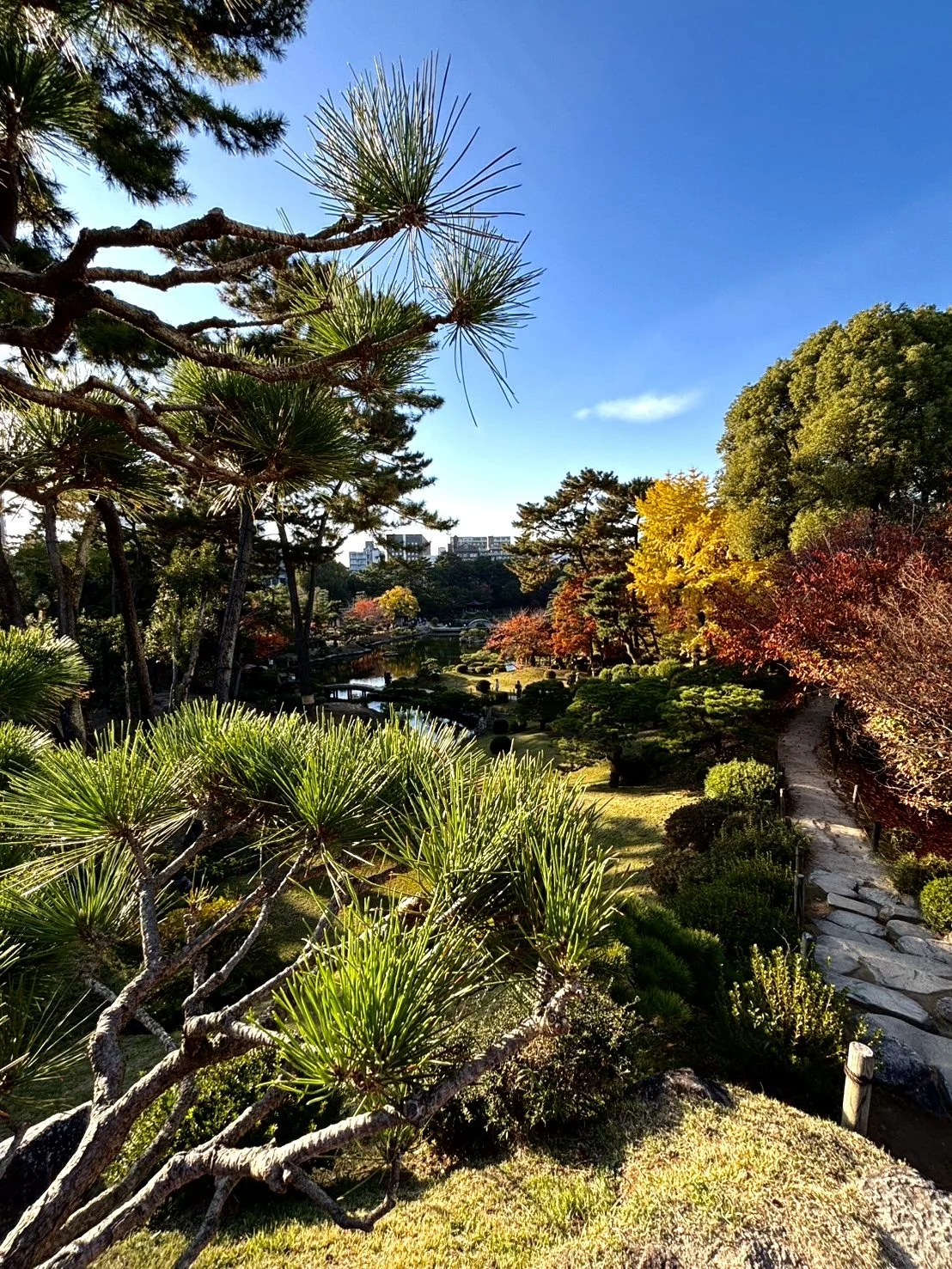
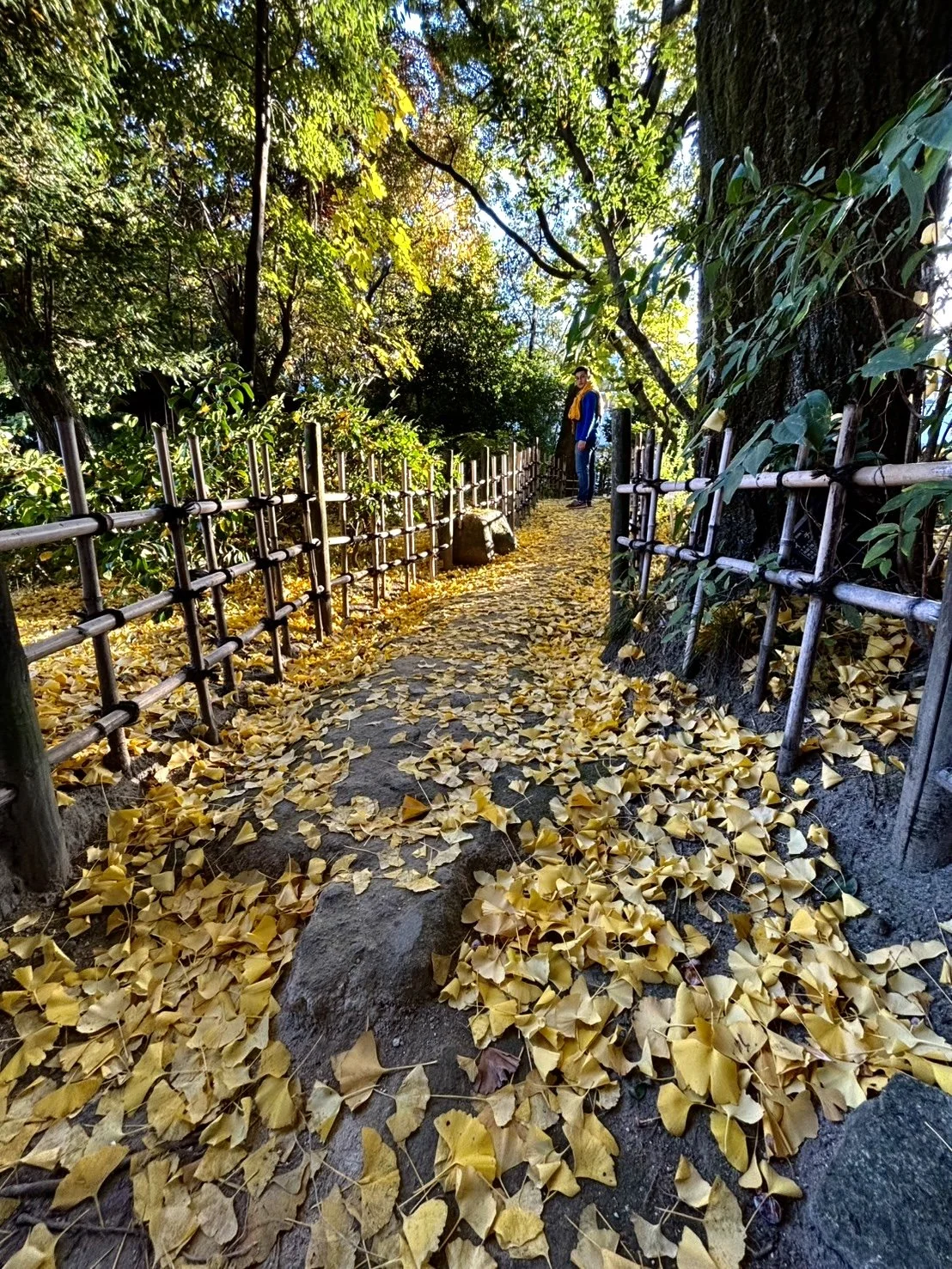
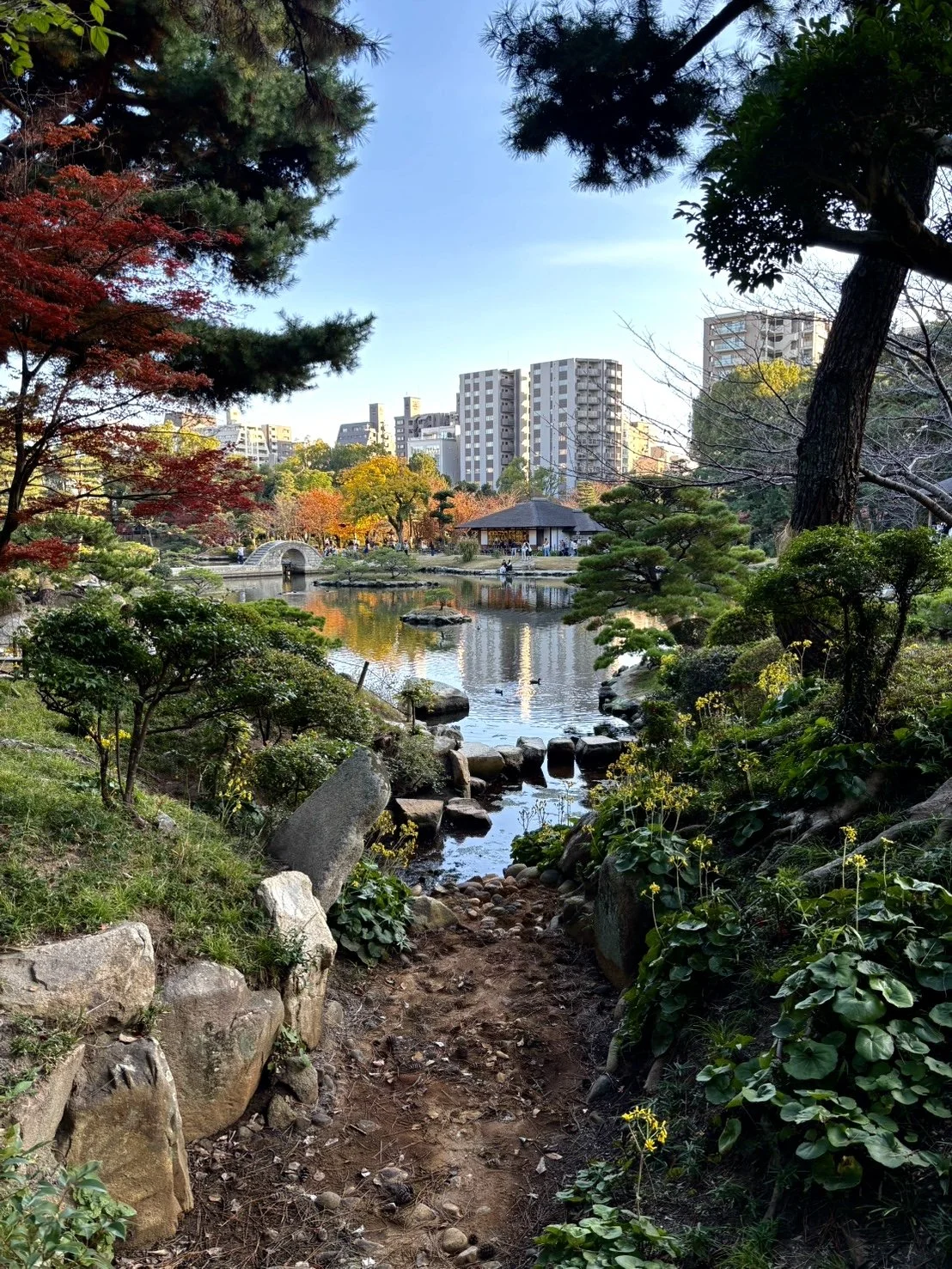
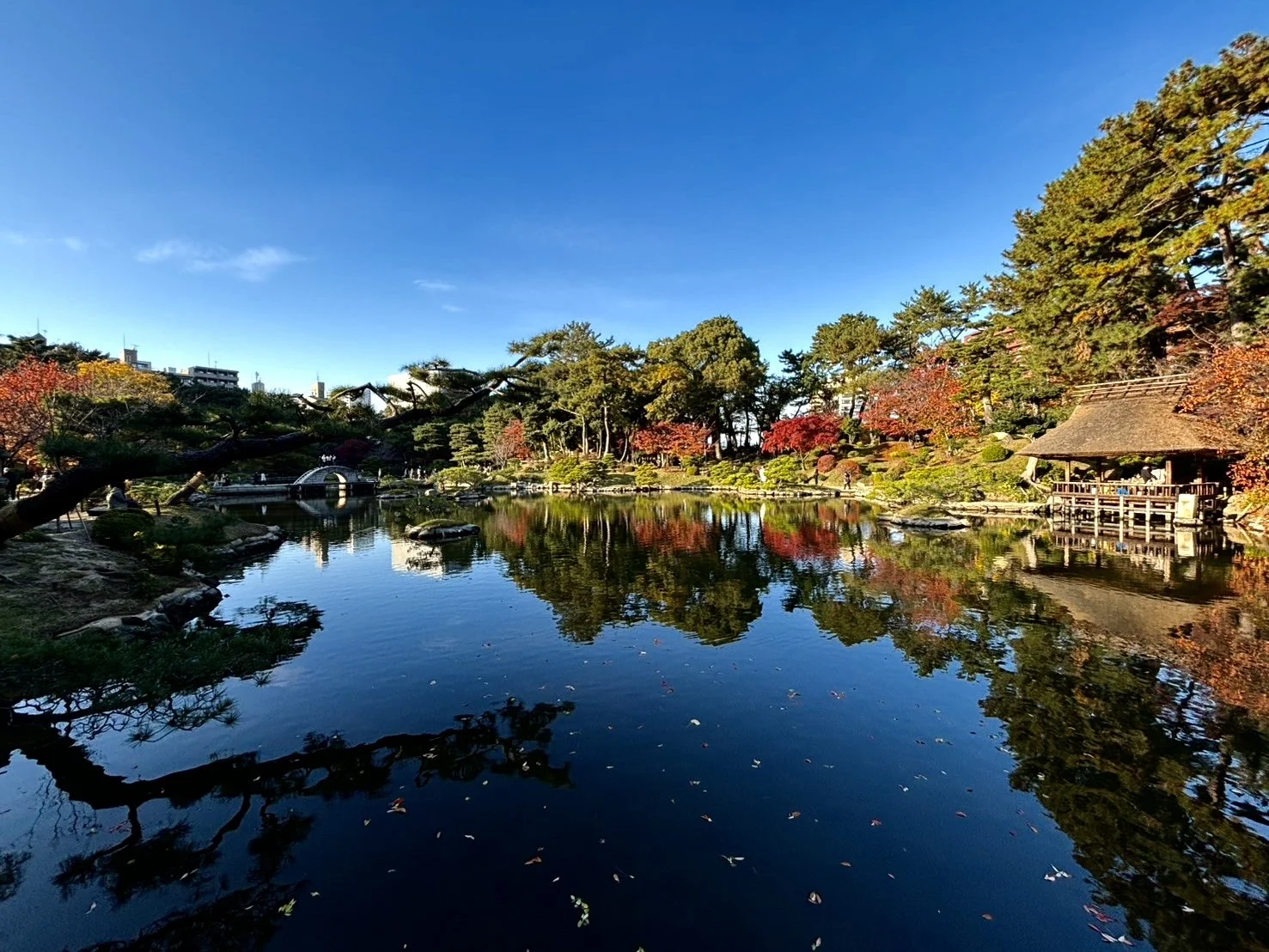
On the way back, we swung by Shukkeien Gardens, where we sat watching the ducks and witnessed a proposal as the sun set. Our plans to hike Ogonzan or visit the art museum were forgotten in our contentment.
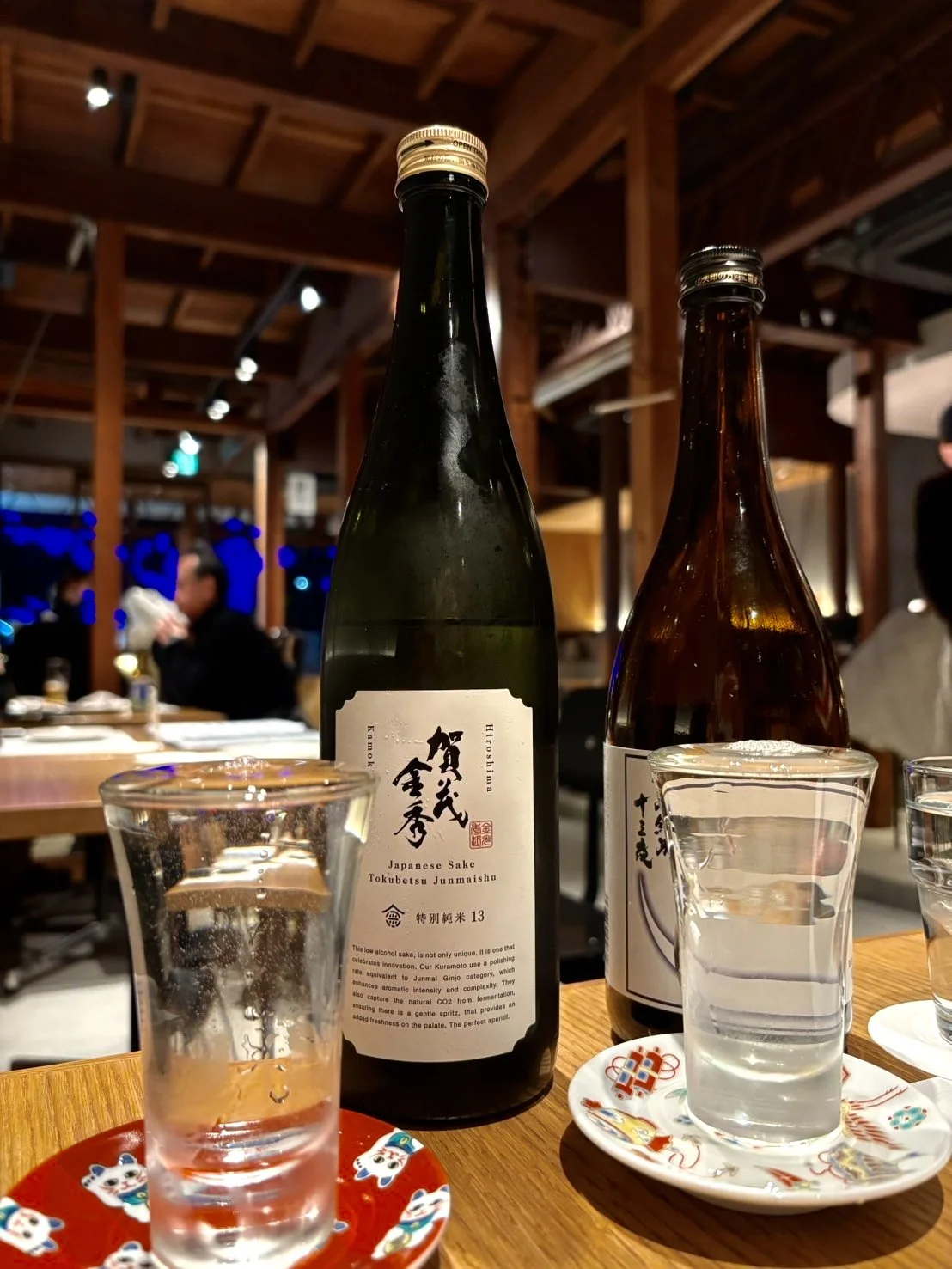
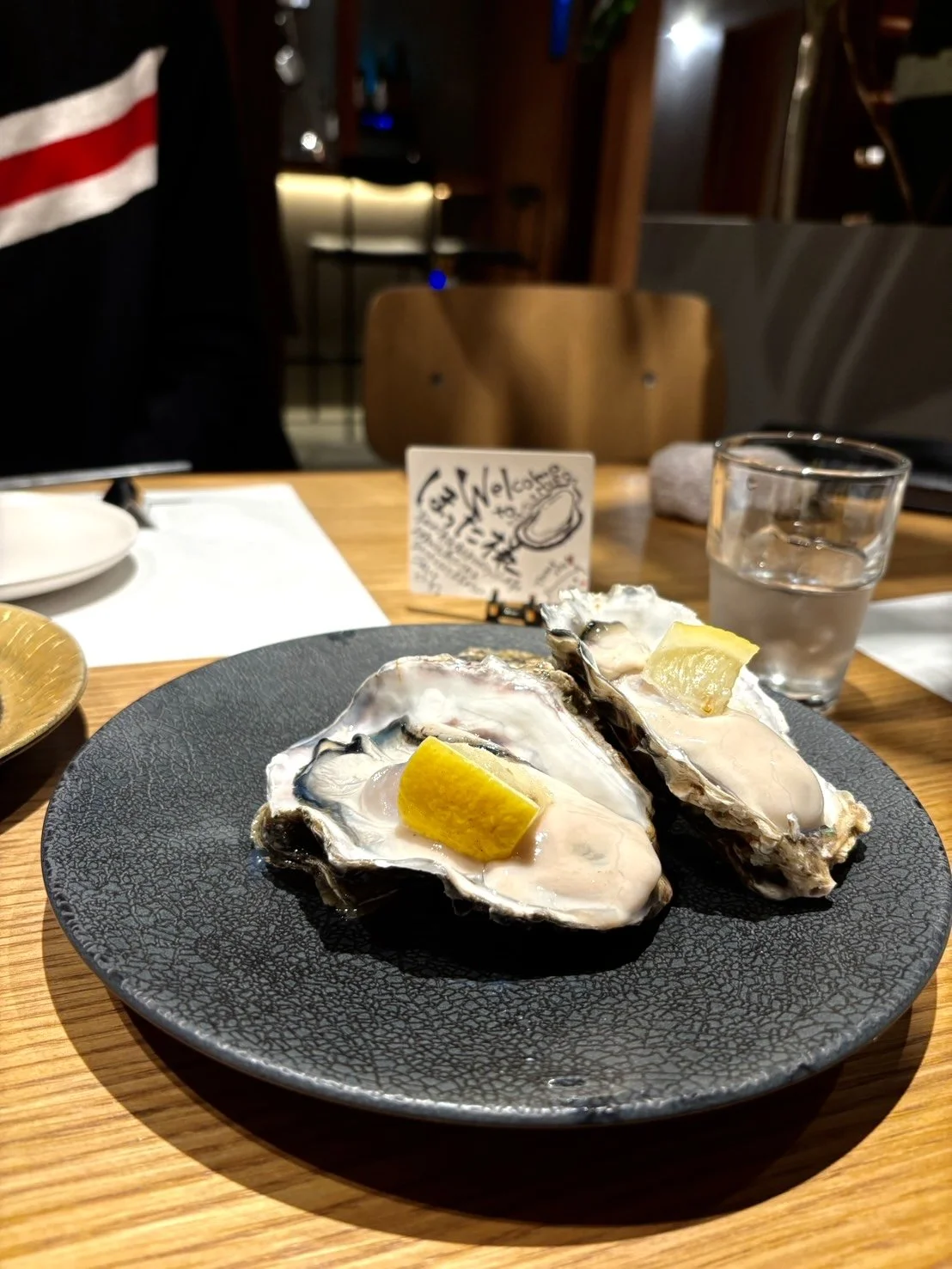
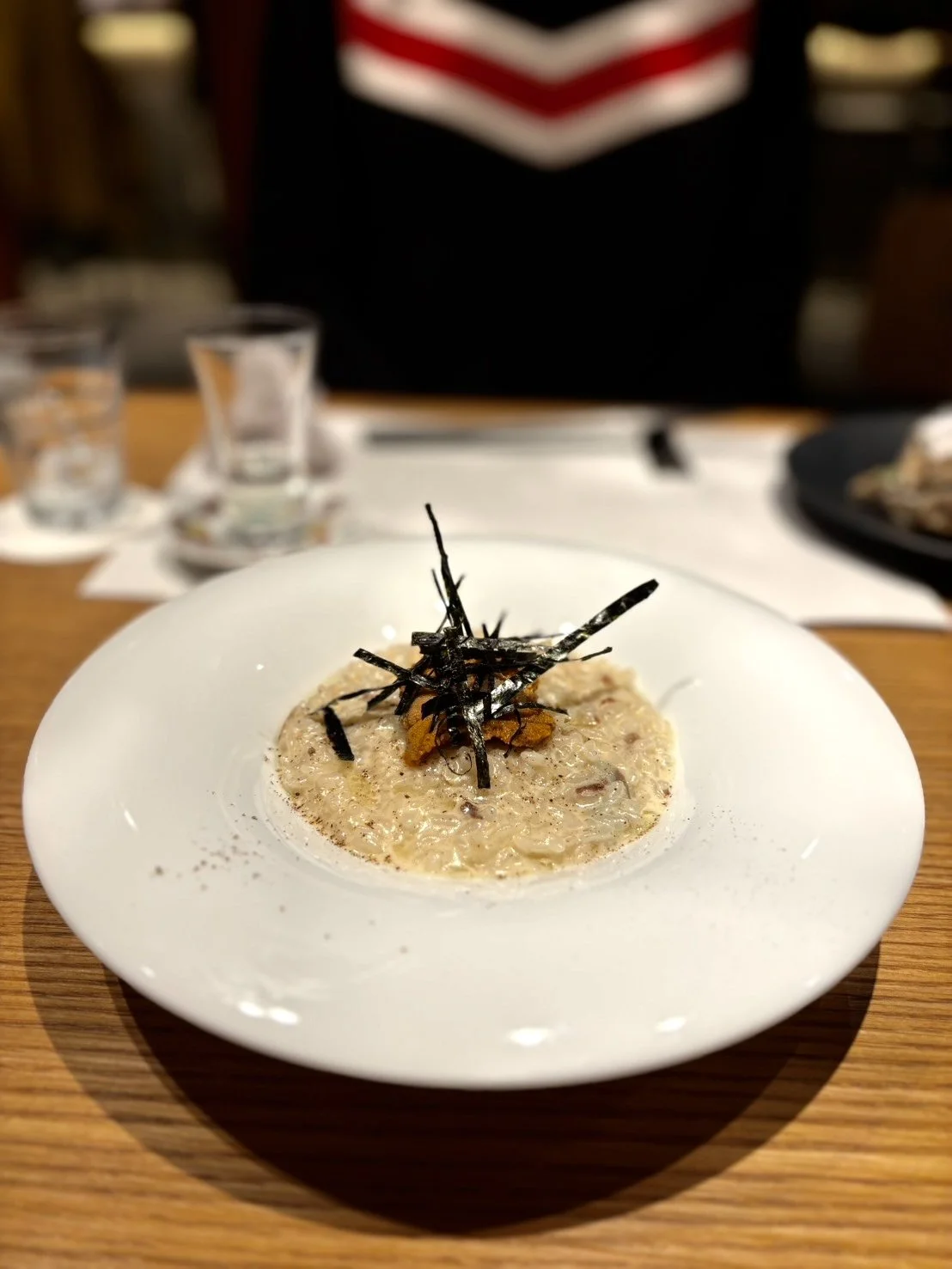
Heading out into the night, I was briefly high on the city life. We had our pick of restaurants and ended up reserving a spot at an oyster and sake restaurant. I say this knowing that, if it was food poisoning I acquired, that this is the meal that most likely gave it to me: it was divine.
The two types of Hiroshima sake we ordered, per our waiter’s recommendation, paired so nicely with the lemony, raw oysters. Due to the size and slimy texture, one each was more than sufficient. The sake took immediate effect as we gobbled down the sea urchin risotto, nori cream cheese, and sashimi, unabashedly caught up in the debauchery of it all.
Adding to the decadence were the three kinds of ice cream we shared en route back home: pistachio, mochi, and creme brûlée. Walking beneath the Christmas lights speckling the city, arm-in-arm with my husband, eating ice cream after a wonderful meal, all the hurdles of the day were forgotten.
Day 2: Muddy Docs
The second day began with German-level efficiency: a speedy drugstore breakfast and shitty hotel coffee to unclog the sewers, my daily stretching session, a shower, a checkout, and a check-in all before catching our train at 7:33. Today, we would be disembarking on Miyajima, and I was determined to beat the crowds.
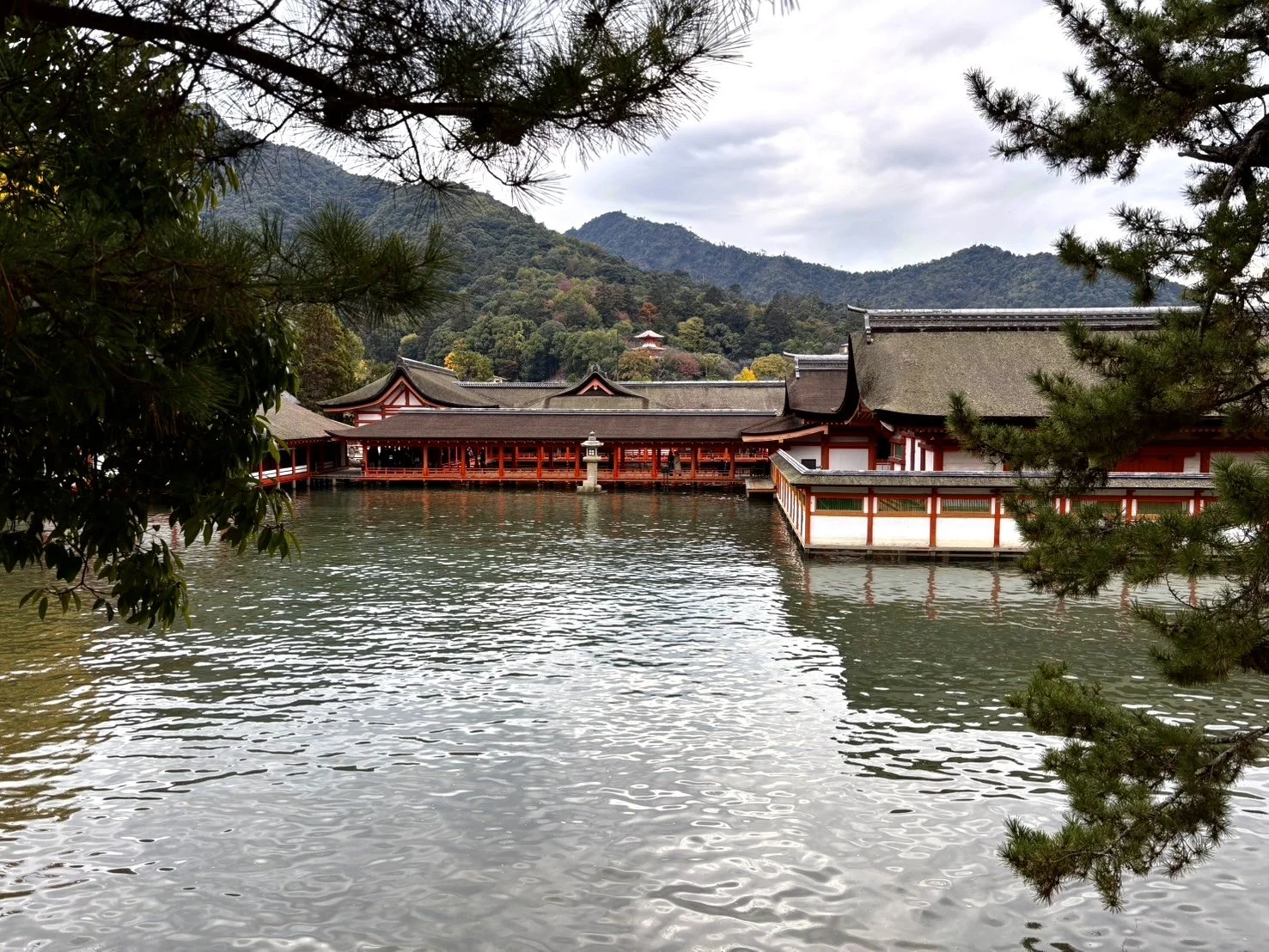
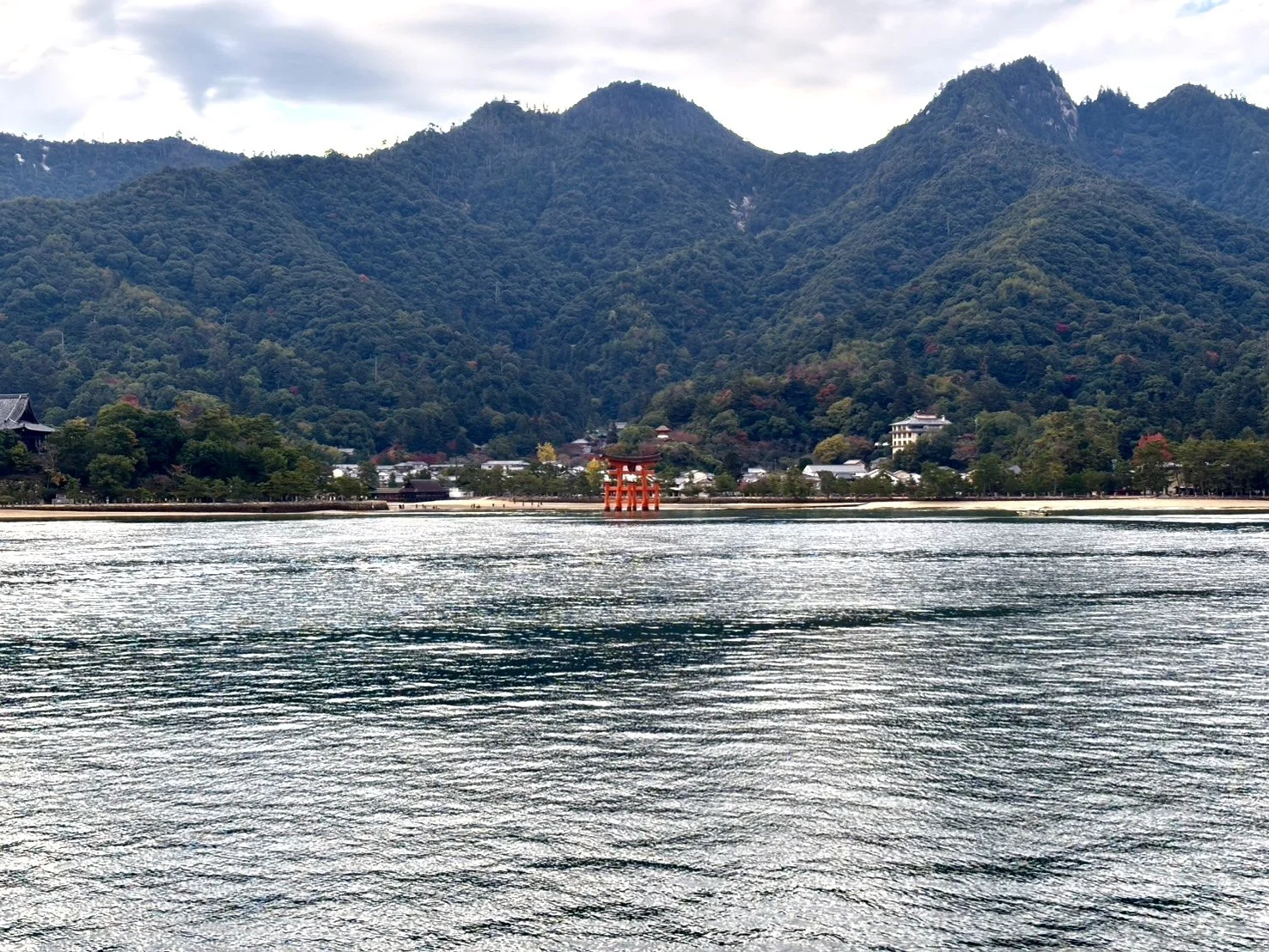
From the second we boarded the ferry, the vermillion torii gate of Itsukushima acted as a homing device for all amateur and novice photographers alike. One ojiisan even pulled out a video camera, which warmed my elder Gen Z heart. The siren song of the gate continued to steal the sea legs from my fellow passengers, rendering us all powerless to do anything except stop for another photograph every ten feet. I’m going to be so honest: I took dozens of photos of Itsukushima on land, and my favorite is still the one taken on the boat with the greenery of Miyajima behind it.
Our early arrival time meant the closure of any shops selling momiji manju, the signature maple leaf-shaped red bean paste sweet of Miyajima. In lieu, I snacked on a few bites of Taka’s curry bun for sustenance before our hike up Mt. Misen.
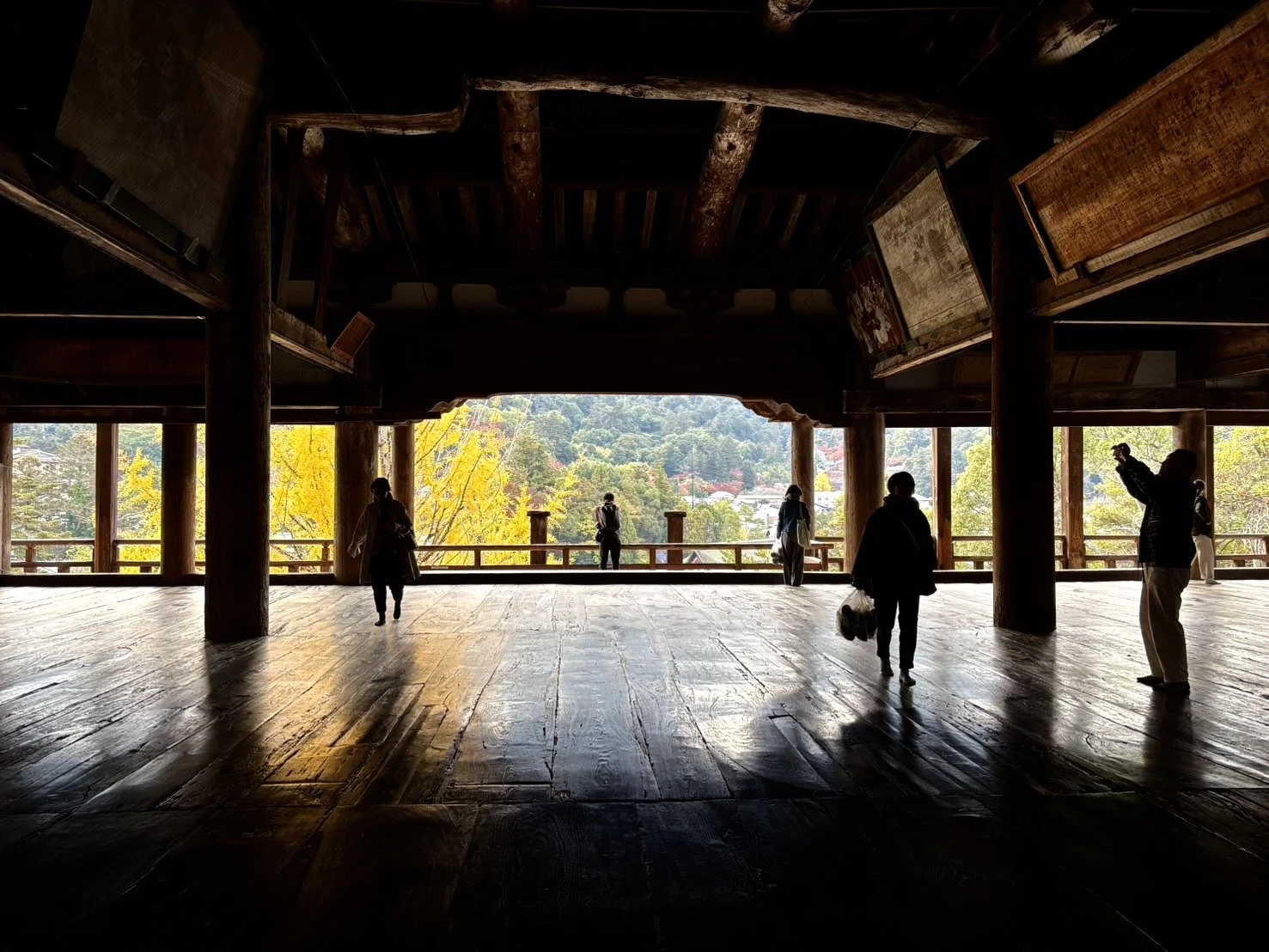
At the foot of Mt. Misen lay our first stop, Daishoin Temple, a massive wooden pavilion with open views of the autumnal mountains from every side. Looking out from the main area, a massive golden Ginkgo tree imbued the otherwise dark building with its glow.

I would’ve happily stayed all day picnicking and journaling, but we had a hike to do.
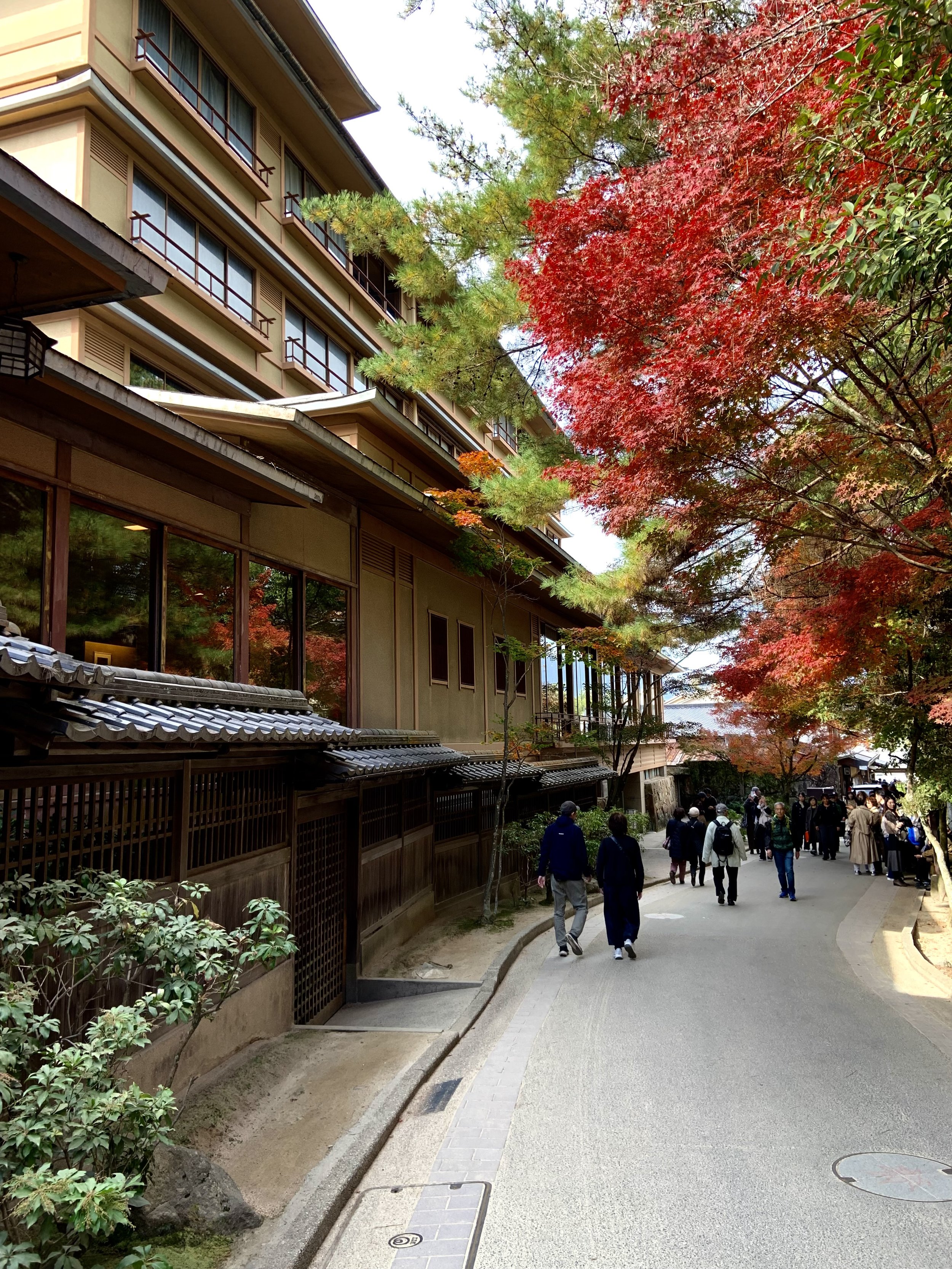
There are a few trails up Mt. Misen, but considering the fall colors, there was no other choice for us but the Momijidani trail, named for the very maple trees that make it so colorful. As we’d soon find out, it was not all smooth pavement like the Google Maps reviews seemed to suggest, and thus I trudged up the mountain wearing a sweater, a denim jacket, a velvet skirt, tights, and Doc Martens—an outfit that, while cute as fuck, is not suitable for proper hiking.
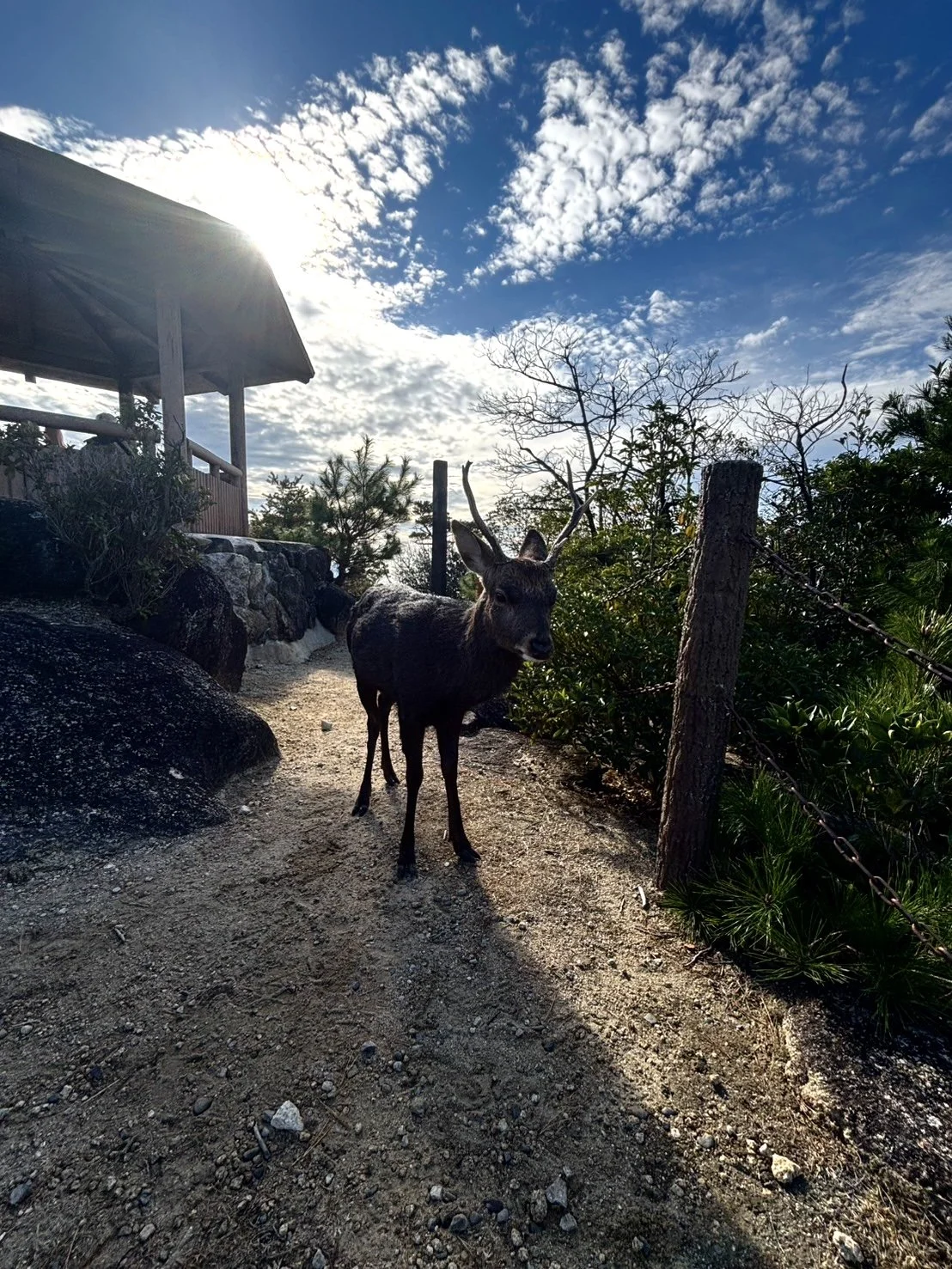
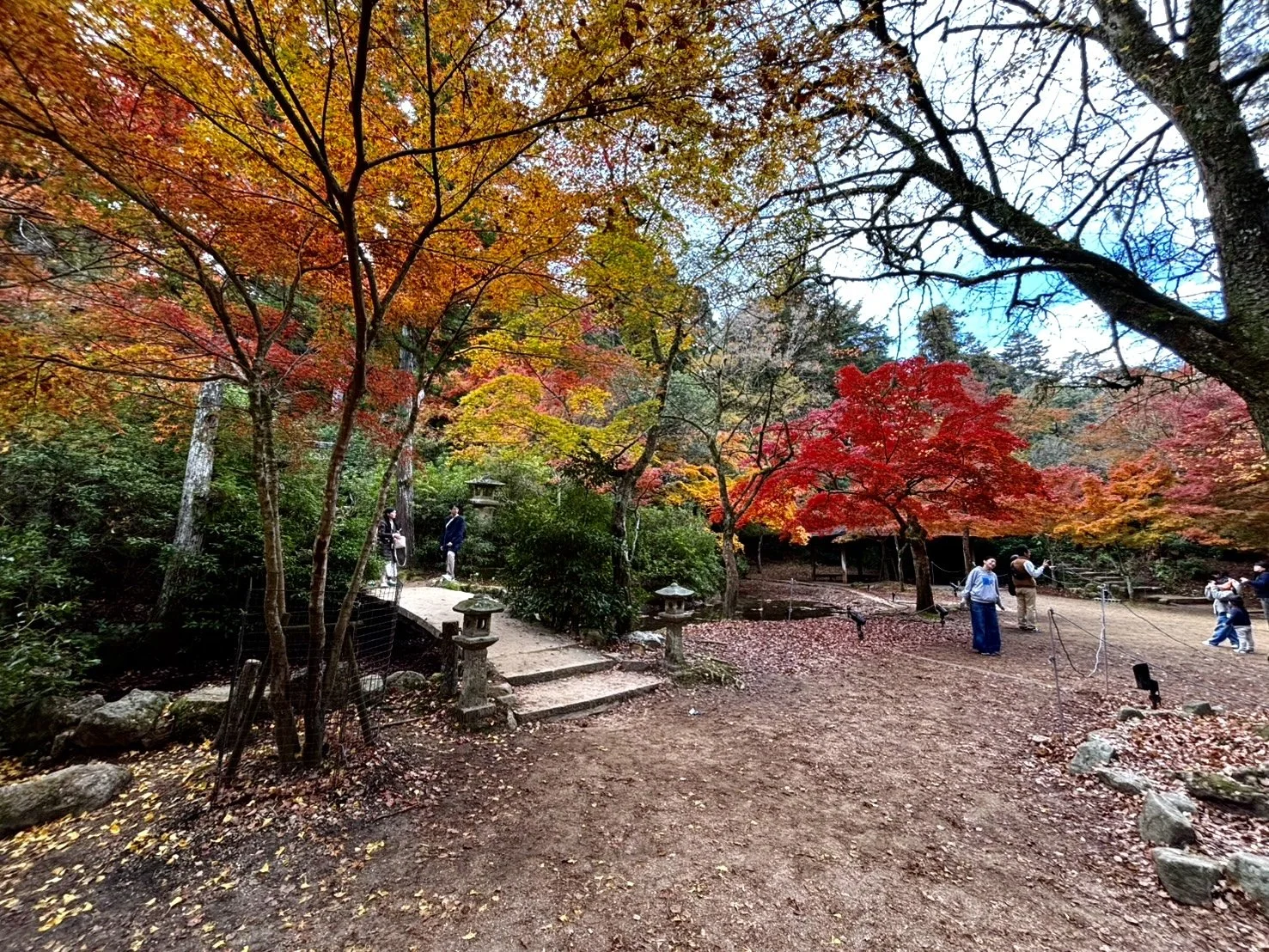
Perhaps the illness that was likely coming on at this point added to the difficulty, who knows. We were not the only ones out of breath by the time we got to Momiji Park, that I can say. The pictures will show you, but the colors were kaleidoscopic, and the few deer strutting in for a photo op increased the magic tenfold.
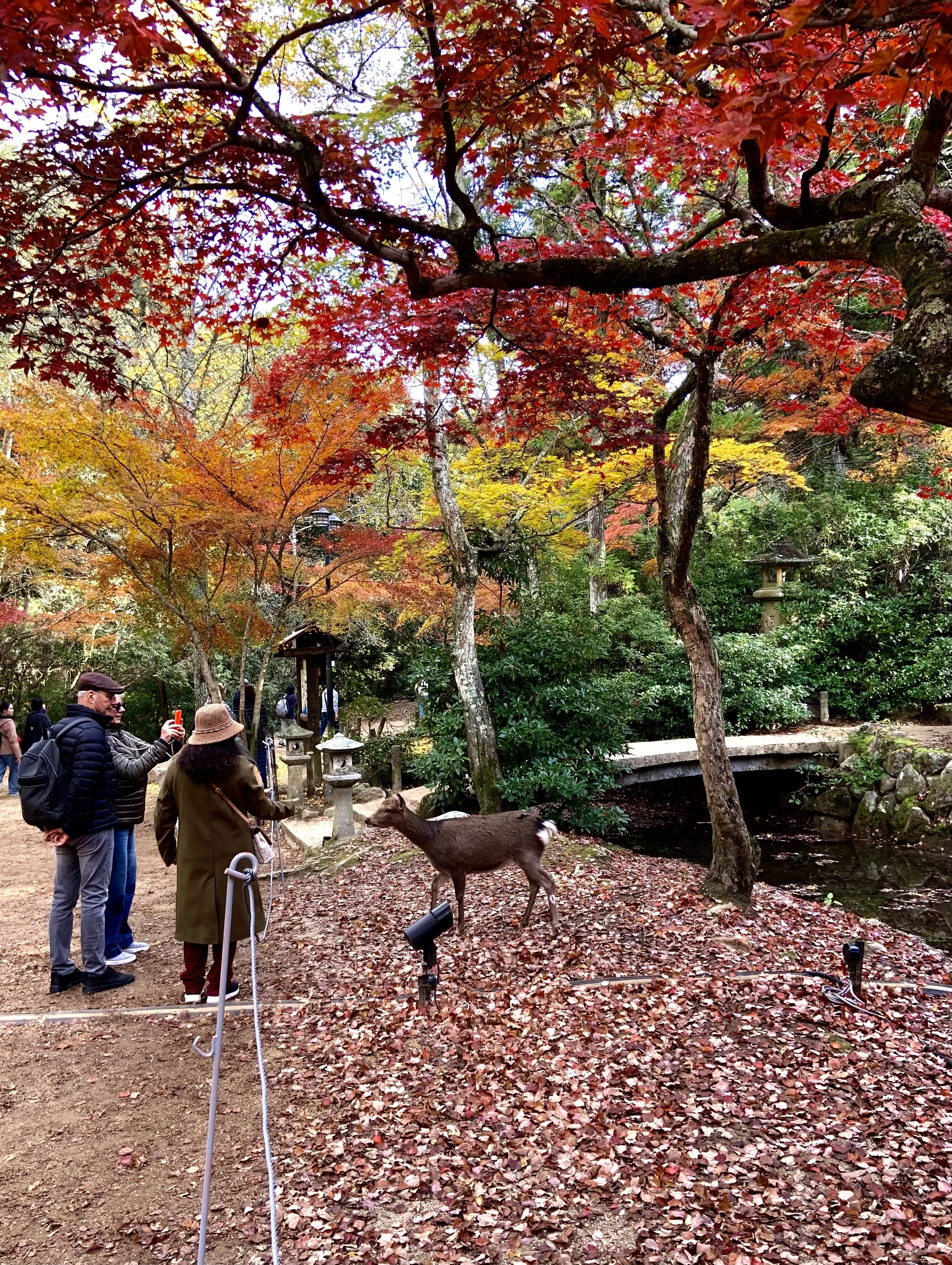
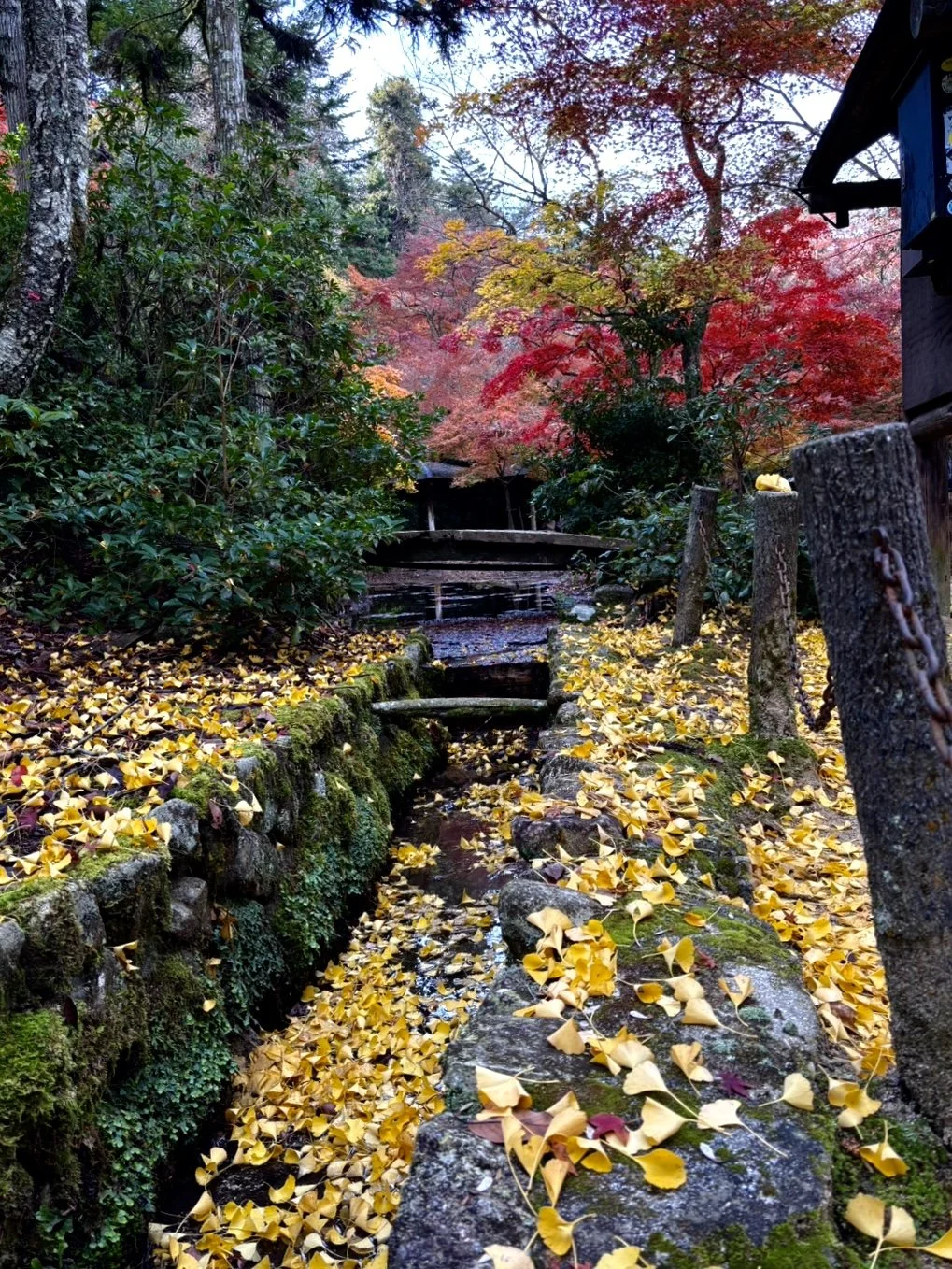
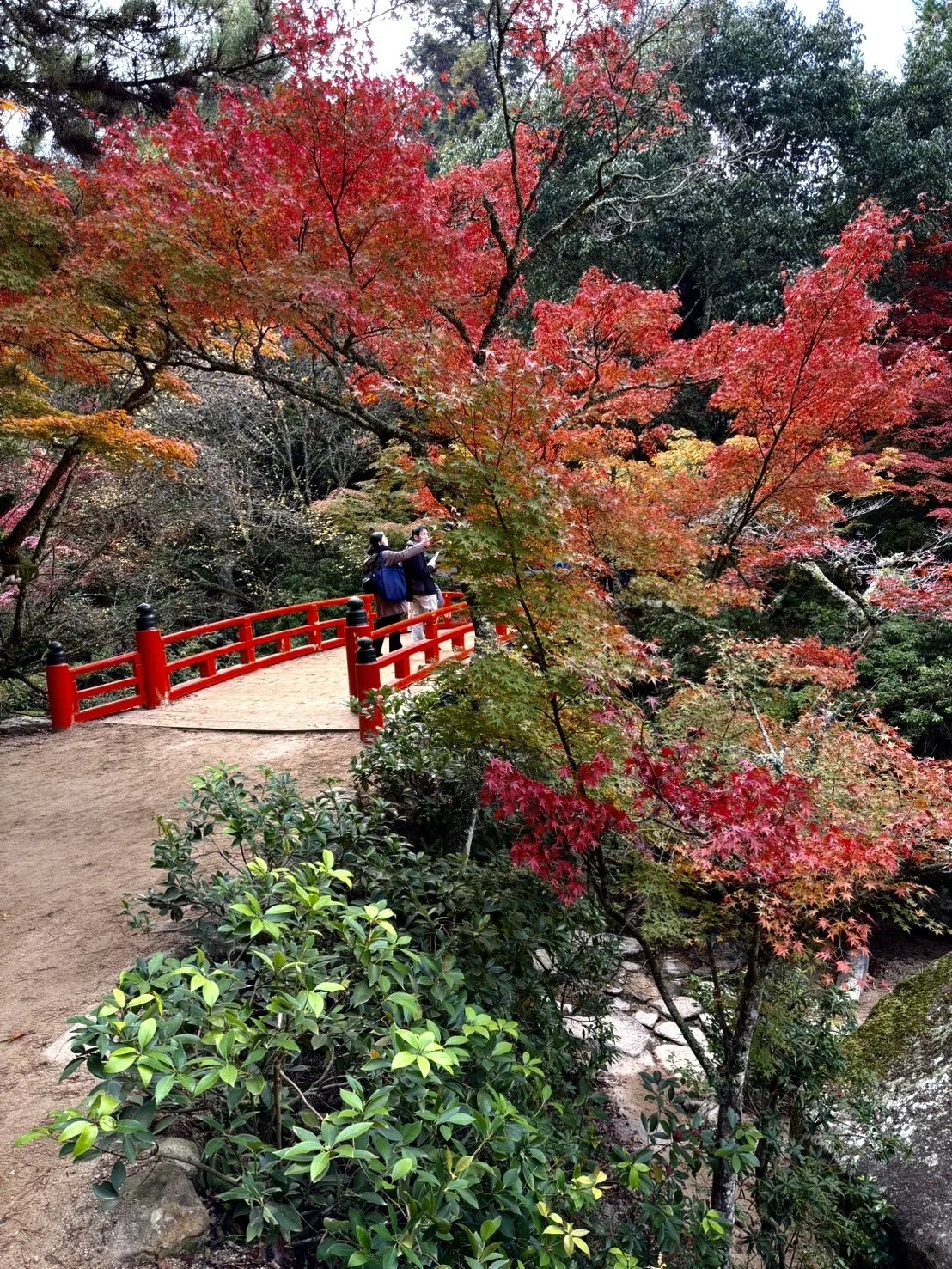
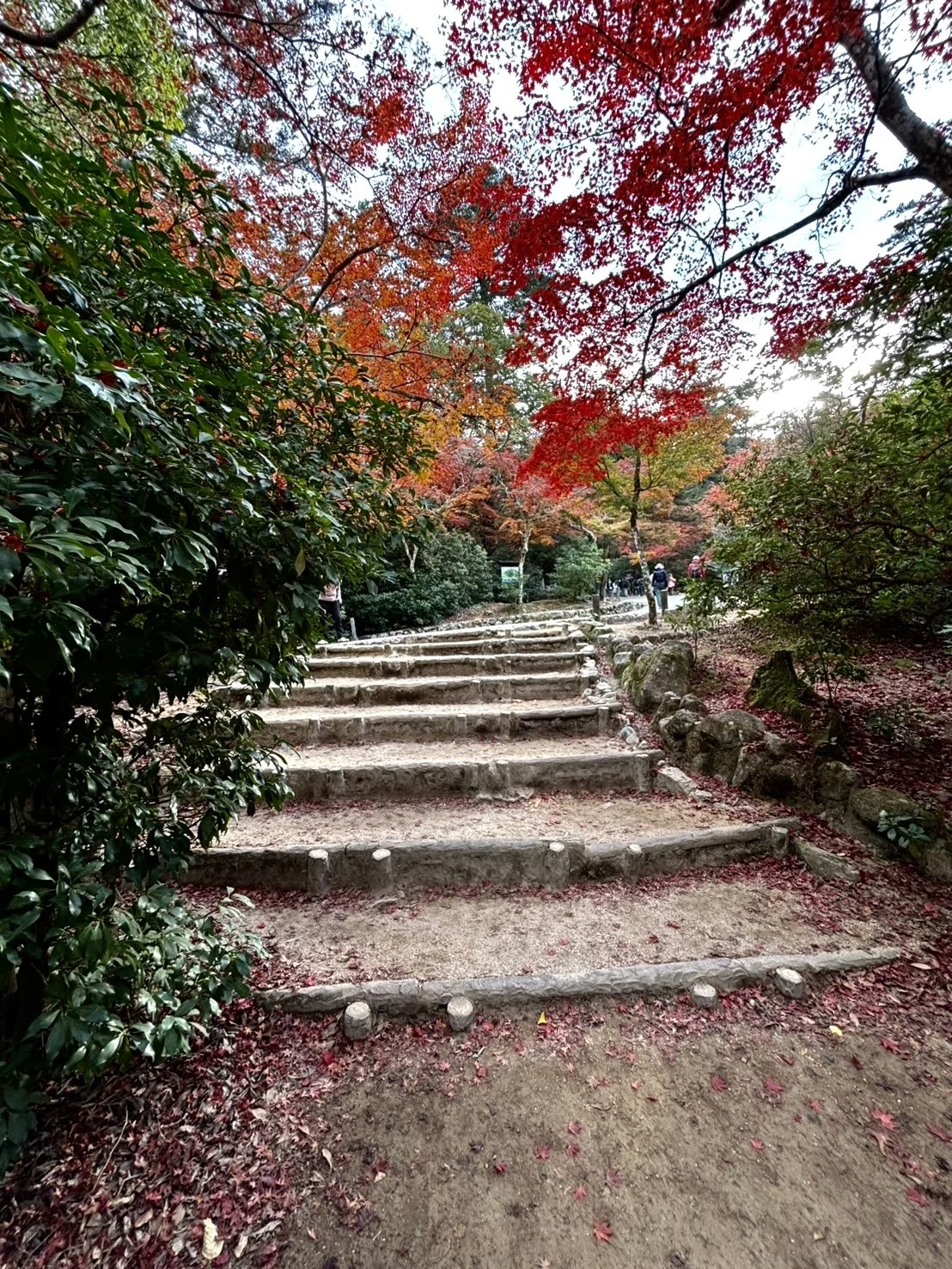
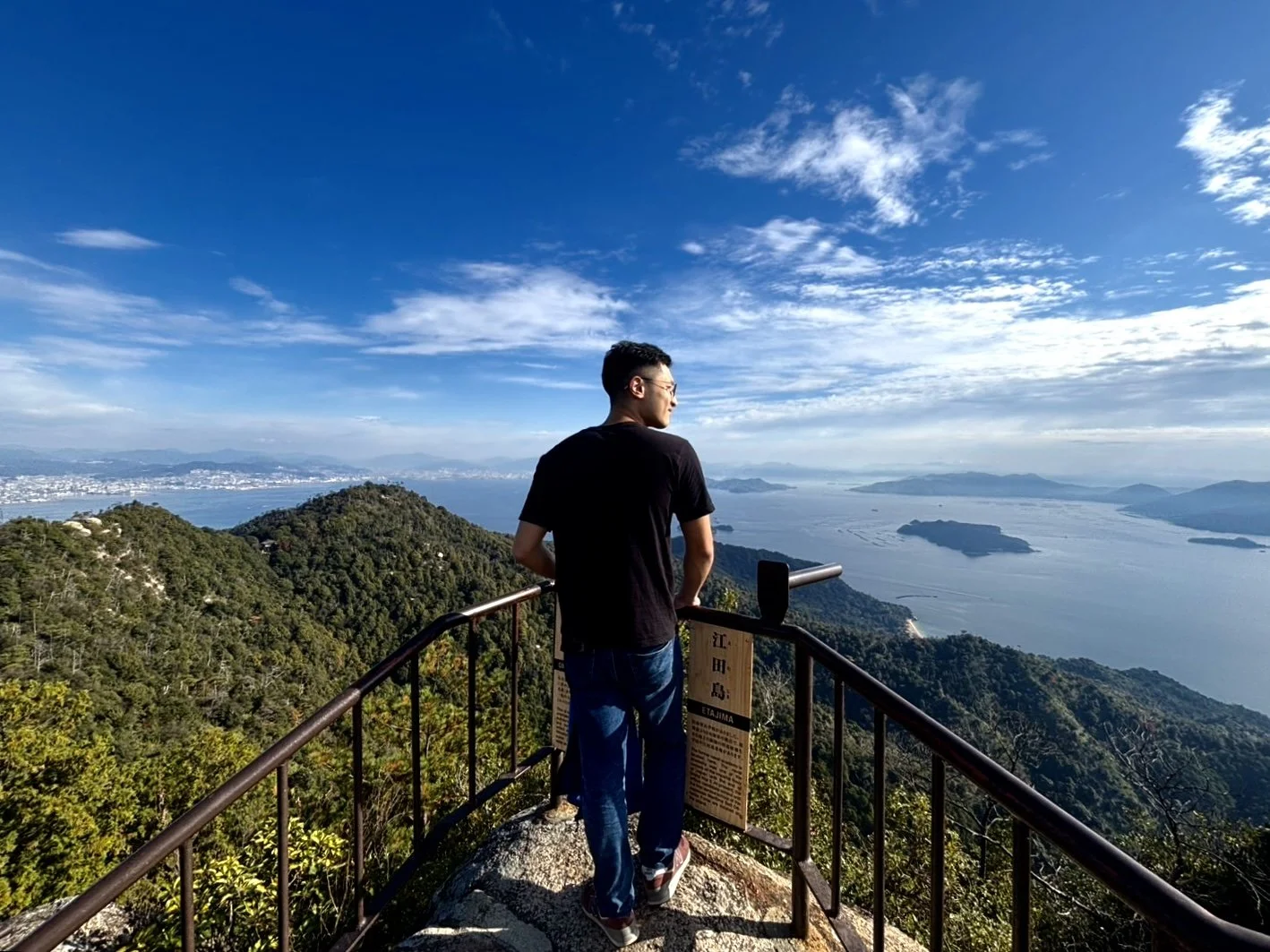
Steadily passing by people who were likewise taken aback by the steepness of the trail, Taka and I at last made it to the summit, drenched in sweat, about an hour and a half after our arrival, finding not just panoramic views of the Setouchi Sea but a deer waiting to congratulate us on our efforts. Needless to say, it was a euphoric feeling of accomplishment.
Given the state of my trusty boots and my body, I felt not a single ounce of guilt in the decision to bypass most of the hike down by taking the cable car to Momiji Park to take in the cinematic sight once more. After communing with yet another deer, it was time for lunch.
If you couldn’t tell by now, I carefully plan out my meals while traveling to eat all the specialties of a particular city or region, and lunch on Miyajima was no exception. This time, I went for anago, a lighter version of grilled eel with a sweet sauce. Our meal would take an hour to come due to the lengthy cooking time, which we spent looking out from the tatami tables to Itsukushima right in front of us. Because this was Taka’s early birthday trip, we talked for a long while about how we both felt that we had changed so much in our 27th year.

Exceedingly hungry from the morning’s hike, Taka and I were much too ambitious with our order of two anago rice bowls with a whole plate of tempura, miso soup, and momiji manju. The juicy and tender anago went down without a problem, as did the miso soup and crunchy, fried momiji manju, but I could only handle so much of the tempura and rice before I had to put my hands up, revoking my membership to the clean plates club for the day.
Traditionally, momiji manju is baked, not fried. I’d originally wanted to try both versions while on Miyajima, but after the massive meal, I had no desire to eat anything else. That being said, there was one more place I wanted to patronize before leaving.
Since our last trip to Fukui, when we’d shared more than a few triple espresso lattes (I mistook my husband’s order for a caffe latte in the past—I apologize to the coffee fiends), I’d developed a taste for the bitter drinks, and nothing sounded better than sipping a latte with a view of the sea. With everyone else bundled up inside, the two of us had the balcony all to ourselves, enjoying the crisp air and conversation with just an air of pretentiousness. And this I have to share: there was a Japanese guy randomly doing backflips over and over again on the beach, entertaining us to no end. I hope he achieves whatever his dreams are.
Our mugs emptied and the next ferry pulling in, we pushed through the opposing current of high tide photographers to board the ferry and train back home. Again, we asked ourselves if there was anything else we wanted to do while we were out, and promptly made our way to the Sheraton for our second night in Hiroshima.
Thanks to my husband’s credit card points, we were able to experience the second of two luxury items typically reserved for my clients in one trip. Not only were we staying in the Sheraton for free, mind you, but we also had a corner suite! I tell you, I could get used to this.
After a respite spent napping, cleaning up, and pre-gaming in the club lounge, it was dinnertime. I was already feeling full from overdoing it with scones in the club lounge, but I pressed on to an Italian restaurant at my husband’s request. The place we chose was on the second floor of an old apartment building, decorated with antiques and velvet curtains. We were the only customers there, making the environment especially cozy.
With limited room in our stomachs, we ordered two mushroom and truffle pastas with a potato and fish salad appetizer, all of which we rated four out of five stars.
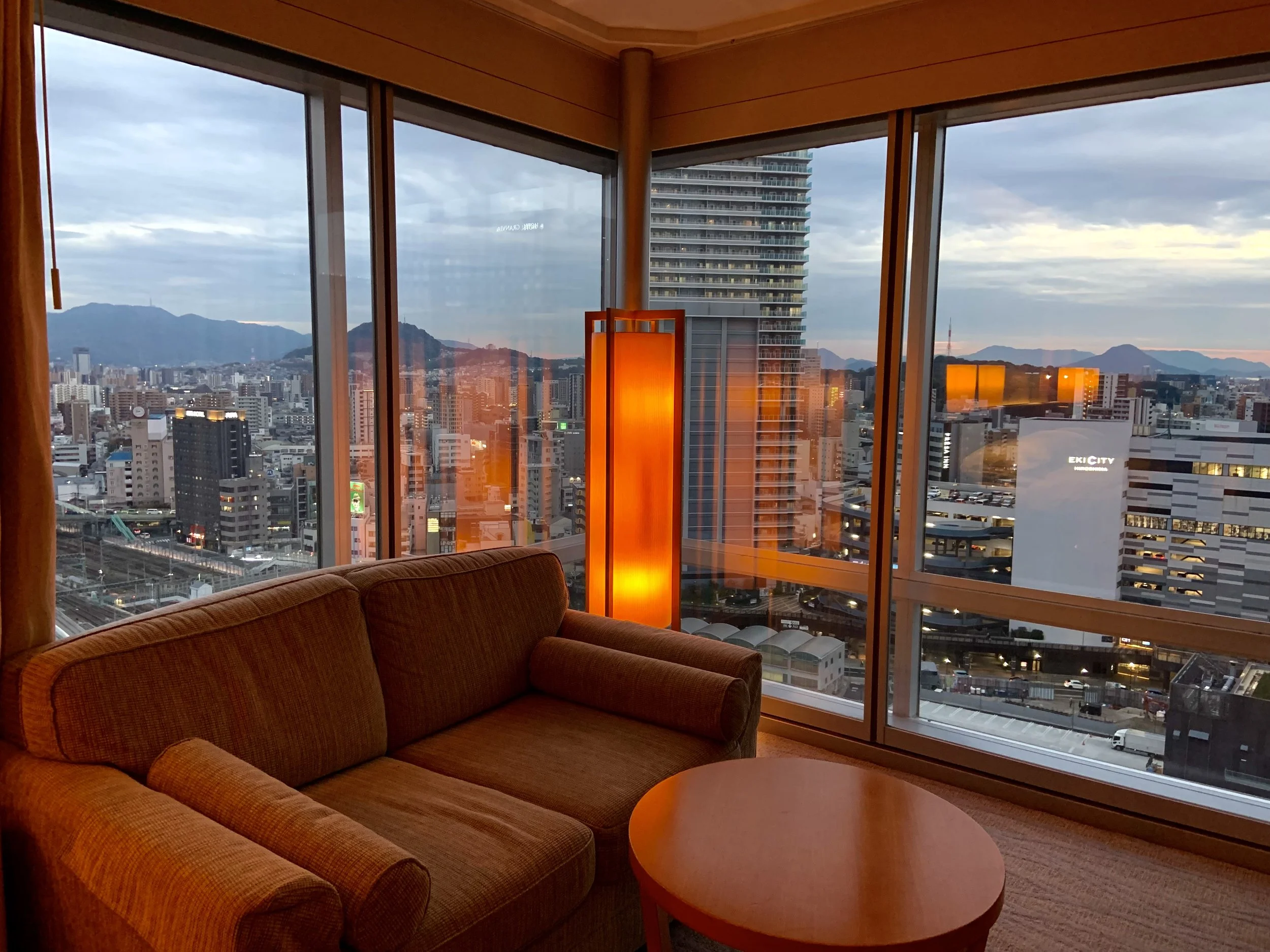
The sunset from the Sheraton.
Day 3: The Exorcist Pays a Visit
And then, the horrors. I went to sleep experiencing uncomfortable stomach pains, which then manifested into the urge to expel all the contents of my dinner. I first knelt over the toilet at 2 A.M., and there I stayed, dozing upright and regurgitating, for the next four hours.
I had a bath at around six, by which point my stomach had been completely emptied and my throat made raw. While I finally managed to sleep (still upright) on the sofa, Taka got to enjoy the luxurious Sheraton breakfast.
Checkout wasn’t until 12, so I spent the next few hours working up the energy to make the two-and-a-half-hour journey back home. Work began at 10, but there was no way I was risking boarding the train before I was ready.
Even after eating little more than a banana, I had to move at a snail’s pace through Hiroshima Station, holding my breath while walking past any shops selling food. Everything was a threat to my stomach, and I fell asleep the instant I sat down anywhere.
To speed this narrative along, I made it through the train ride unscathed, sleeping through most of it and without any need to use the barf bag I’d packed just in case. While I was upset to have lost out on a pleasant final morning in Hiroshima, I was just glad to survive the experience.
Of course, the day after we came home, my husband fell ill, and the next day, I was laid off from my job, so if anything, that last night in Hiroshima was small potatoes.
A Week Out
Writing this blog about the last happy trip before it all came crashing down has felt like its own beast to conquer. Writing is the one place where I am especially unable to put on a persona. I am a perfectionist in form, but I am unwilling to buffer out the authentic feelings. Through this blog in particular, I hope to reclaim the joy I felt during this trip and to entice interested parties to make their way to Hiroshima.
I will most definitely be back. I kind of want to move there, so long as we’re confessing things. There is so much nature to see outside of the city, too. One area I have my eye on is Jinsekikogen, with its beautiful gorges and kayaking spots, but that will have to wait til a time when I am a little more flush.
Hiroshima is the site of an unimaginable tragedy, where people were forced to start over again from scratch, rebuilding the city with a palpable sense of hope. It is with this sense of hope and resilience that I aim to move past the speed bumps that came after this trip.
In all realness, however, I cannot say that I will be doing much traveling this winter season. I had already planned to scale back and reserve my stores, which is looking all the more necessary now. Keep an ear to the ground for the stomp of my boots just in case, but expect to hear from me by February or March at the latest. I look forward to traveling with all of you again soon. Until next time, may you drink lots of hot cocoa and get lots of rest!
Access:
Hiroshima Peace Museum:
Walk about 30-40 minutes from Hiroshima Station or take the #24 bus toward Yoshijima Eigyosho (14 mins), getting off at Peace Memorial Park. The museum is a three-minute walk through the park. Admission is 200 JPY per person.
Shukkein Gardens:
From the Hiroshima Shinkansen Entrance, take the Meipu Loop bus, riding for four minutes and walking for the same amount of time to Shukkeien Garden. Alternatively, you can walk 11 minutes from Hiroshima Station. From the Peace Memorial Park, take the same bus or walk 27 minutes.
Mt. Mitaki:
From Hiroshima Station (there are also other stops near the Peace Memorial Park), take the #22 bus to Seiganji-mae (29 mins) and walk eight minutes uphill to the complex. There are no entry fees, but there is a tea house where you can sip tea by a waterfall for the cost of a drink.
Miyajima:
Take the San-yo Line Rapid bound for Iwakuni at Hiroshima Station, getting off at Miyajimaguchi Station (22 minutes). Follow the signs for Miyajima Ferry Terminal through the underpass beneath the intersection, walking for about five minutes. Board the AquaNet (not the hairspray) ferry, which departs every 20 minutes or so. Duration: 10 minutes. Payment: cash or IC card.
Planning on traveling to Japan? Sign up to get notified every time I post a new story. Like my work? Consider buying me a chai! Thank you so much for reading and supporting my work here at Koyo Travels.
