

Shimanami Kaido: The Road You Must Cycle Before You Die
Salt ice cream, rigor mortis knees, cat butts, and art in Setouchi
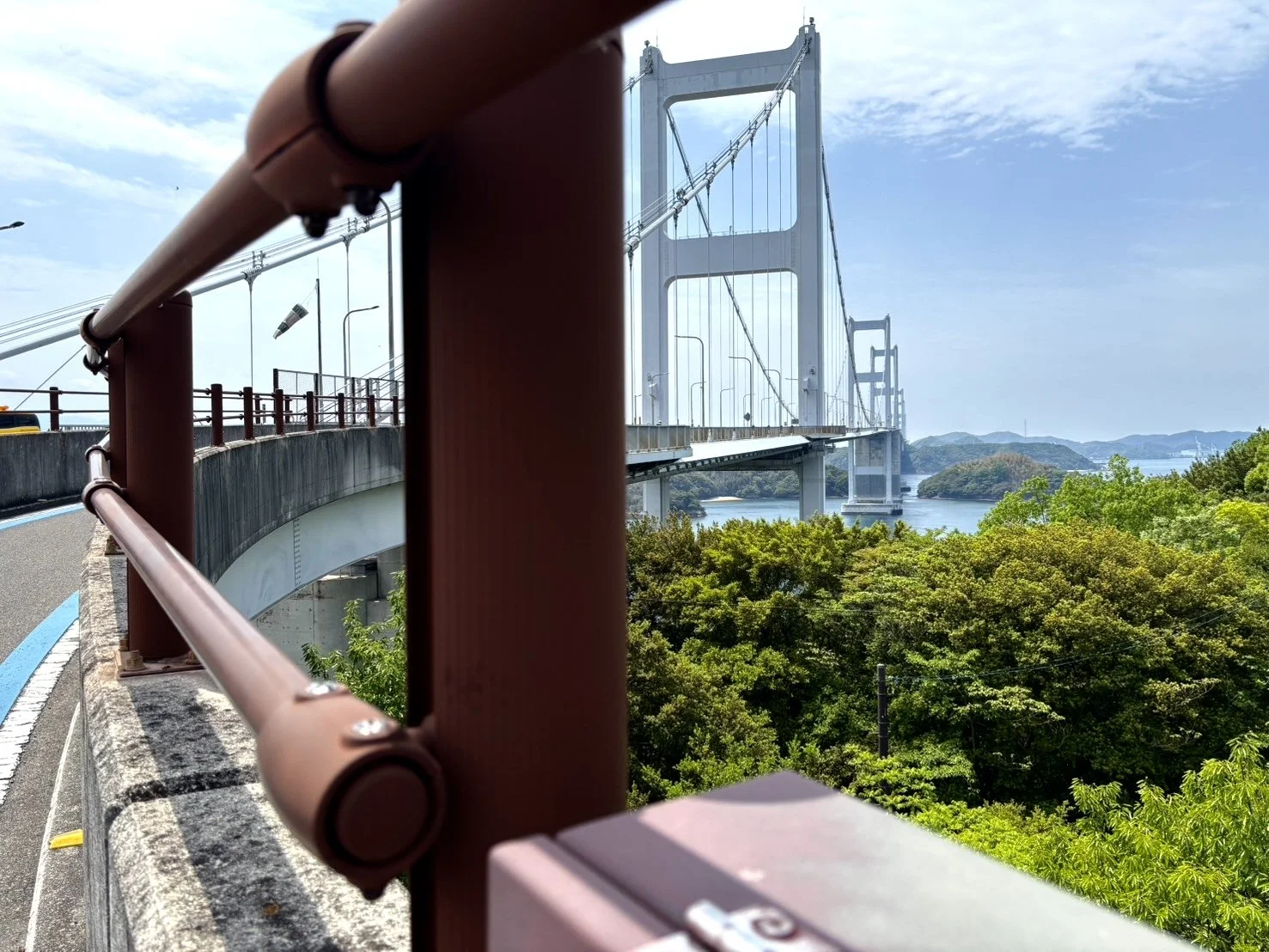
Kurushima-Kaikyo Bridge: the final, four-kilometer-long bridge along the Shimanami Kaido.
Over the last four and a half years that I’ve called Japan home, several regions have remained untrekked by my Brooks Ghost 14s. Of those, the Seto Inland Sea continued to call out to me like a homing beacon. This April, I finally responded.
The Shimanami Kaido. 70 kilometers and change. Seven bridge crossings. One of the top cycling routes not just in Japan, but in the world. What better way to celebrate my 28th birthday, seeing as last year’s cycling jaunt in Okayama marked my first occasion bike-side since the Bush administration (Junior)?
Two days were dedicated to the road itself, while two shoulder days were designated to the port cities of Onomichi, Fukuyama, and Tomonoura for the coastal trip of a lifetime. That is, if my knees could remain intact for the journey ahead.
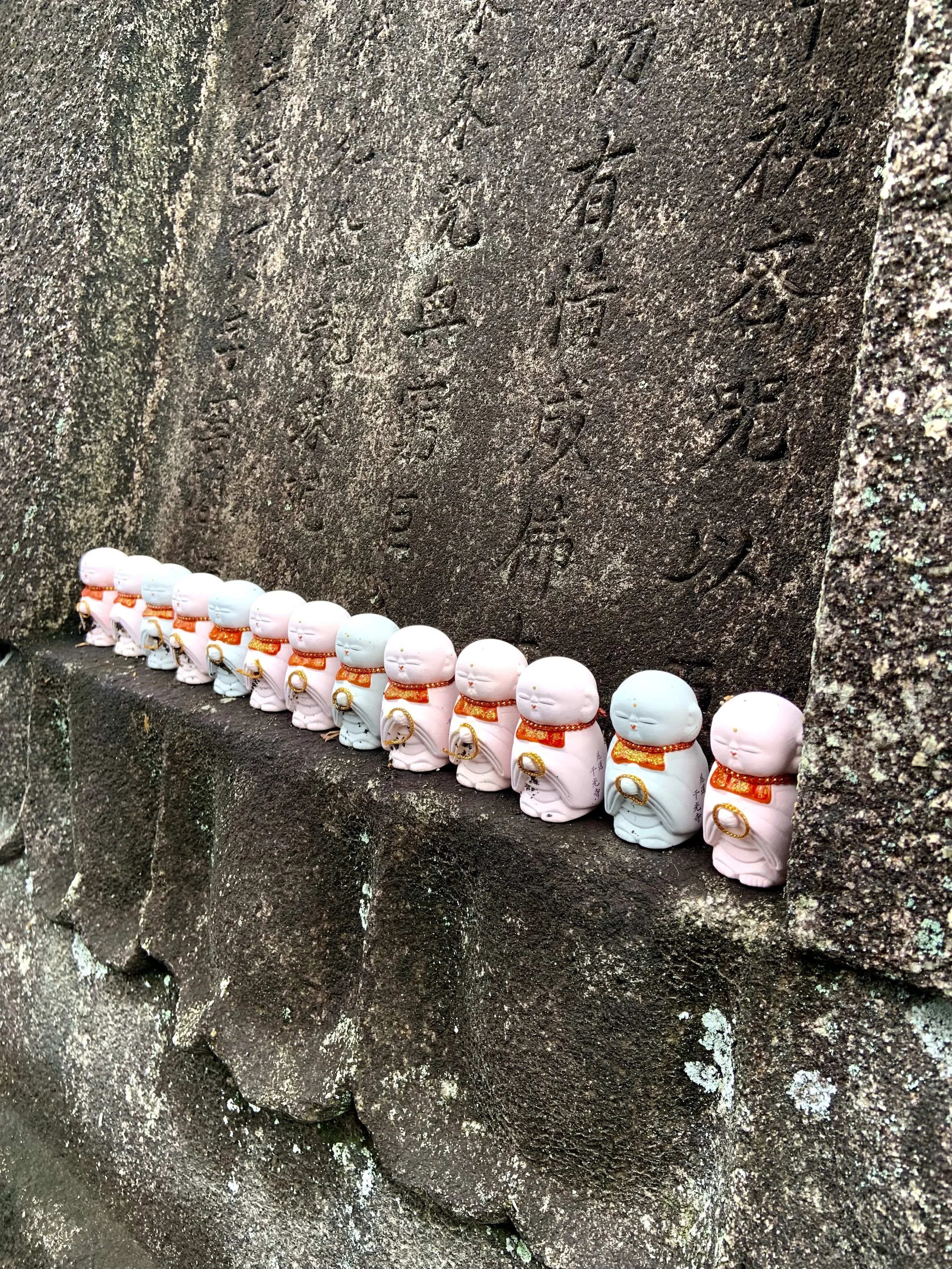
Day One: Onomichi
My husband and I cruised into Onomichi just after 10:30, immediately enveloped in a swarm. Tunneling our way through to our hotel just outside the ticket gates, the crowds were explained away by the Port Festival taking place that weekend.
As one of the biggest festivals in the Chugoku region, we wouldn’t get the full brunt until wandering down Onomichi Hondori to kill some time before lunch. Hordes of kids dressed in tasseled costumes danced down the parallel street. A group of older Japanese folks glided through the shopping street itself, pounding two massive taiko drums on wheels and cheering with gusto all the while. Festivalgoers were shoulder-to-shoulder as children made a beeline for the fishing games and food stalls that lined the area.
The atmosphere was at once claustrophobic and contagious.
Seeking reprieve from the chaos over pizza, rounding out the meal with the region’s specialty lemon cakes was a no-brainer. Taka chose to eat his before it thawed out, while I waited until reaching the viewpoint at Senko-ji. Unfortunately, the weather was so hot and muggy that I’d shed my jacket for my navy sleeveless dress, and the cake was overly soft.
More citrusy goods were yet to come, so all was fine and dandy.
From Senko-ji, we could see the sprawling white bridge we’d cross in less than 24 hours. I’d seen a similar view of the Seto Sea from Okayama, but this time we were actually going to reach Shikoku, and the first step in the journey lay right before us.
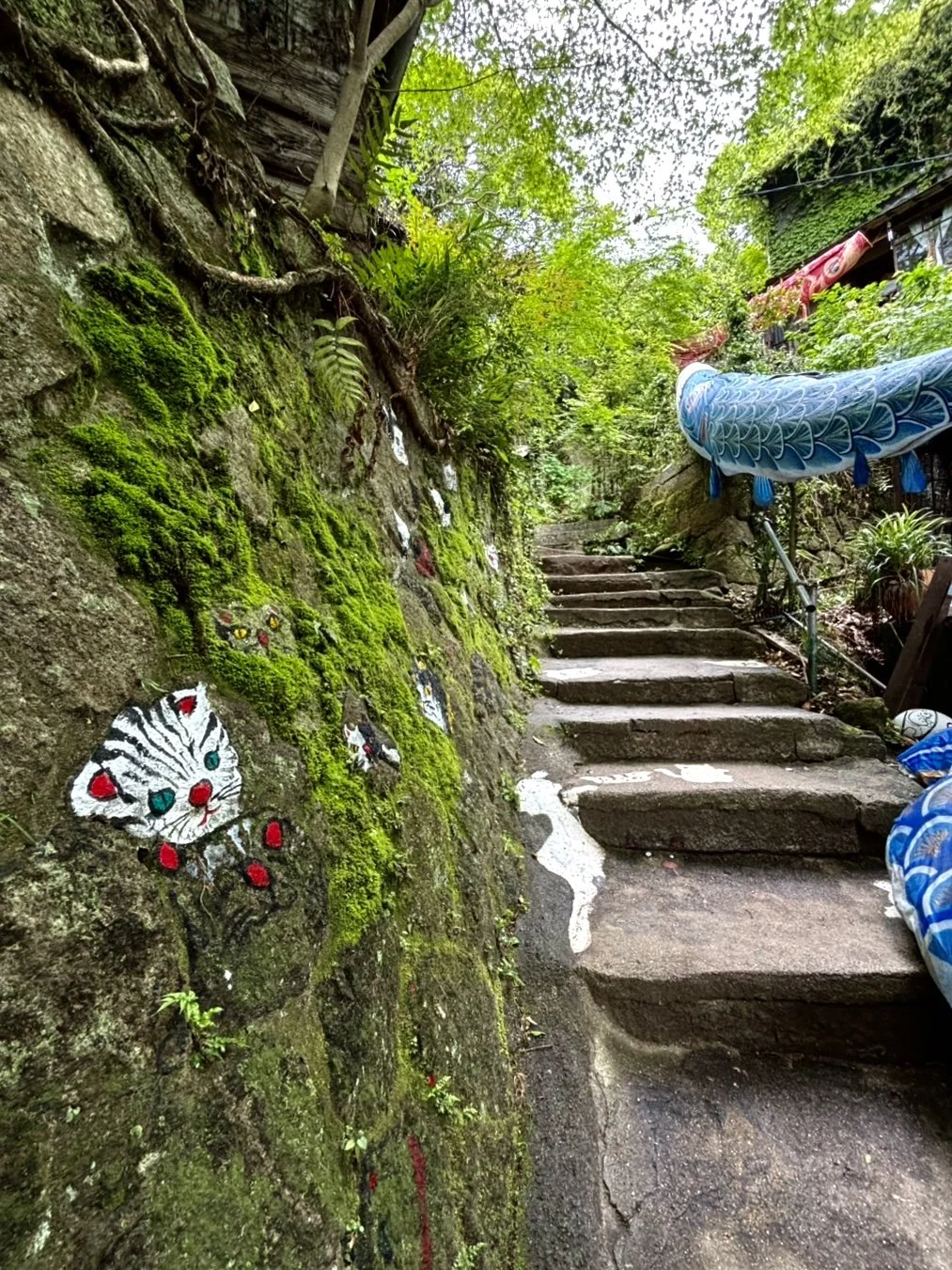
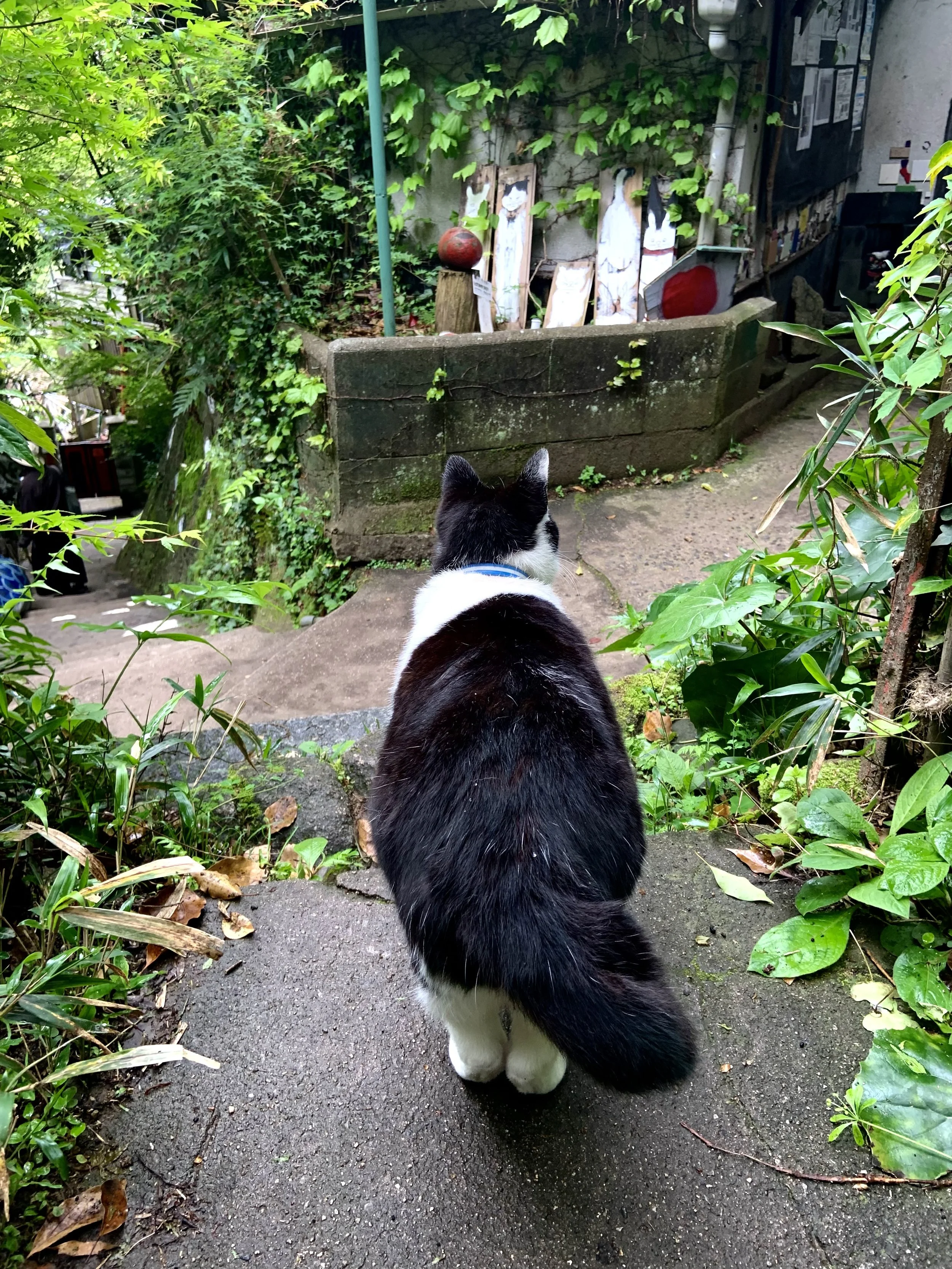
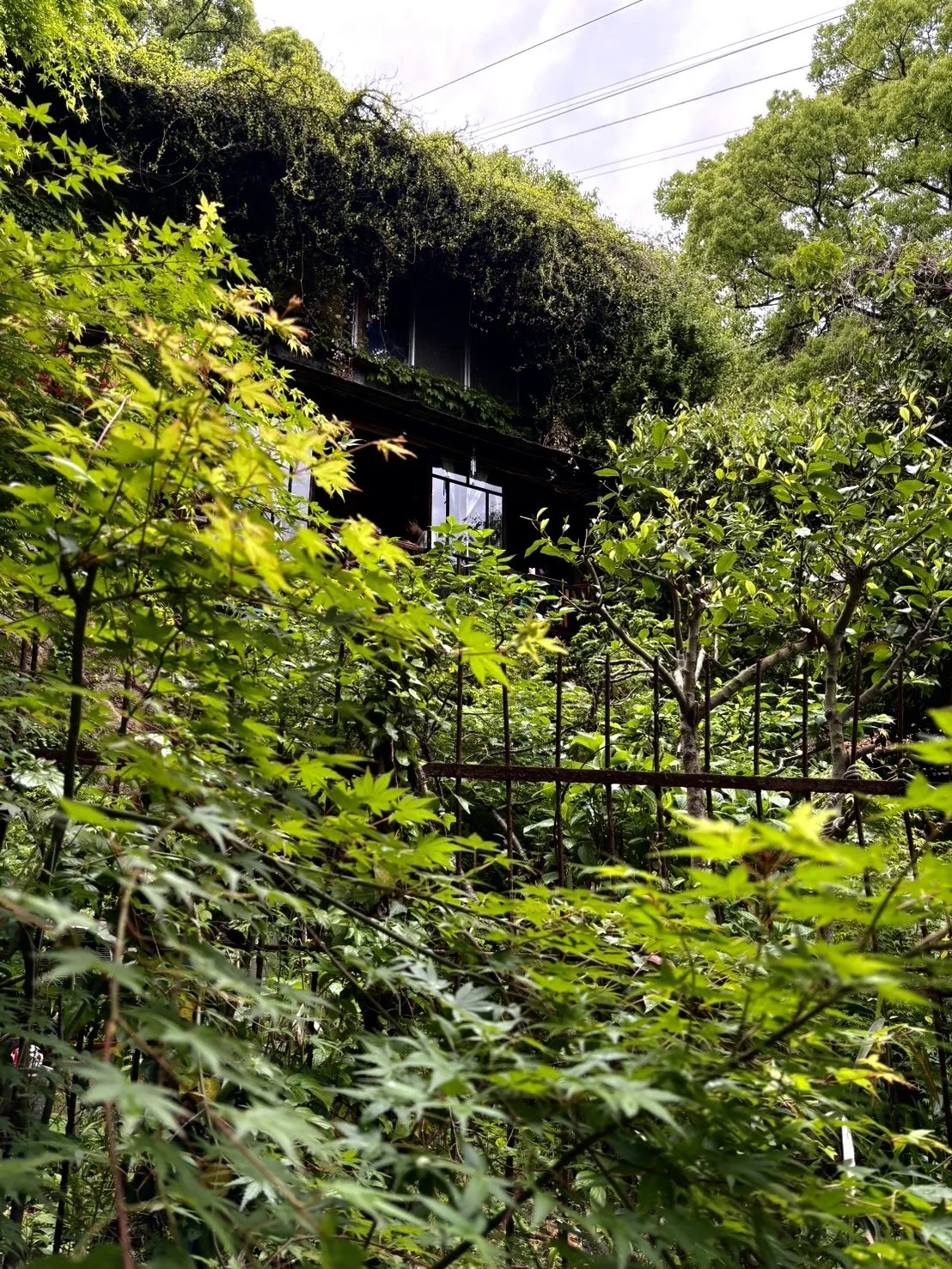
Turning away from the excitement, I followed the cat motifs to Cat Alley, where I saw all of one calico cat with the most satisfyingly round rump. Apparently, the area was under renovation, which must’ve caused the cats to disperse. Still, there was a Ghibli-like quality to the ivy-covered wooden house and cats painted into the mossy enclosure, framed by large koi wind socks.
Further out lay Saikoku-ji and Jiko-ji, though I had no luck persuading my husband. Instead, we followed the plunk of the koto to find an Awa Odori performance happening just in front of a Lawson’s. An ancient dance in front of a modern convenience store? It doesn’t get more quintessentially Japanese.
The decision was made as we found our place in the audience.
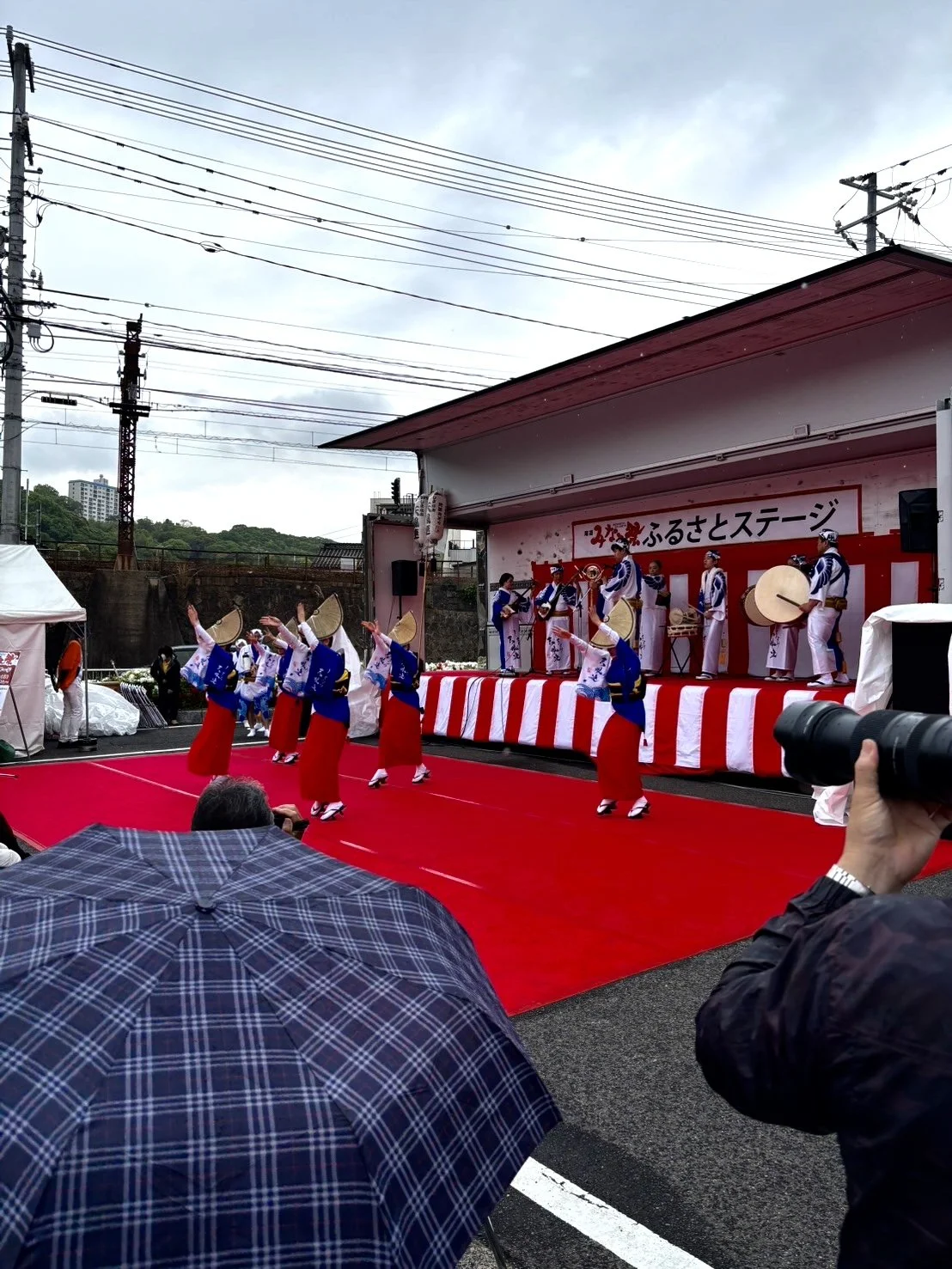
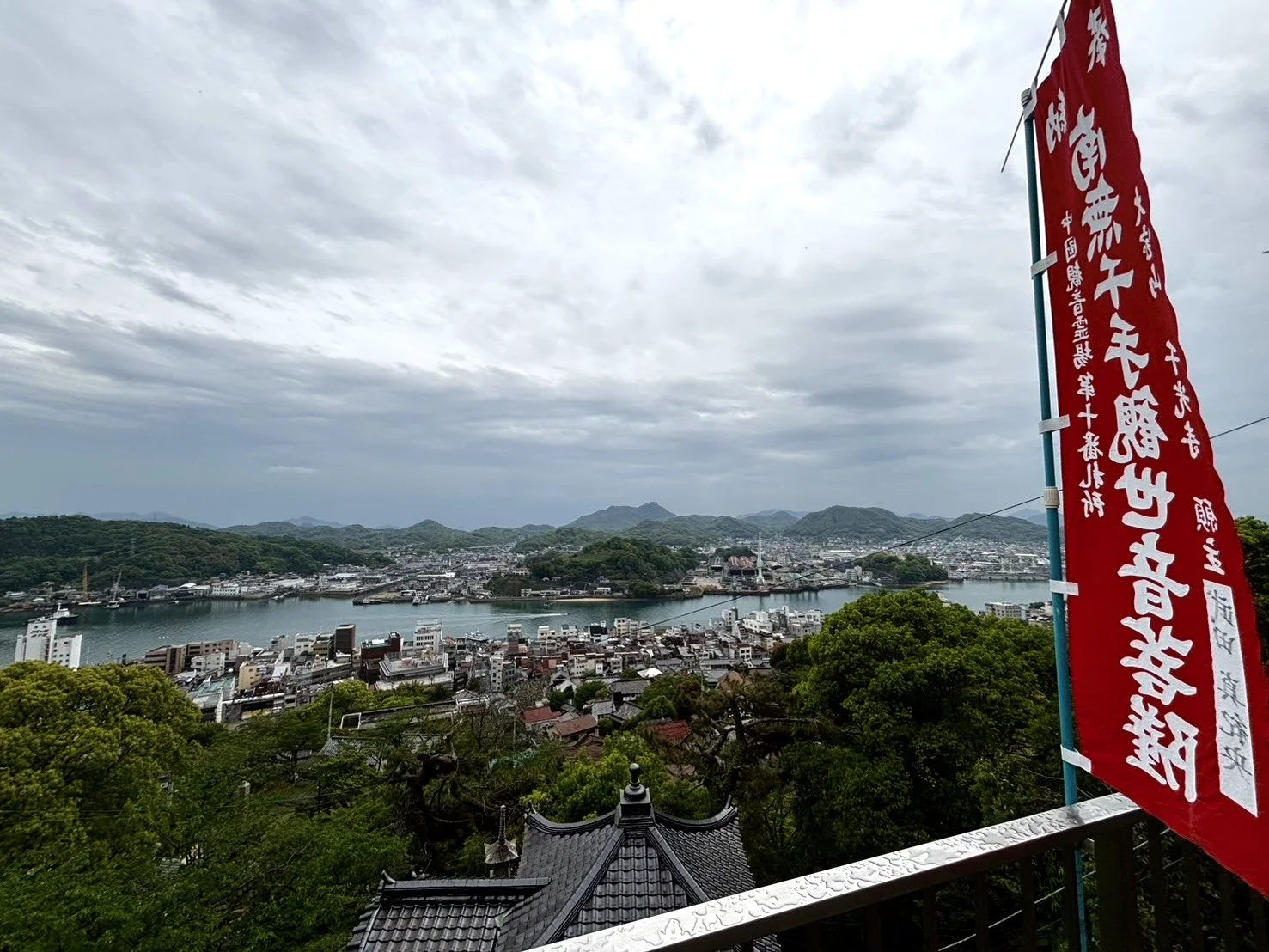
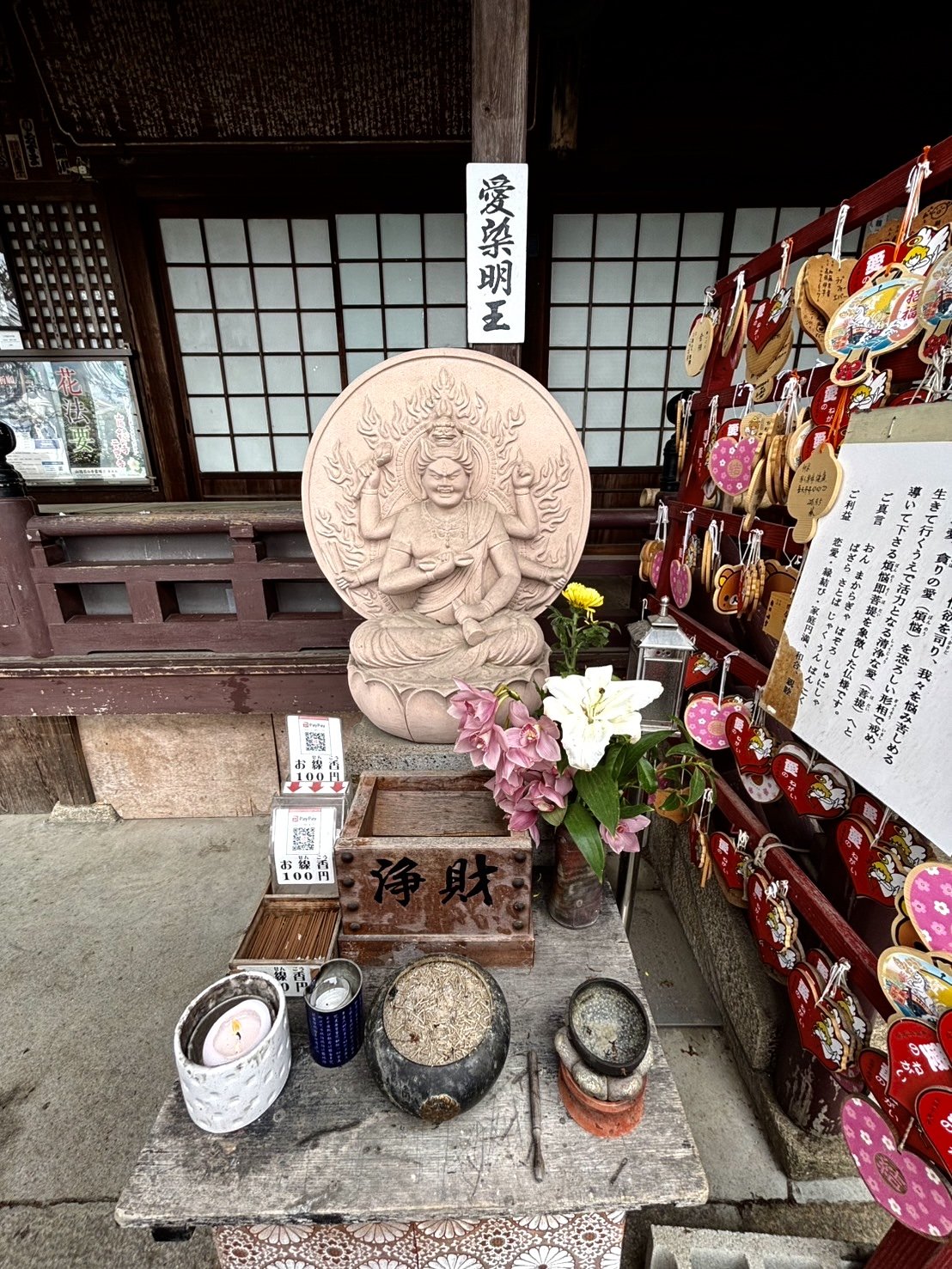
The original Awa Odori Festival in Tokushima has been on my bucket list forever, but this was my first time seeing the dance in person, and what a treat it was. Rain started pelting down, and I remained transfixed by the story being told through the groups of male and female dancers coming together and apart, chanting with impressive verve. One woman absolutely stole the show, and, for the five minutes the performance went on, I couldn’t stop smiling at the privilege it was to witness this.
The rain didn’t let up even after the dancing did. All of us bolted for cover in the shopping street, with the two of us making our way to the hotel for a rest.
At 5:30, we roused for an early dinner of Onomichi’s signature ramen, the shops for which you can’t go ten feet without running into yet another one. Our place of choice was Onomichi Ramen Betcha, just down the now-deserted shotengai.
The rich yet refreshing seafood broth would kick off a trip full of lots of great seafood. As the rain made a mockery of our formerly dry socks, we procured more lemon merch in the form of lemon daifuku and pudding, which we paired with dried sesame sardine chips while watching The Ruins later that night. The lemon daifuku was inedibly bitter, but the rest of the snacks made for solid feasting.
And with that, it was time to call it a night.
Day 2: Mukaishima, Innoshima, and Ikuchijima
Even the best-laid plans are thwarted, which is how I found myself in a line of schoolchildren and cyclists waiting for a ferry with enough room for us all. In all my research, I’d somehow missed that we needed to take the ferry to Mukaishima before beginning the Shimanami Kaido.
Delayed by an hour, 9 A.M. saw me slathering on sunscreen and surrendering my voluptuous hair to that damned yellow helmet for the next two days.
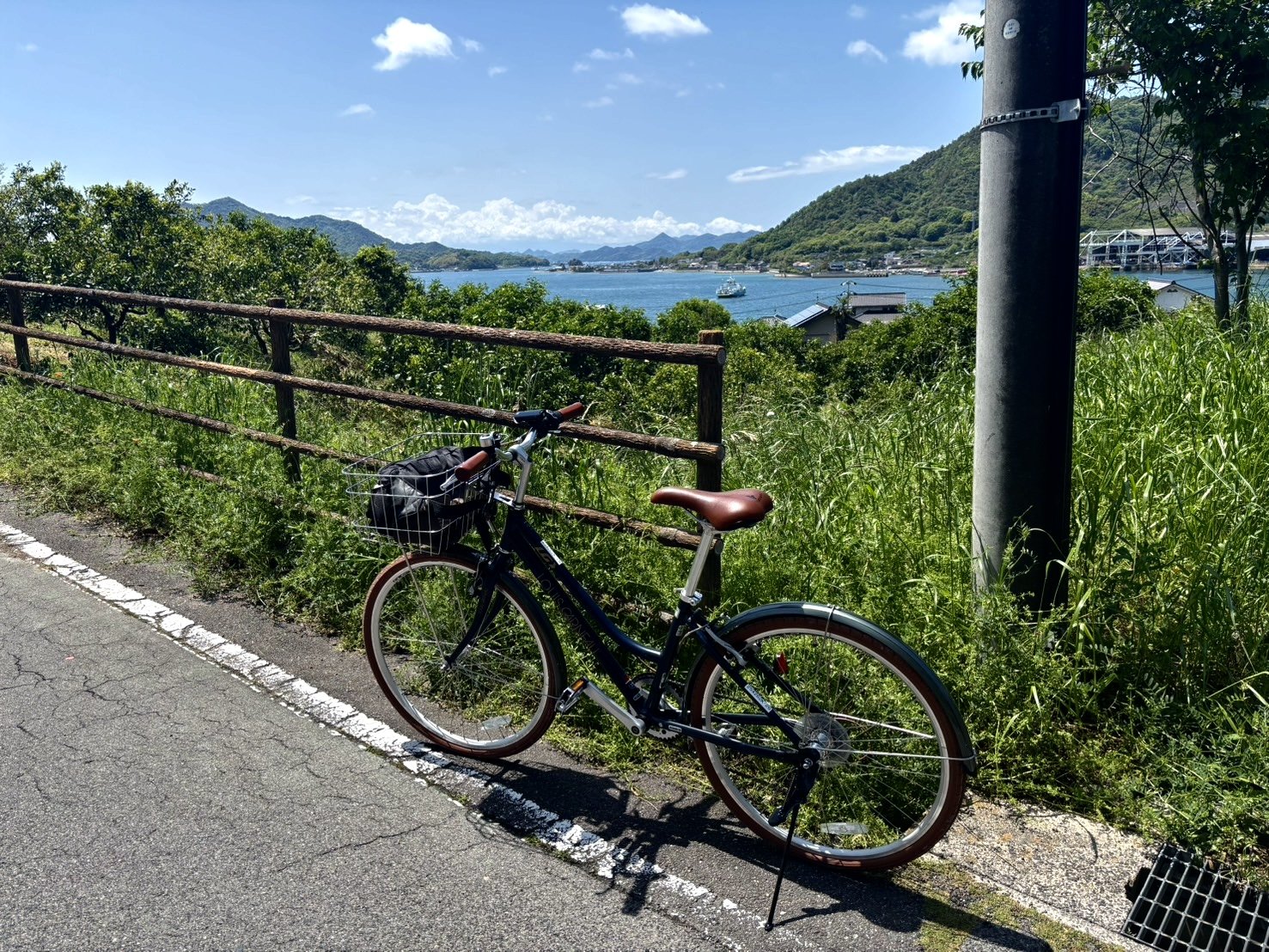
Mukaishima allowed us to get our sea legs. The first bridge even heard Taka’s whoops before I realized that each bridge crossing would mean uphill suffering and downhill coasting down nerve-racking, hairpin turns.
Where Mukaishima was casually developed, Innoshima’s farmland was interchangeable with the Kibiji Kaido in Okayama or my home state of Michigan. The smell of compost, manure, and freshly cut grass permeated the air. Orange signs for the right-wing, nationalist party Sanseito cropped up more than a few times. Tiny caterpillars made their presence known on our bags and clothes.
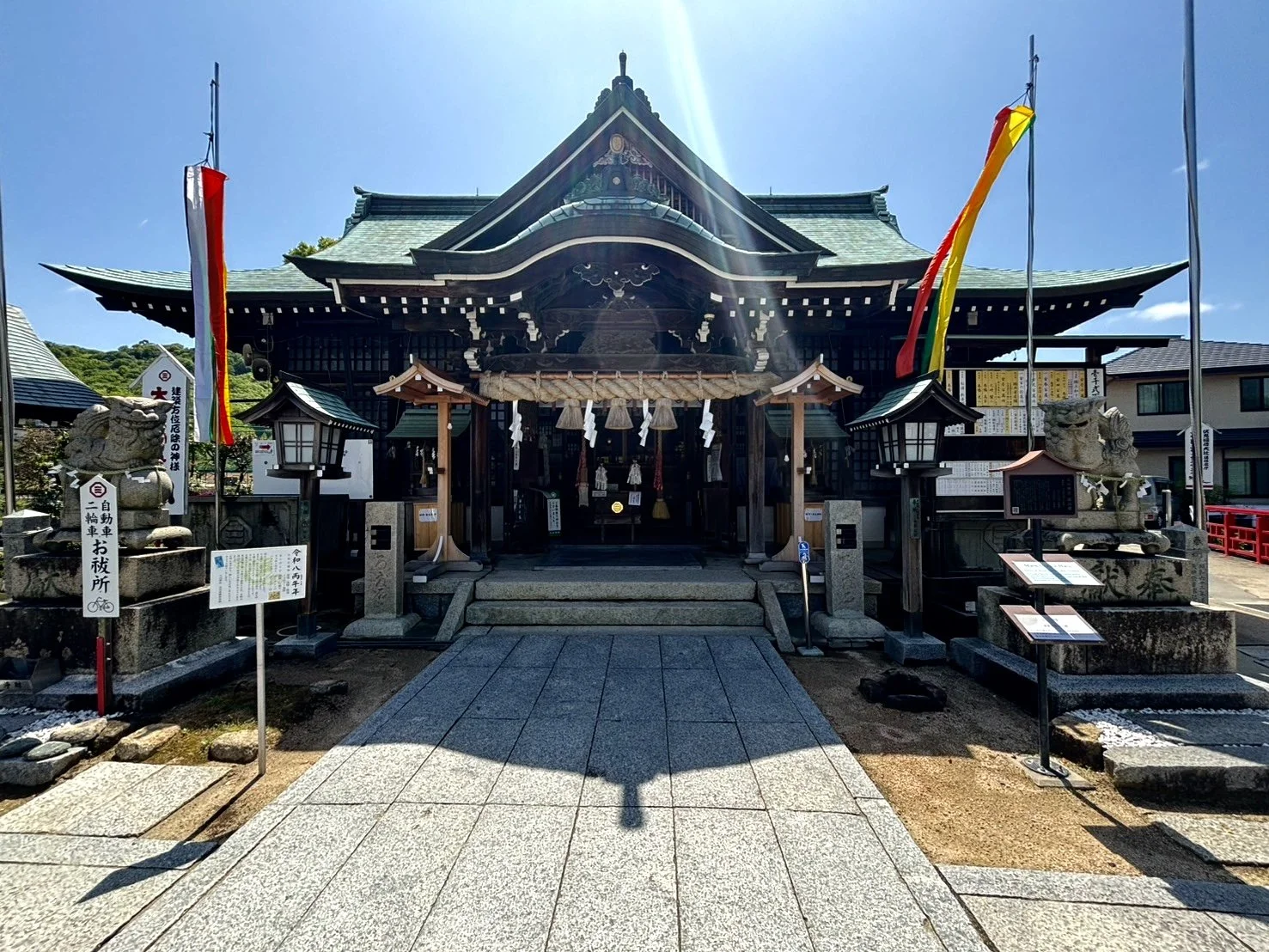
Here, we made our first detour to Oyama Jinja, a delightful little shrine with a bike wheel altar for cyclists, an altar dedicated to ears, and so many unique statues.
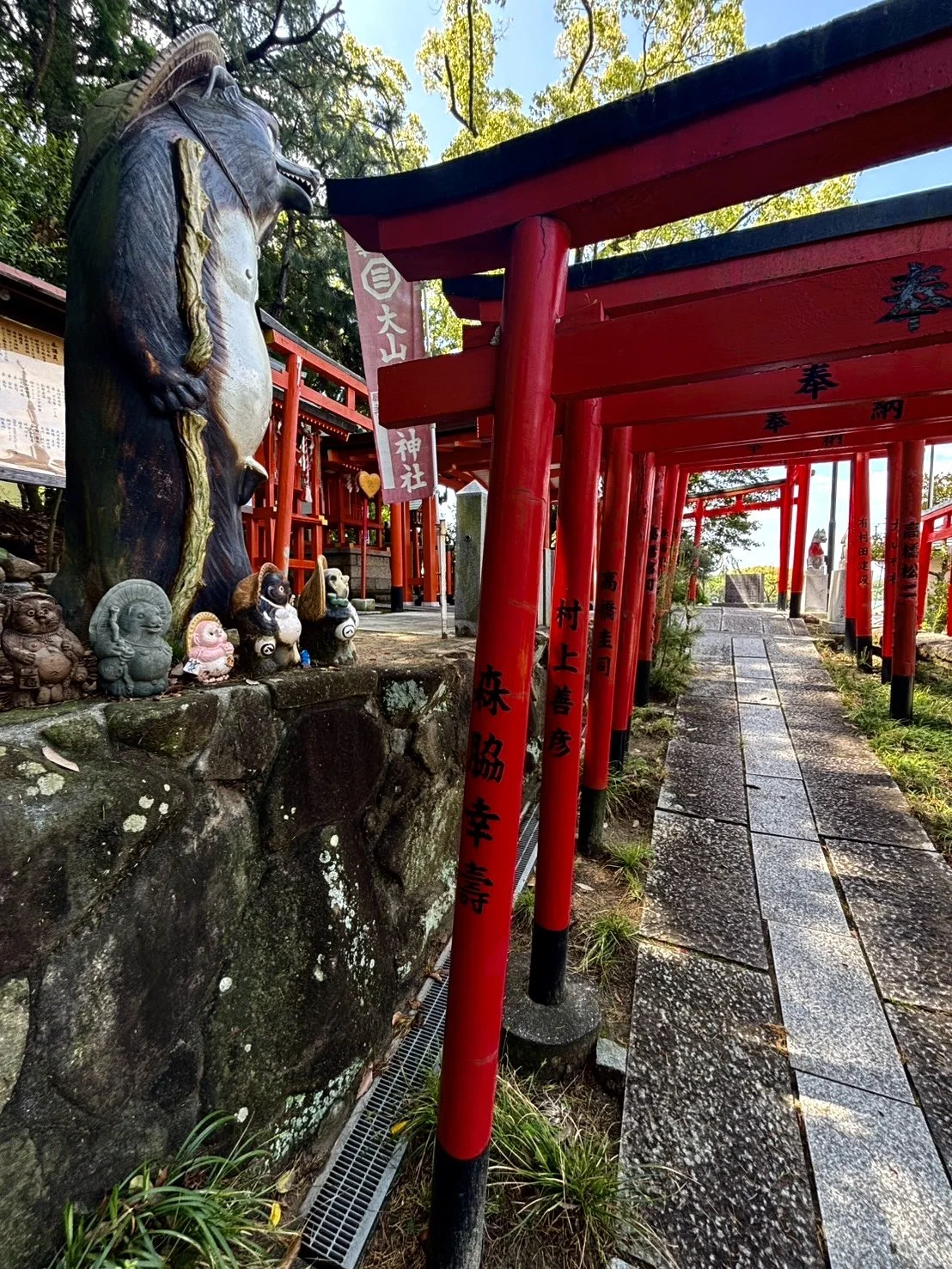
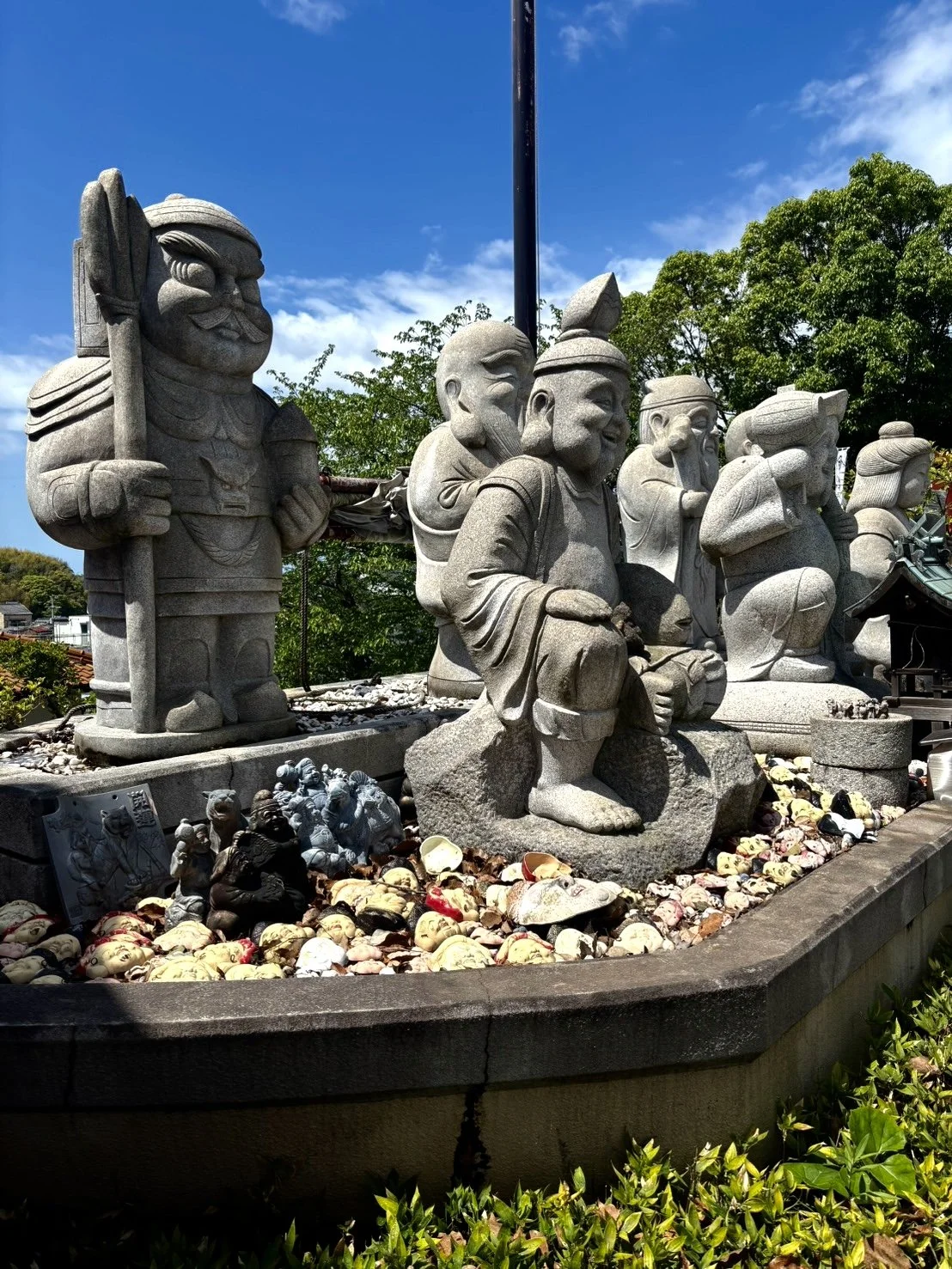
It was already approaching 11:30, so Taka and I sped our way to Ikuchijima, where we’d be spending the night.
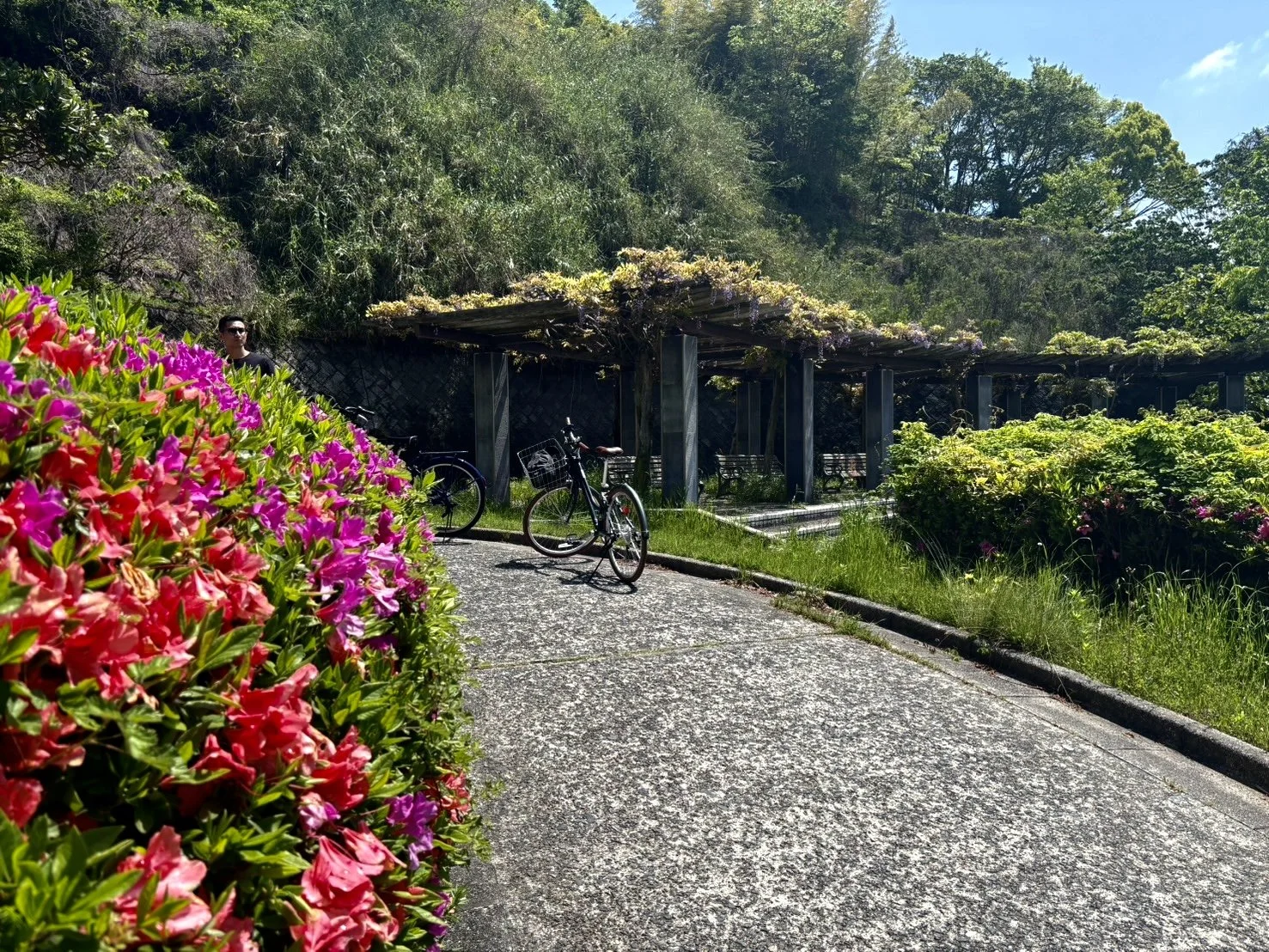
With by far the most sightseeing spots, Ikuchijima captures the tropical feeling I was expecting for the entire road. As the two of us rode right along the coast, we passed by palm trees and azaleas in pink and white hues, popping out against the rippling blue sea and nearly cloudless sky.
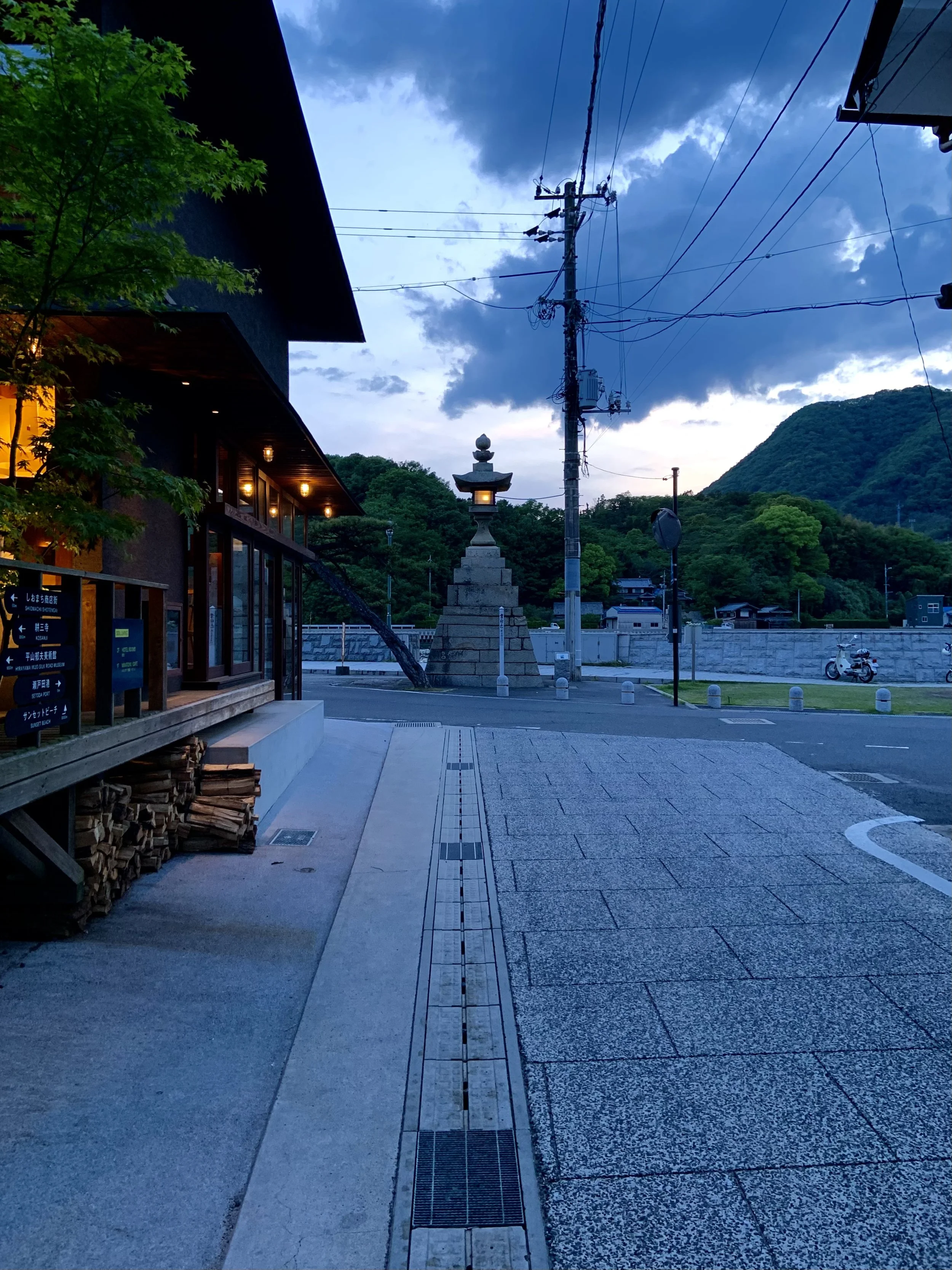
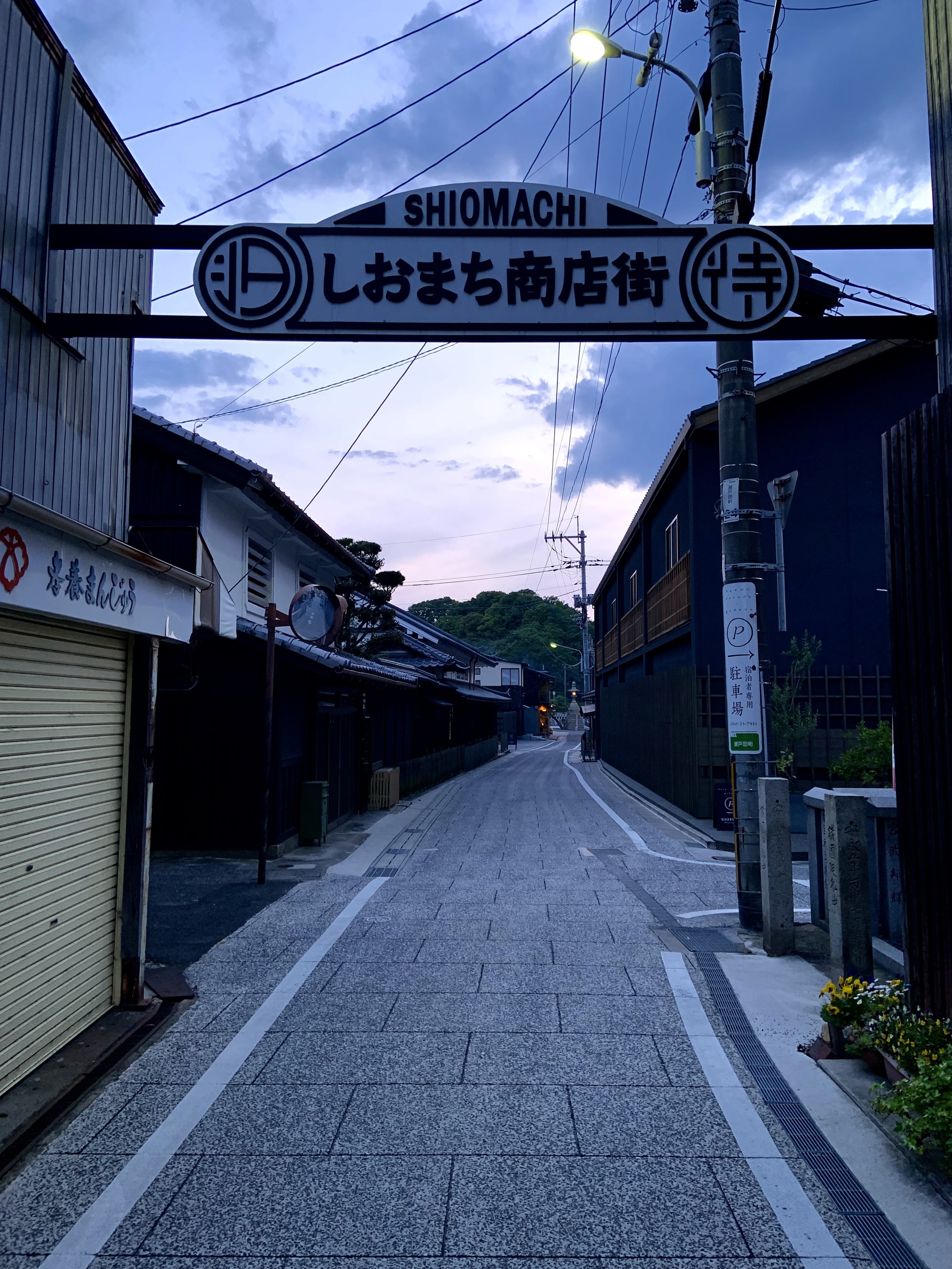
After arriving in the hub of Shiomachi and doing away with Taka’s heavier bag at the hotel, it was time for taimeshi, the grilled sea bream rice bowl specialty of Setouchi. The taste was subtle and smoky, like unagi without the sauce and the rice more heavily vinegared. With some 25 kilometers under our belt, it was the perfect midday meal.
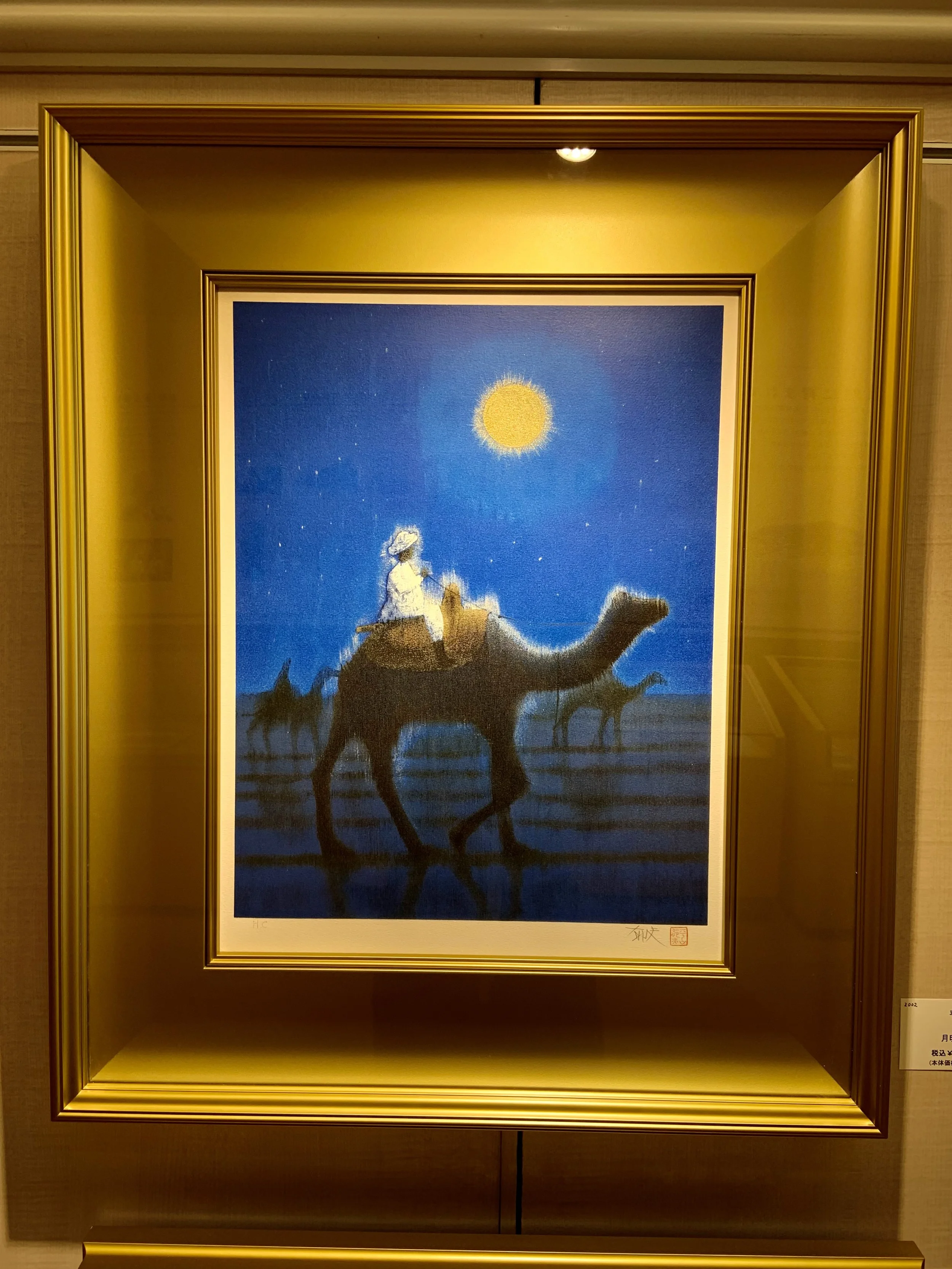
Appetite satiated, Taka insisted on stopping by the Hirayama Ikuo Art Museum before anything else, and I couldn’t be happier he did. The museum showcases Ikuo’s art from his elementary school years in early Showa Era Japan to his later years in the 90s. His art primarily captures his travels throughout Central Asia, which instantly drew me in as someone who has an inexplicable fascination with the region (I read and loved Sovietistan by Erika Fatland at the top of the year). I especially loved his use of glowing light, and wished we’d had room for a postcard or print to take home.
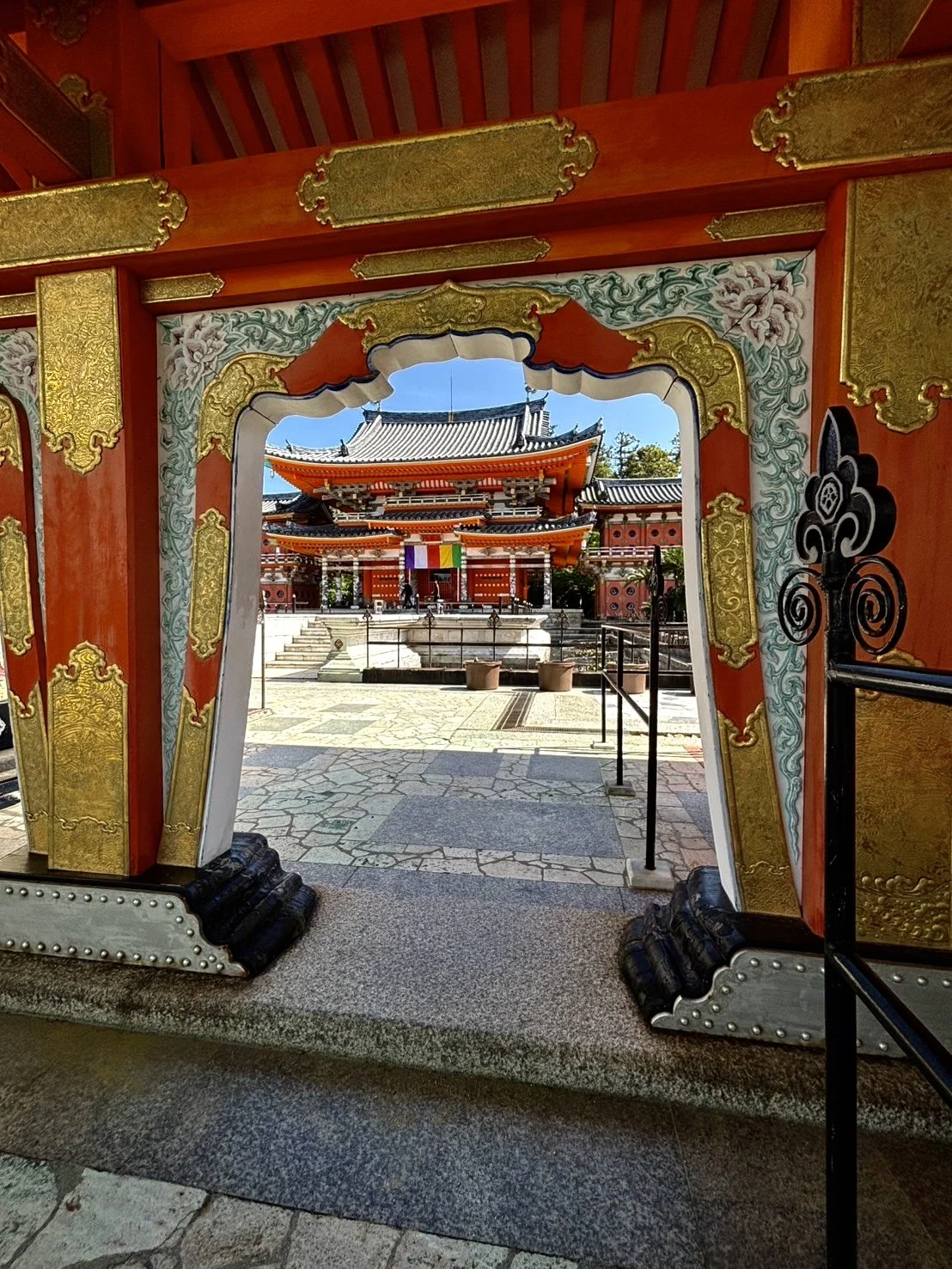
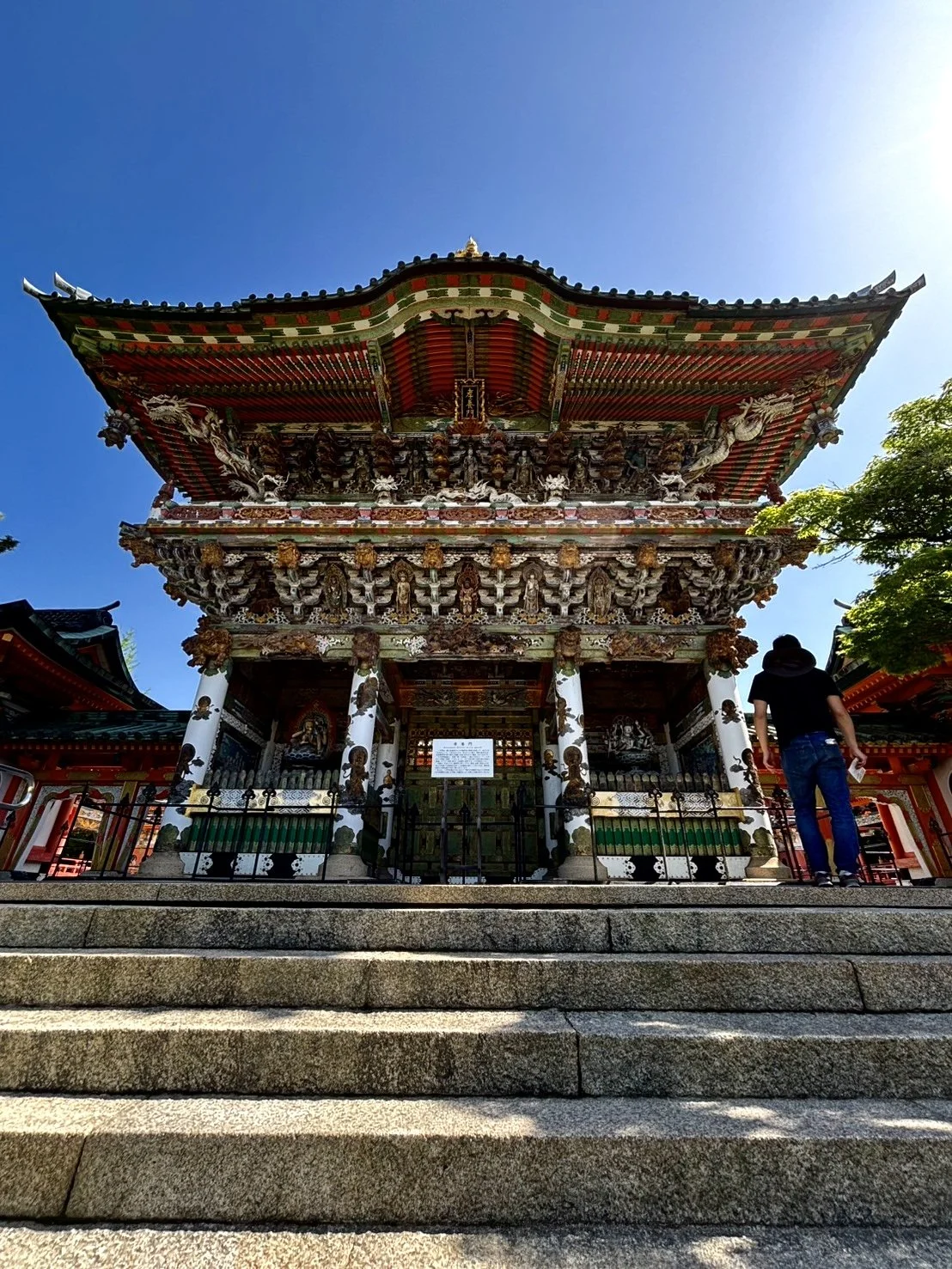
Next was the trifecta of Kosanji Temple, the Cave of a Thousand Buddhas, and the Hill of Hope art installation.
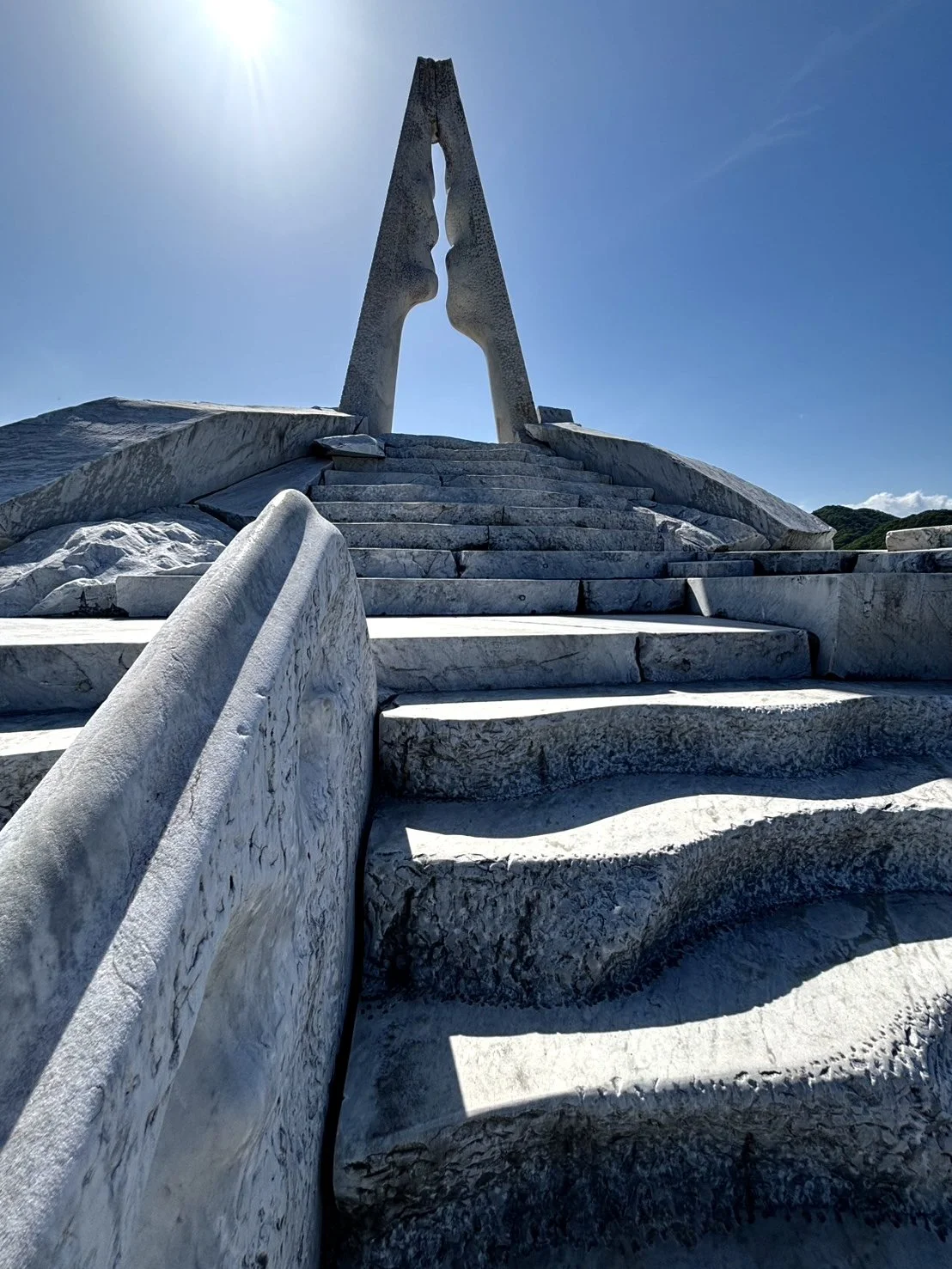
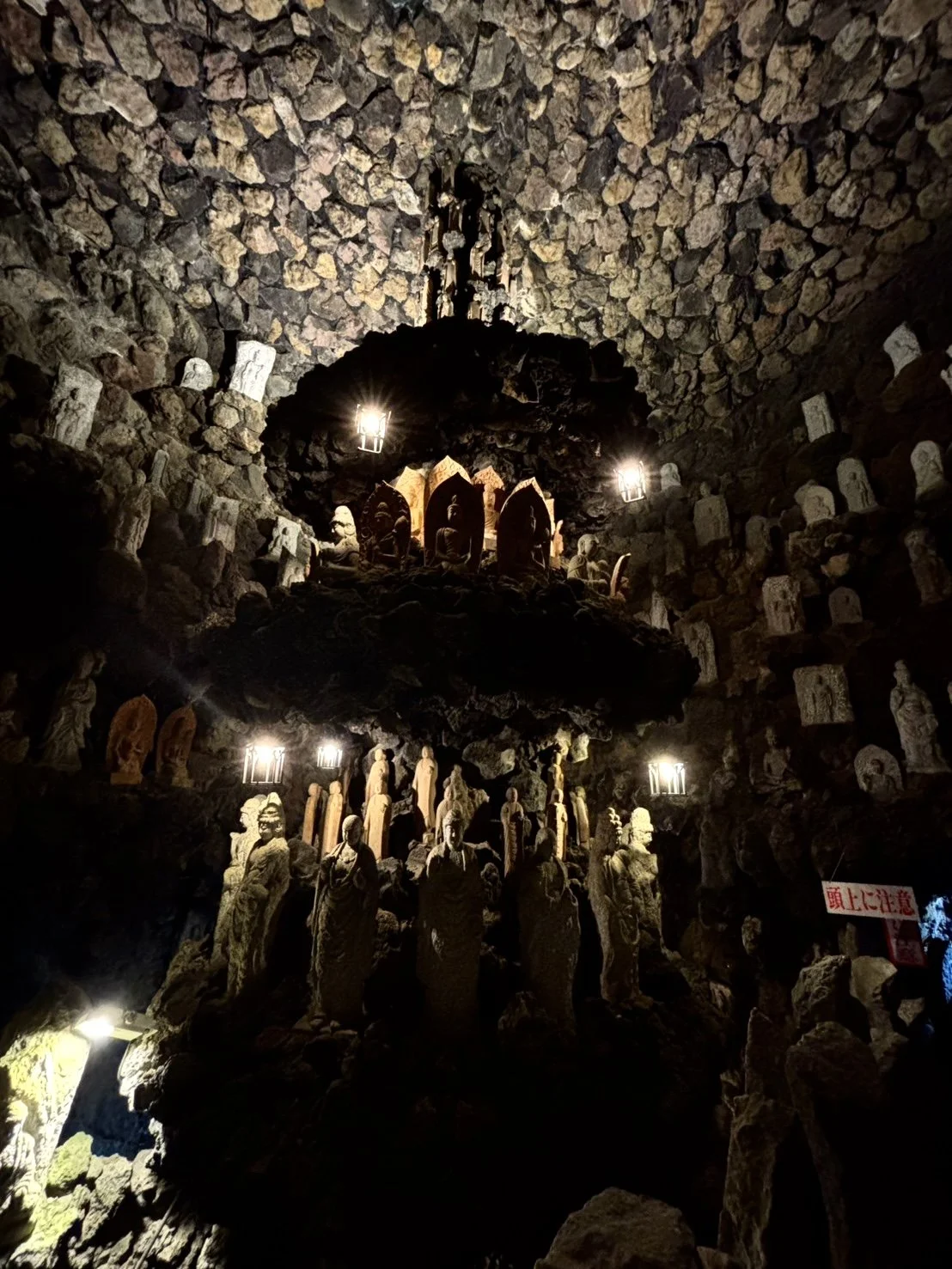
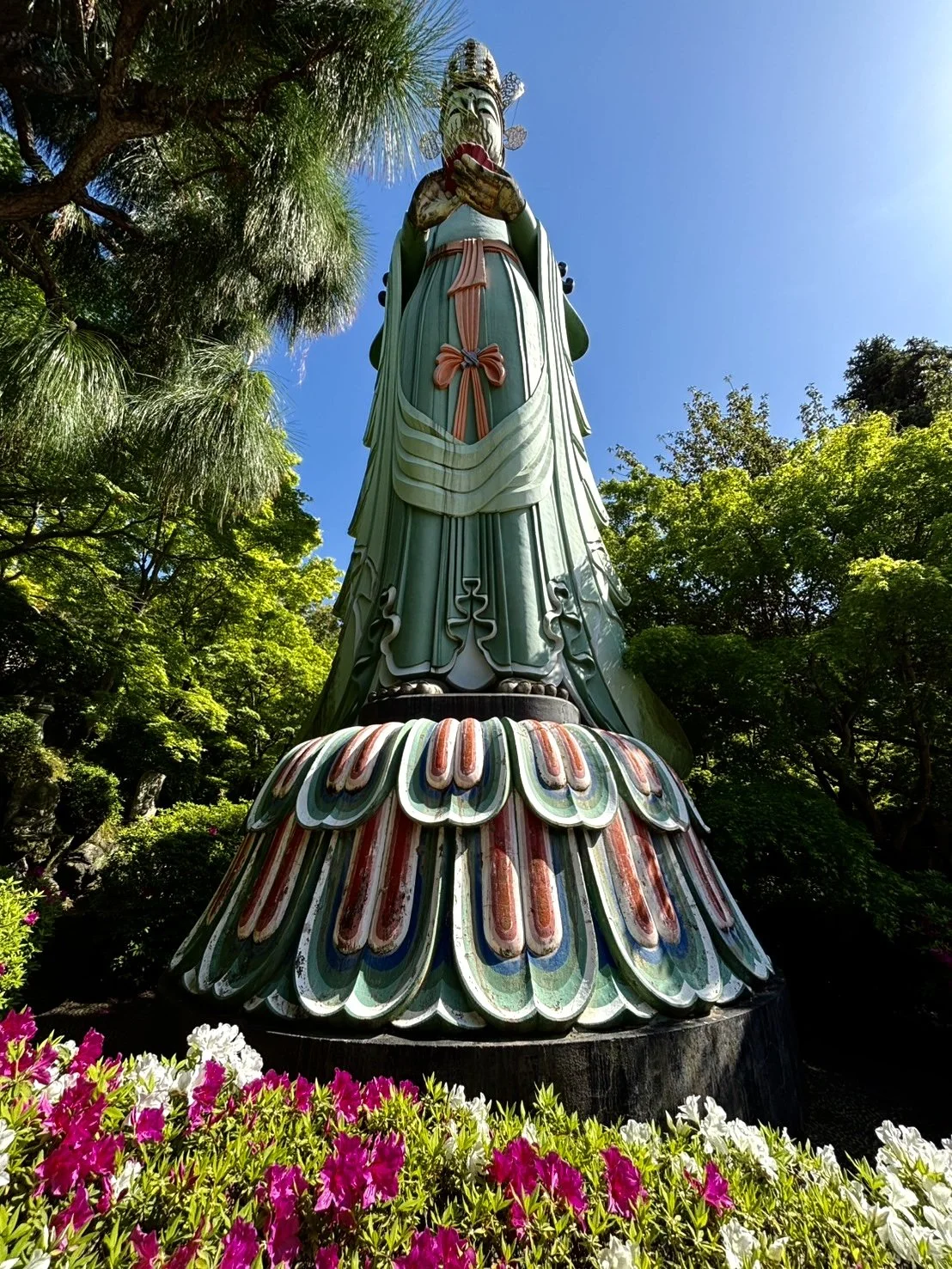
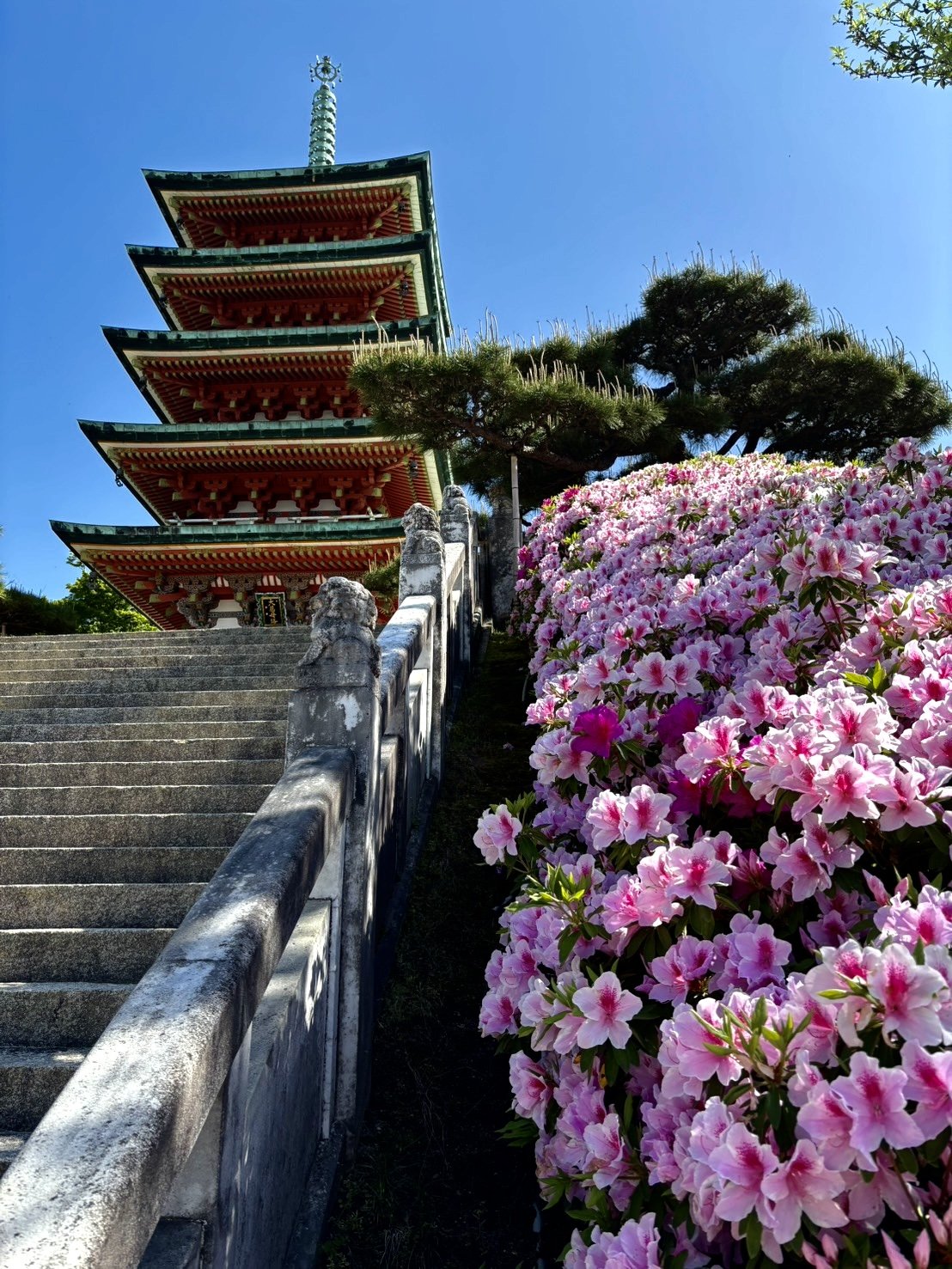
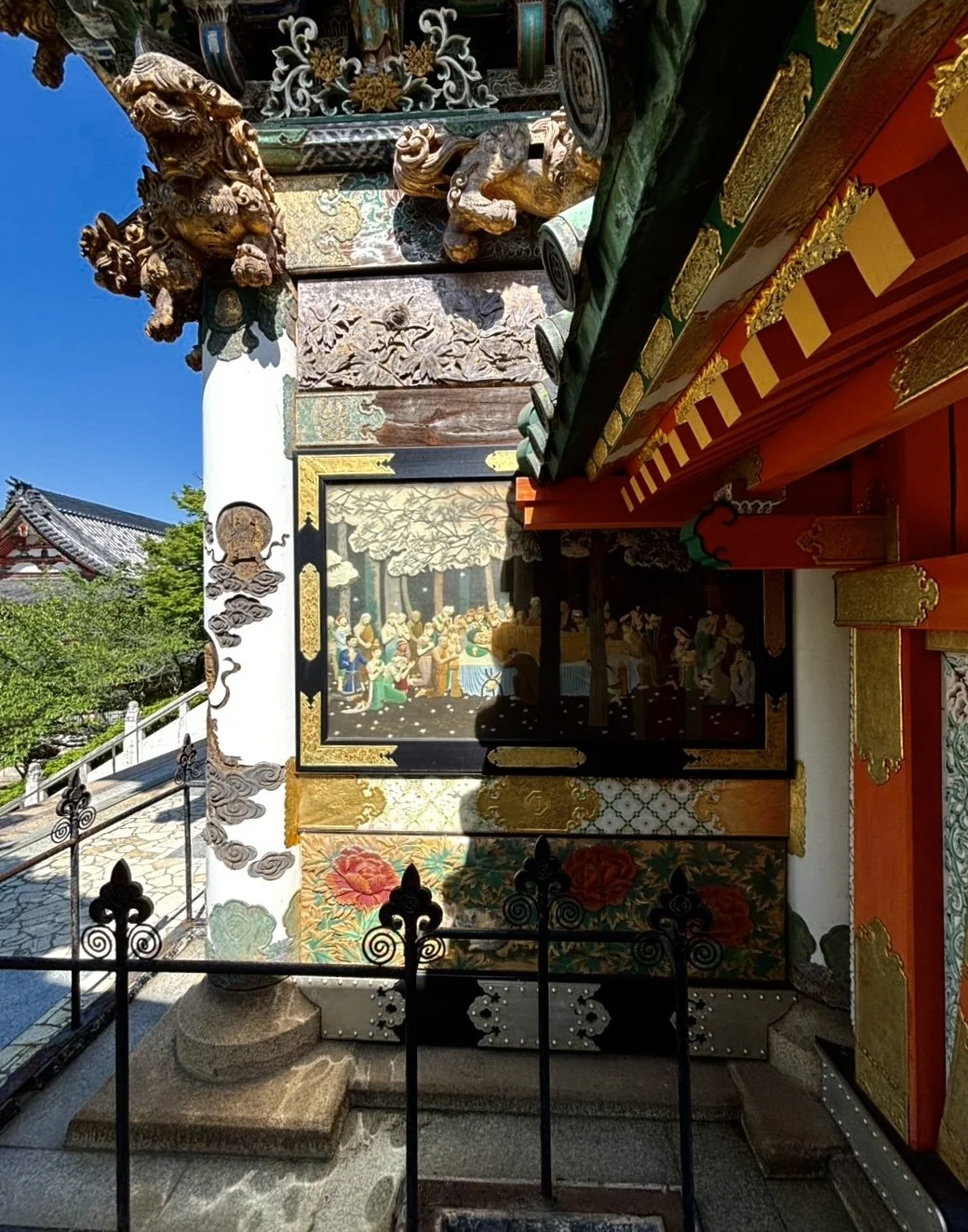
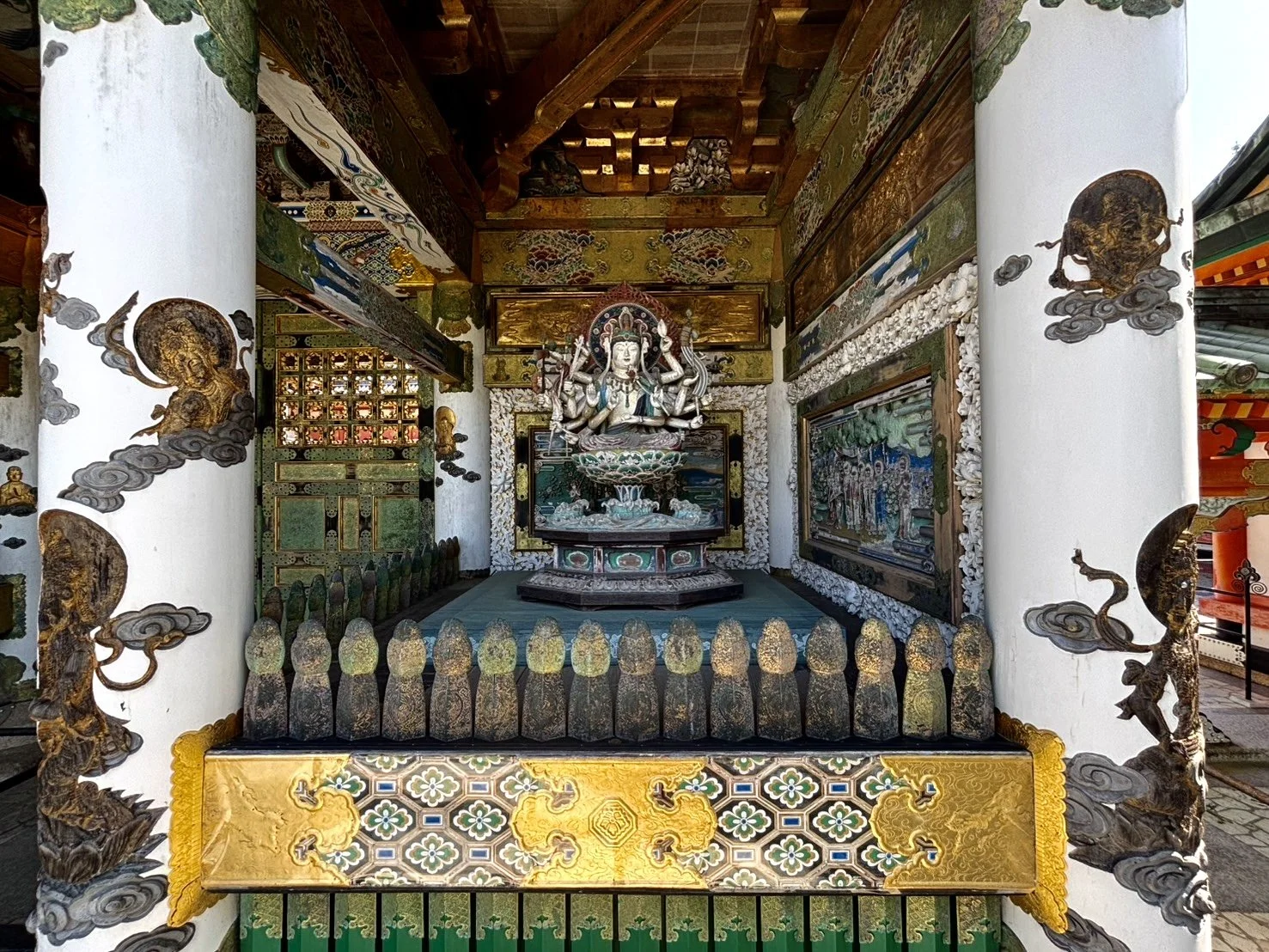
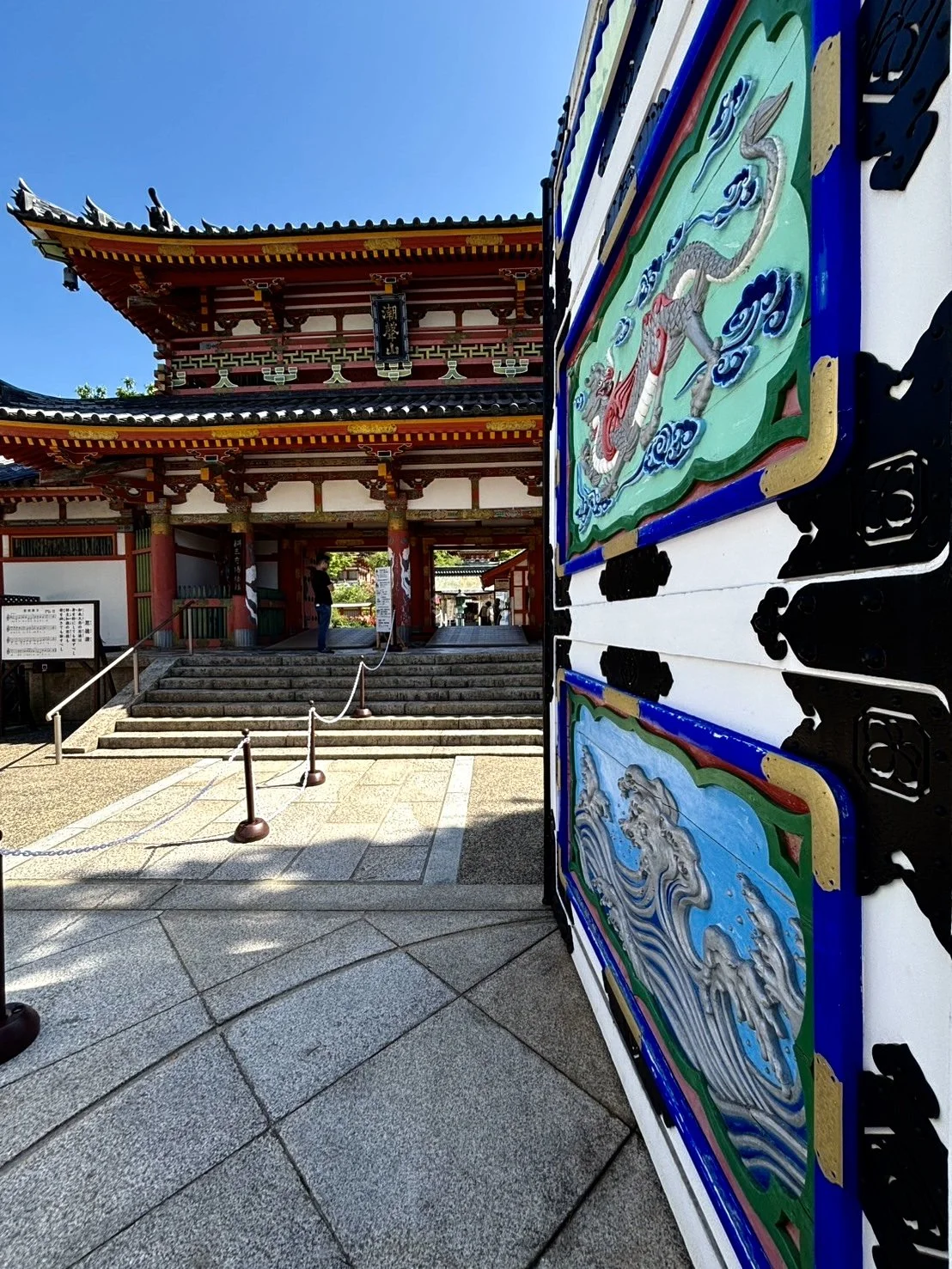
Kosanji is easily the most ornate temple I’ve visited in Japan. Every corner offered paintings and carvings; in other words, a photographer’s wet dream.
The Cave of a Thousand Buddhas calls to mind The Cask of Amontillado with its dark, spiraling staircase, filling you with a sense of dread until it opens up into a cavern filled floor-to-ceiling with small, leering Buddha statues.
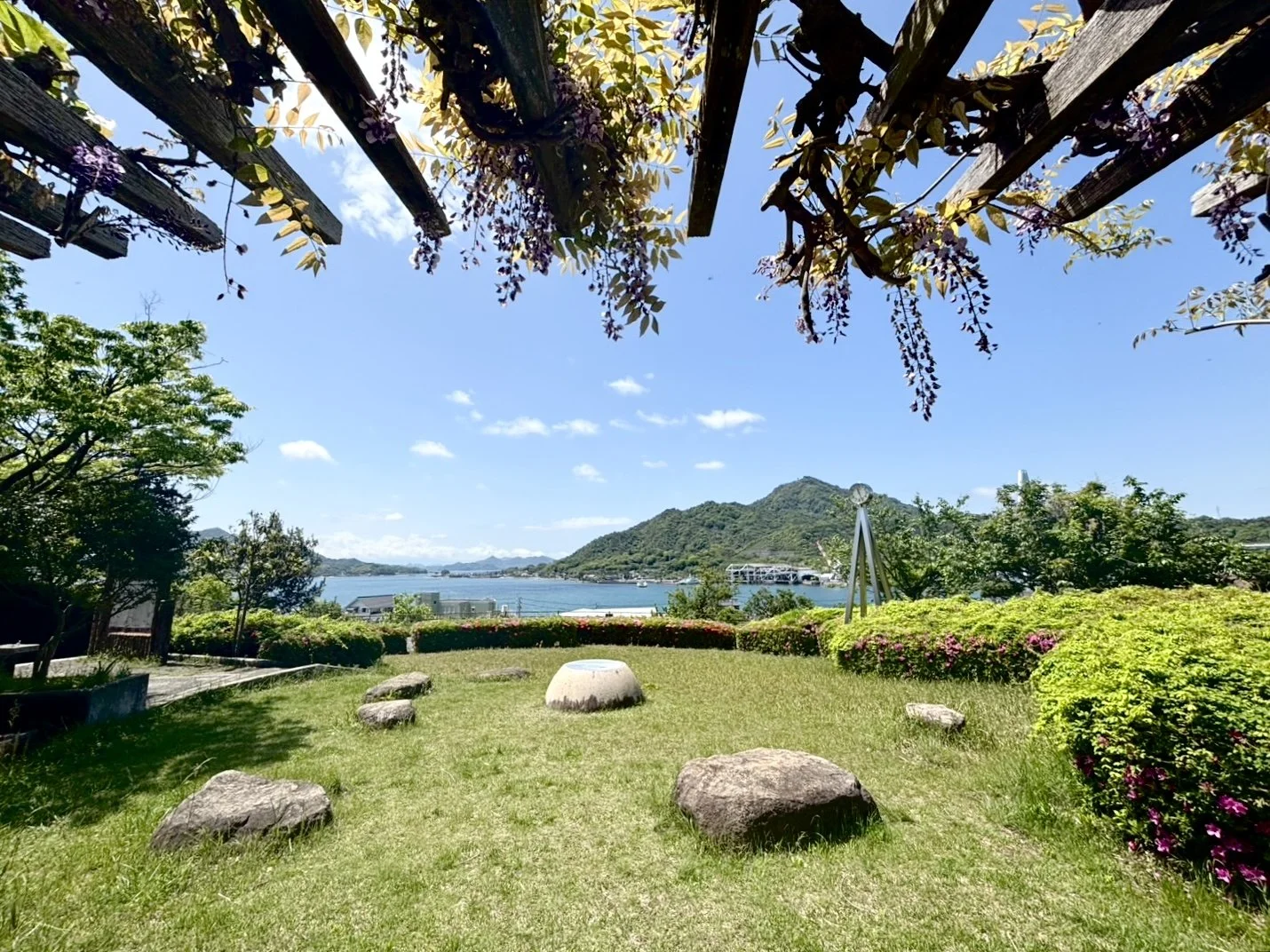
Just up the hill was the appropriately named Hill of Hope, a conglomeration of marble slabs resembling a sundial. Visitors rushed to the summit for photo-ops, but the installation begs to be appreciated in its entirety.
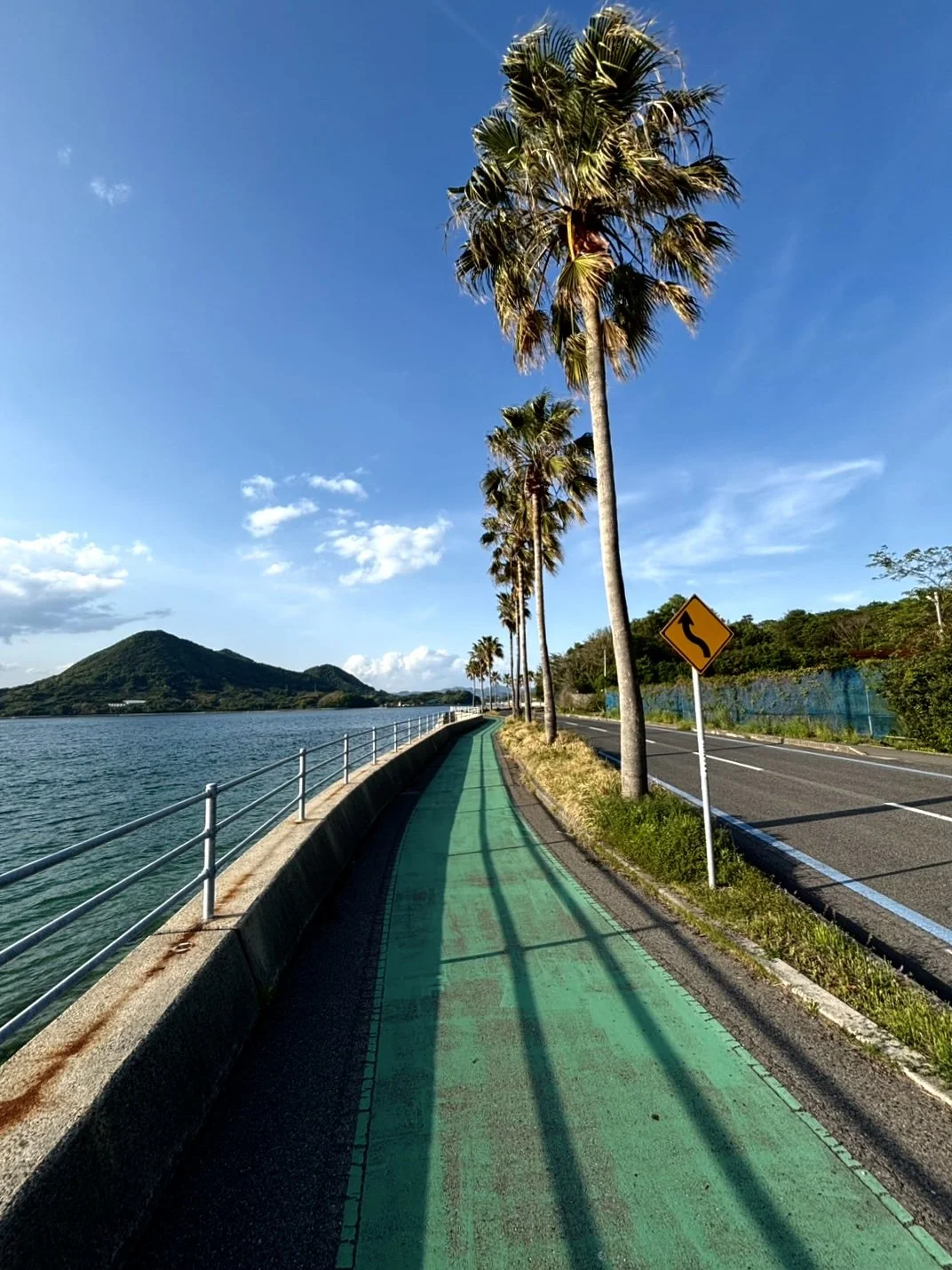
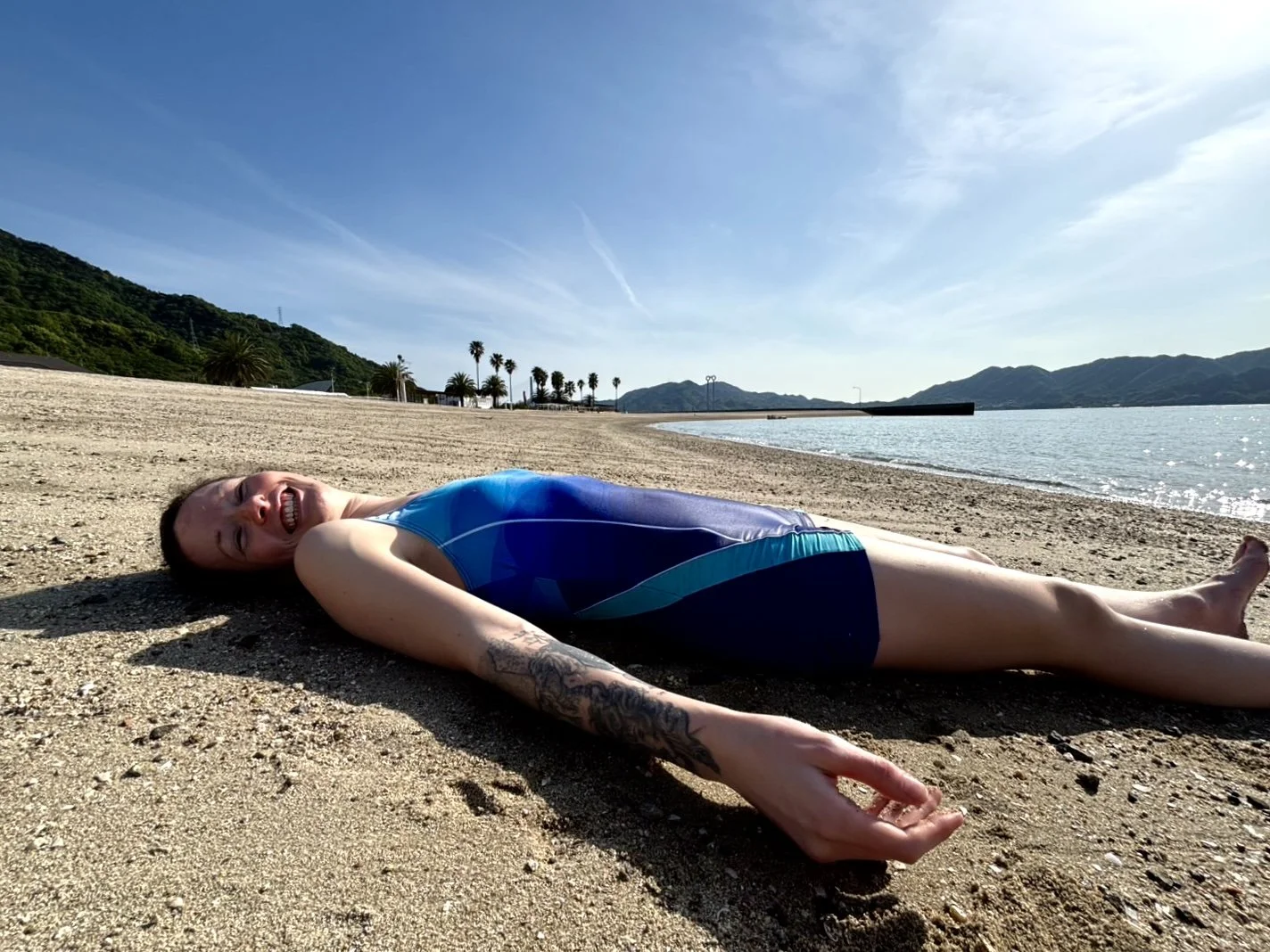
Going on 4 P.M., lemon ice cream and the beach were calling my name. Our destination? Setoda Sunset Beach, along the most beautiful stretch of palm tree-lined road beside the sea. One plunge in the icy waters was all I could bear before settling down for a nap directly on the sand. It was a blissful opportunity to reflect on the trip thus far.
We got cleaned up at the hotel and picked up discounted bread from the supermarket before having dinner at Maguro Hamaten, a local, ramshackle shop specializing in tuna dishes. From the tuna tartare to the grilled cheek, everything was divine. Only one other customer joined us, making for a pleasant contrast to what ended up being a noisy, guesthouse-type accommodation.
I drowned out the music blaring from the restaurant downstairs with Friends and snacks before a fitful night of sleep, made worse by knees so stiff it hurt to move around.
Day 3: Omishima, Hakatajima, and Oshima
If there’s one thing I’ll give our accommodation, it’s the seaside view, which Taka and I enjoyed while eating our day-old French toast and tea. For reading material, the room was stocked with artsy travel magazines about the island.
Upon stretching and packing up, I obliged Taka in a visit to the rooftop balcony, where we said so long to Ikuchijima.
My knees made even mounting the bike a challenge, and my ass, bruised from the skinny bike seat, was not in much better shape. I didn’t know how I was going to make it a further 45 kilometers to Ehime, and it was only thanks to my husband’s e-bike, which I switched to for uphill sections, that I did.
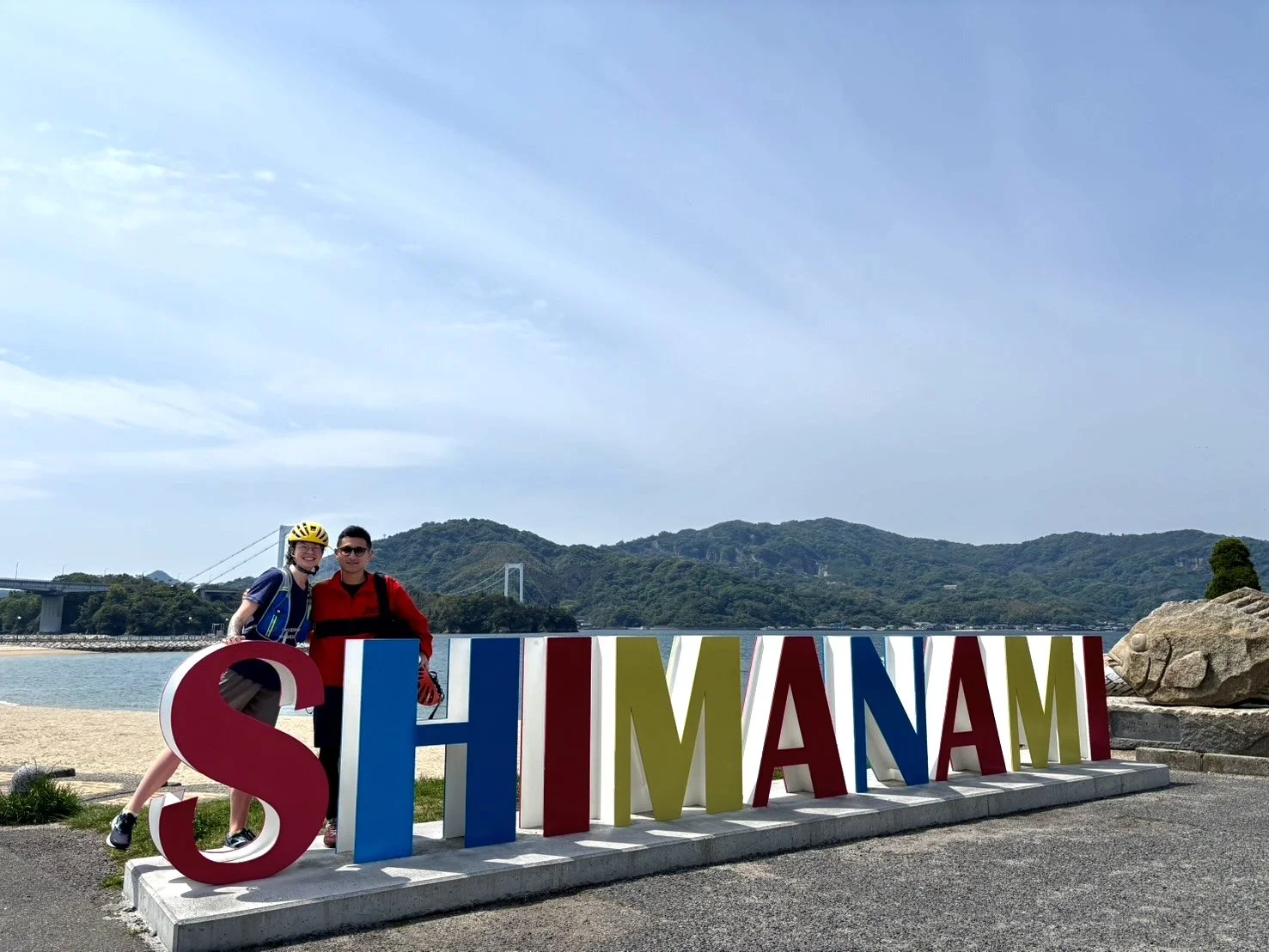
Five hours it took us, dropping destinations along the way because getting started again was harder than continuing. The only bit I remember fondly was the salt ice cream and kenpi imo on Hakatajima, where a couple snapped our photo in front of the iconic Shimanami Kaido sign.
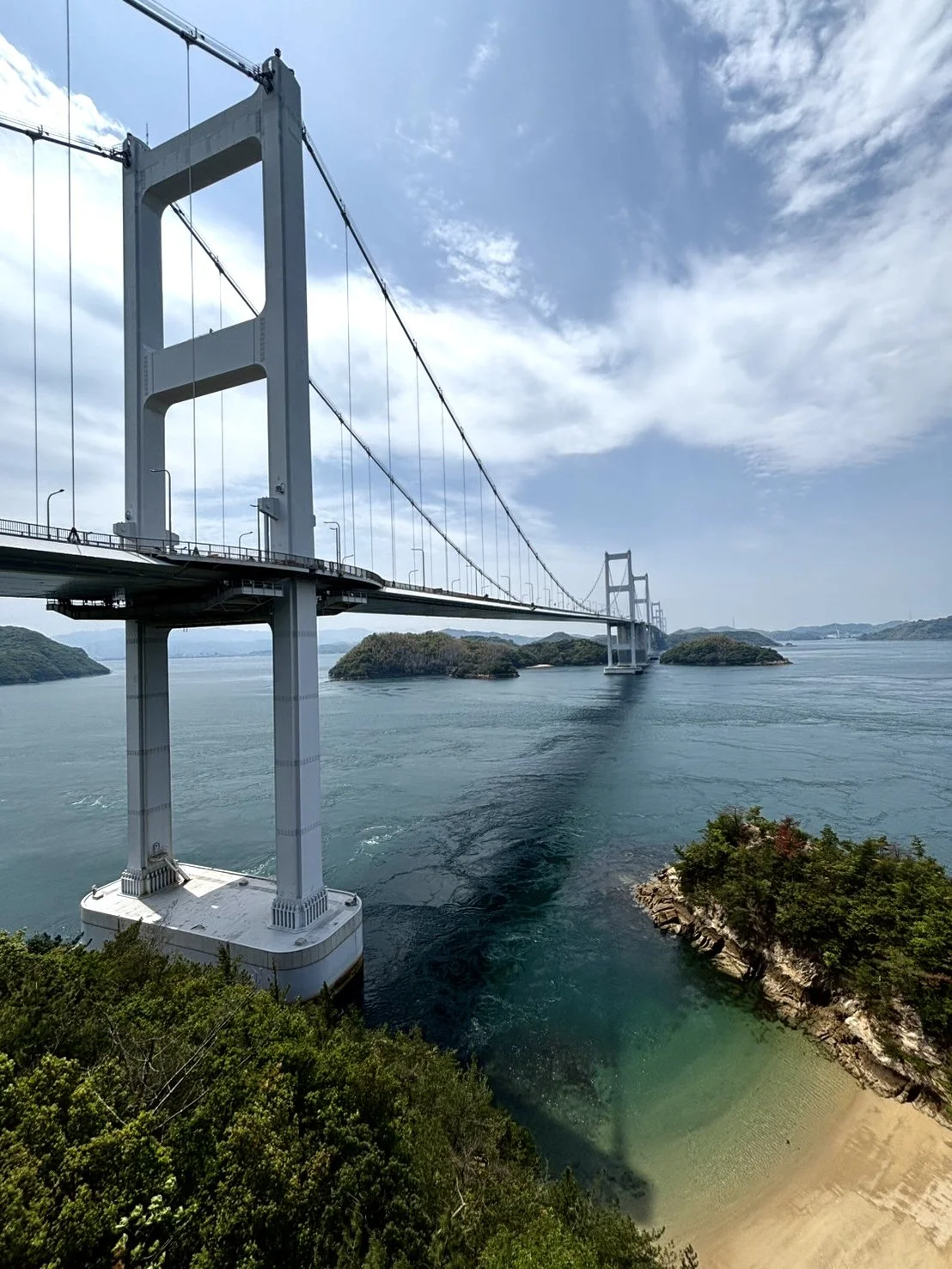
Fitness-wise, I was doing fine; it was just my knees, challenged as they already are by my running routine. And, to overcompensate for the knee pain, my shoulders were clenched and hunched to an unhelpful level. It was all I could do to keep ticking off the kilometers. Testing my strength the most, however, was the final four-kilometer-long Kurushima-Kaikyo bridge, facing down the strongest headwind I’ve ever endured.
But make it I did. We even tacked on a few extra kilometers to get to Iyo Suigun for a feast of unagi taimeshi, which, with its panoramic views of the final bridge we’d just crossed, was entirely worth it.
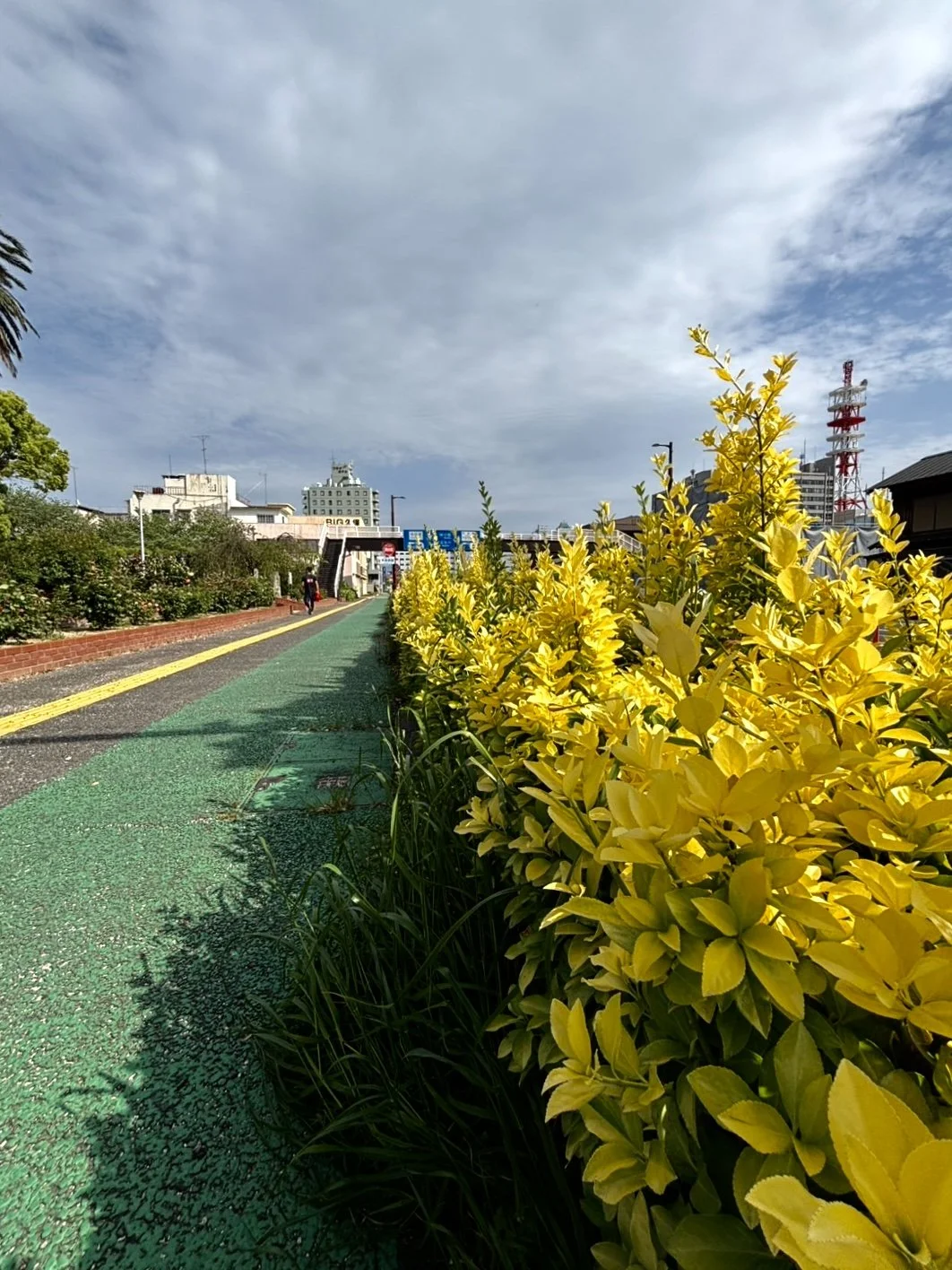
At long last, the yellow flowers that populate the streets of Imabari signaled our terrestrial return. I could’ve thrown the bikes for how done I was with pedaling.
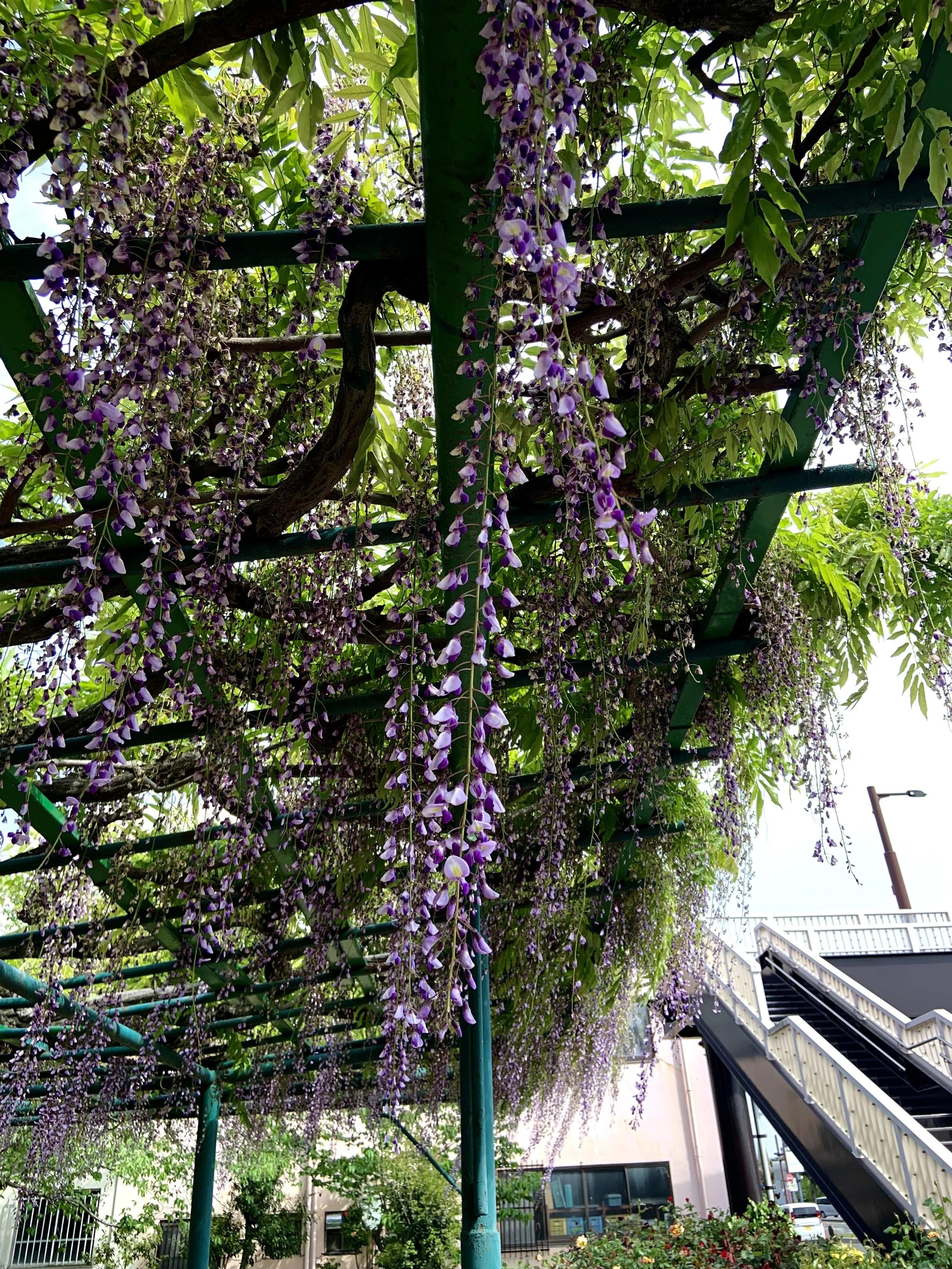
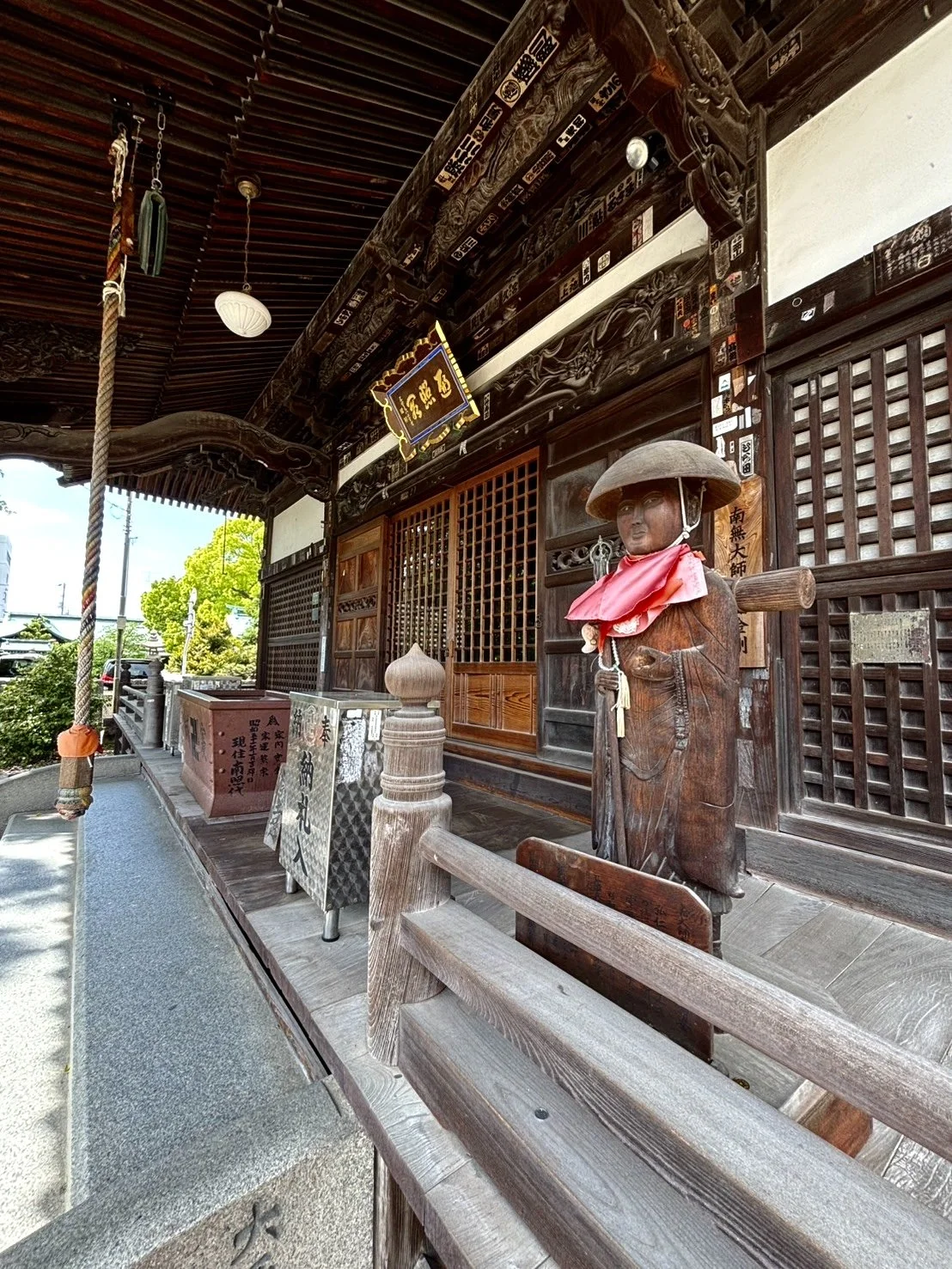
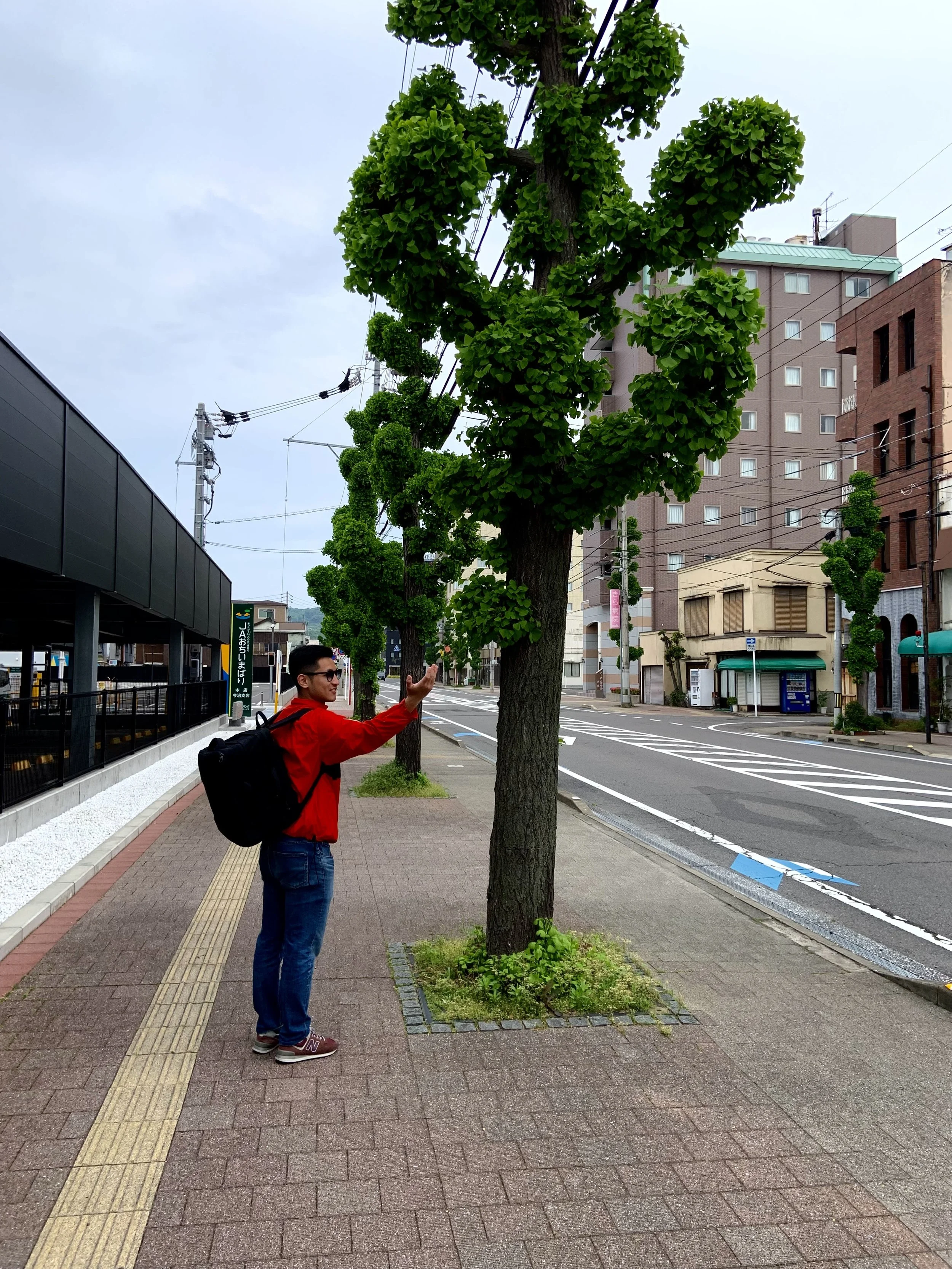
Instead, Taka and I headed to Nankobo Temple, the only temple we ended up making it to, given how far apart everything else was. There, Taka chatted up a pilgrim while I snapped pictures of Imabari’s flora, even coming across a wisteria trellis in full bloom.
Rather than hitting up as many places as possible, I let myself inhabit the city for the evening, patronizing a local (albeit mediocre) izakaya, popping into a dessert shop, picking up bread for breakfast, and watching the sunset before binging Friends once more.
Day 4: Fukuyama and Tomonoura
The fourth and final day also happened to be my birthday, which we celebrated with salted walnut cheese bread and Setoda lemonade in front of Imabari Station. No complaints there.
We’d be taking the bus up to Fukuyama, from where we’d take a side trip to Tomonoura, the town Hayao Miyazaki's film Ponyo is set in, as well as the bullet train back home. More well-known destinations like Matsuyama and Takamatsu were too out-of-the-way, and I thought it’d be a good excuse to visit two places we otherwise would’ve passed through without seeing.
Upon arrival, the grounds of the adjacent Fukuyama Castle were bursting at the seams, it being a national holiday and all. That prompted us to change our plans: going straight to Tomonoura and saving the two shrines I had in mind for later in the day.
Luckily, the buses ran frequently, allowing us to touch down in Tomonoura thirty minutes later. As soon as we stepped out, we made a beeline for Chitose, which already had a line of people waiting for its specialty of red sea bream. I’m unsure if the sole item on the menu was red or regular sea bream, but it was delicious, nonetheless.
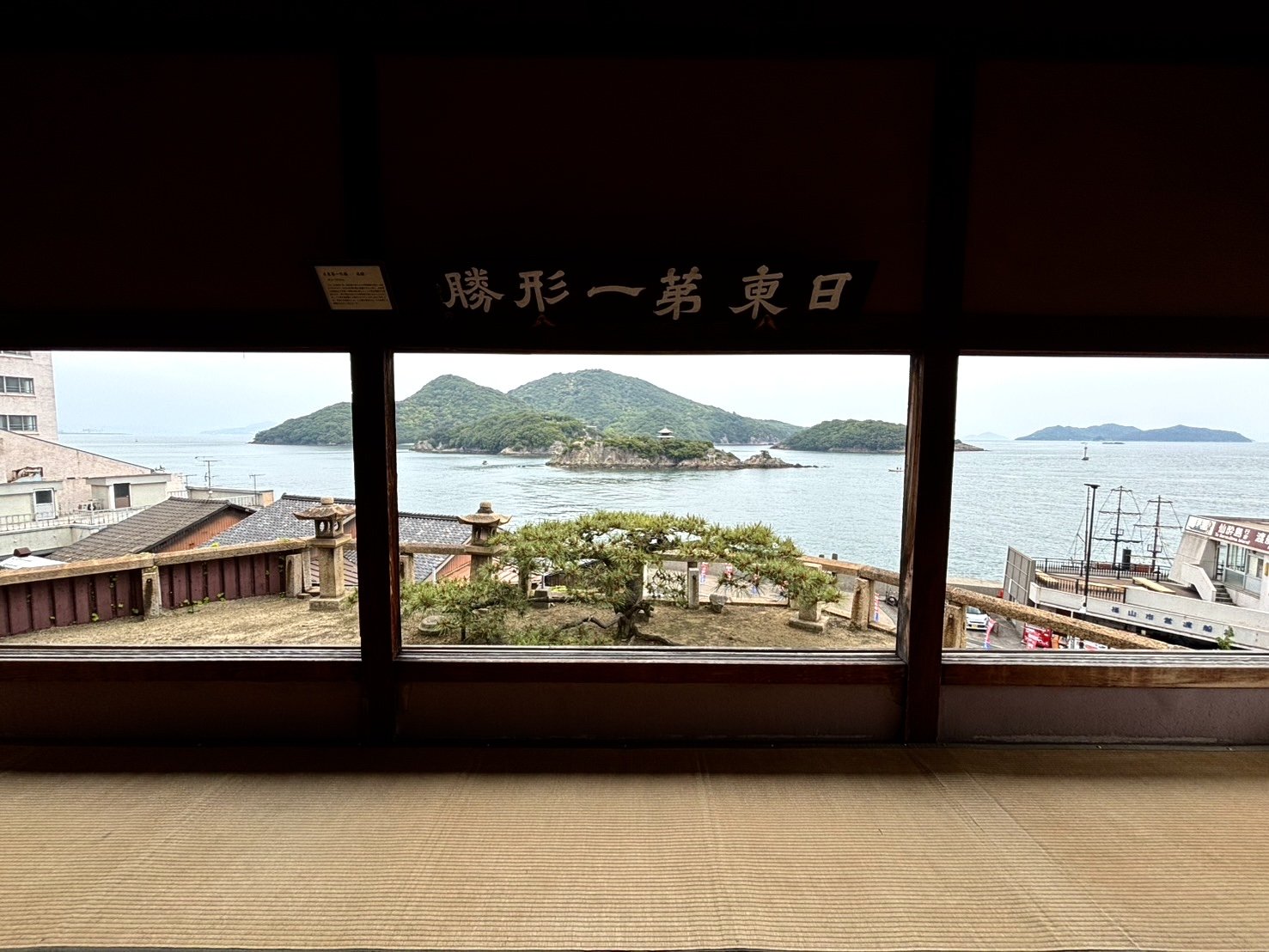
Now, it was time for temple-hopping. First up was Fukuzenji Taichoroh, a small building with red carpet overlooking Bentenjima and Sensui Island, jutting out of the sea like turtle shells.
My favorite was Nunakuma Shrine, which made me think of Miss Peregrine’s Home for Peculiar Children. Enclosed in a forest overlooking the coastal town, this actually used to be the site of many Noh performances, a historical anecdote which I loved.
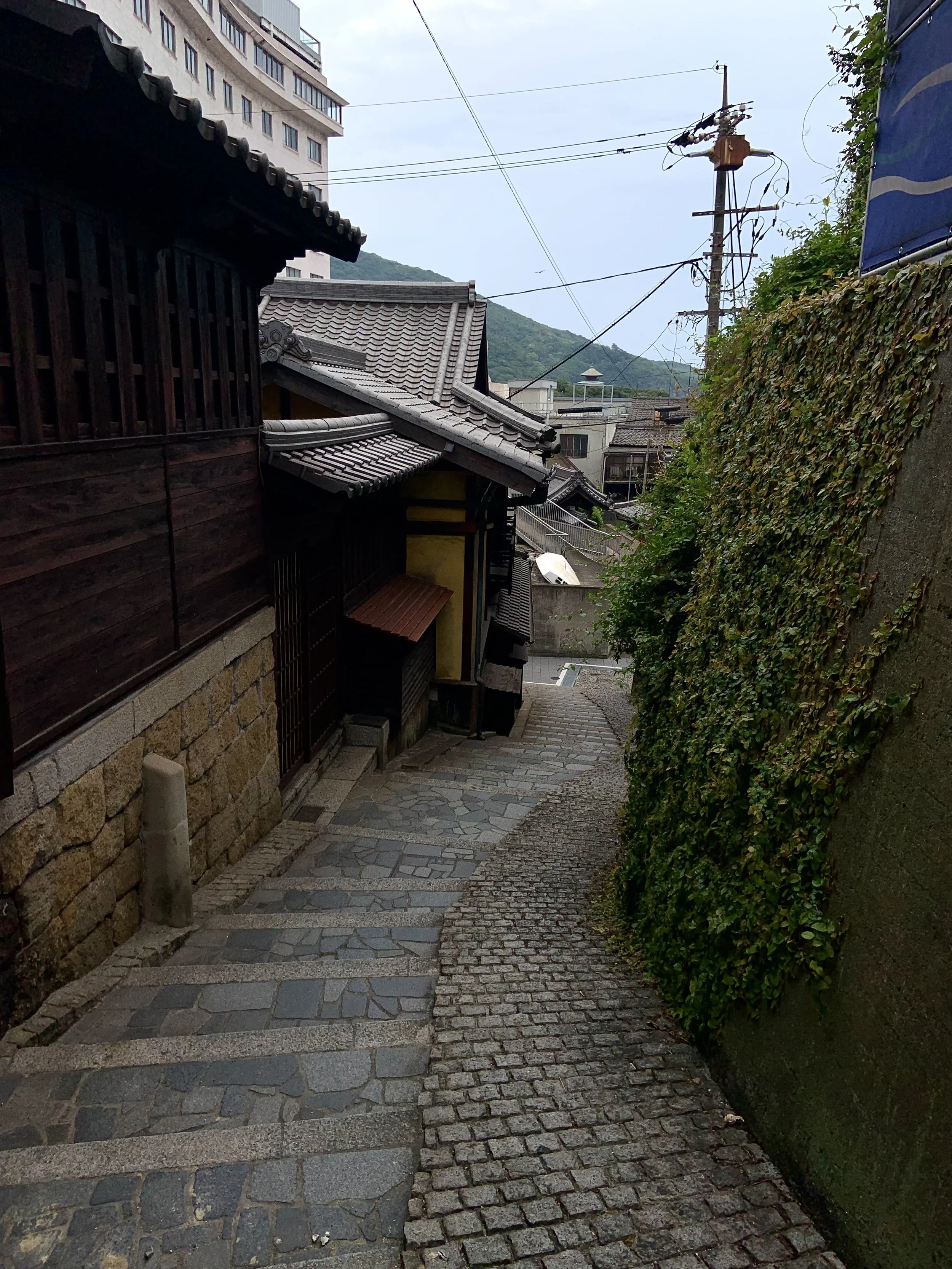
As we walked back down the cobblestone streets to the coast, Taka picked up houmeishu, a medicinal alcoholic drink, for a souvenir and drool-worthy fried oyster curry bread. The snacking continued with a black honey matcha latte (also from Cafe Gangi) and salted lemon ice cream daifuku from Shionone, served by a guy with the nicest smile I just have to comment on it here.
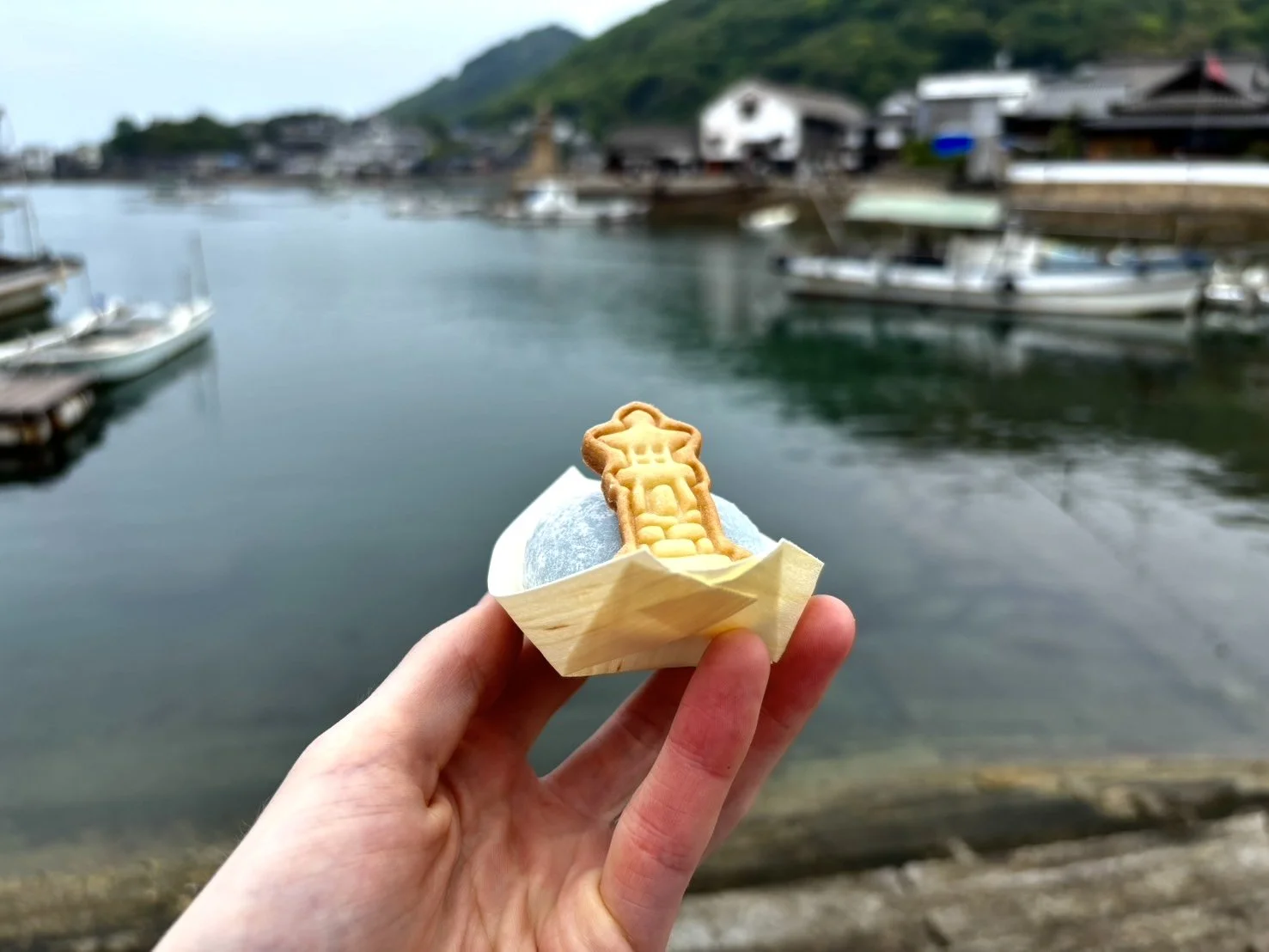
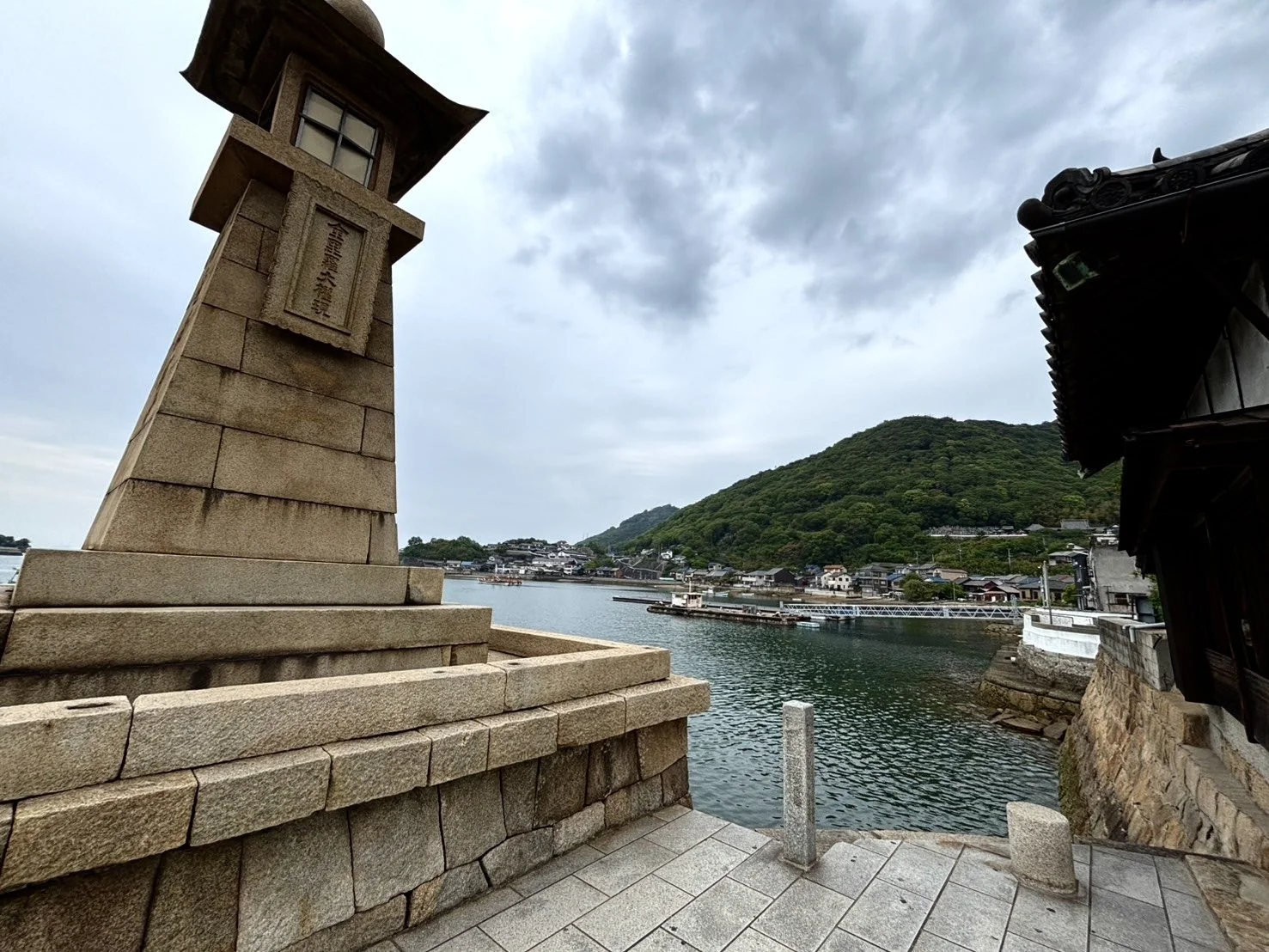
We sat down to a scene straight out of Ponyo: the boats and the Joyato Stone Lighthouse. An older Japanese gentleman was painting the bay, while two dachshunds in dresses accompanied their owners on the steps beside us. The lemony blue daifuku and kuromitsu matcha were further testaments to the astoundingly tasty food of Tomonoura.
After a brief stop in Tomonoura’s Museum of Folklore and History, Taka and I caught the next bus back to Fukuyama, having spent three hours relishing in Tomonoura’s relaxed vibe.
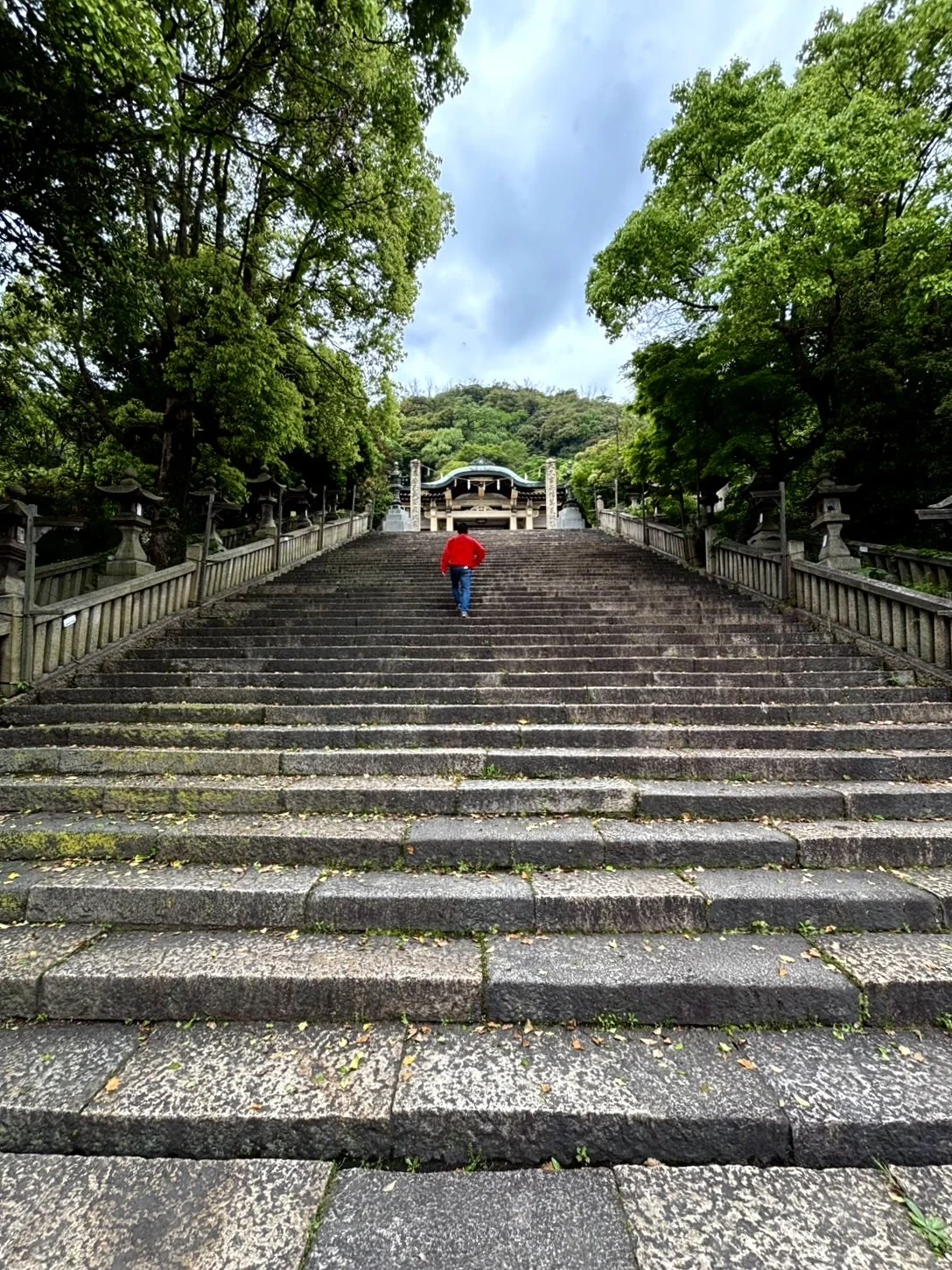
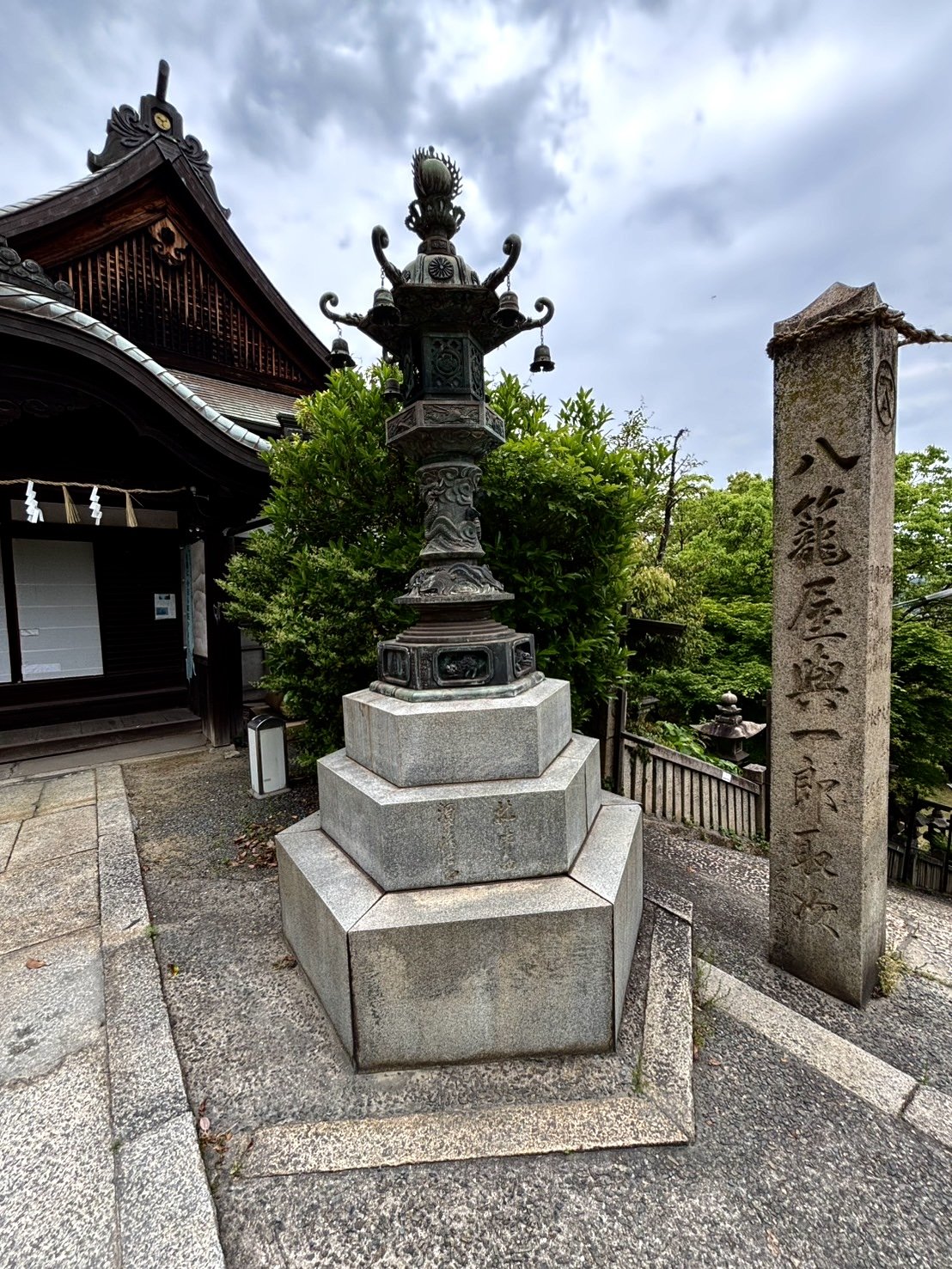
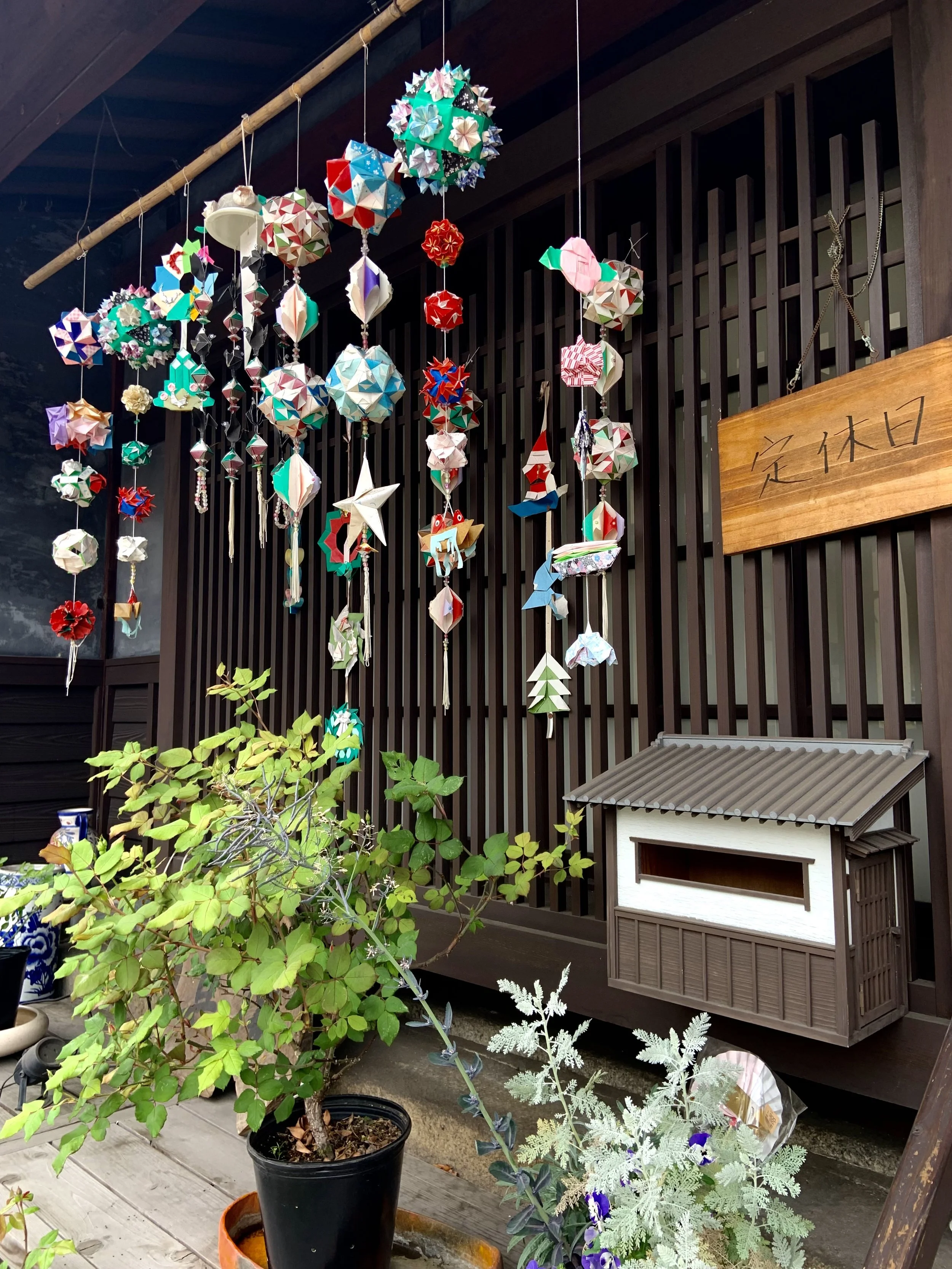
That left an hour and a half until our train home, and the last two spots I wanted to see were a forty-minute walk away. Another bus was boarded, dropping us off right on the highway, requiring a roundabout excursion by the river just to make it to the shrine.
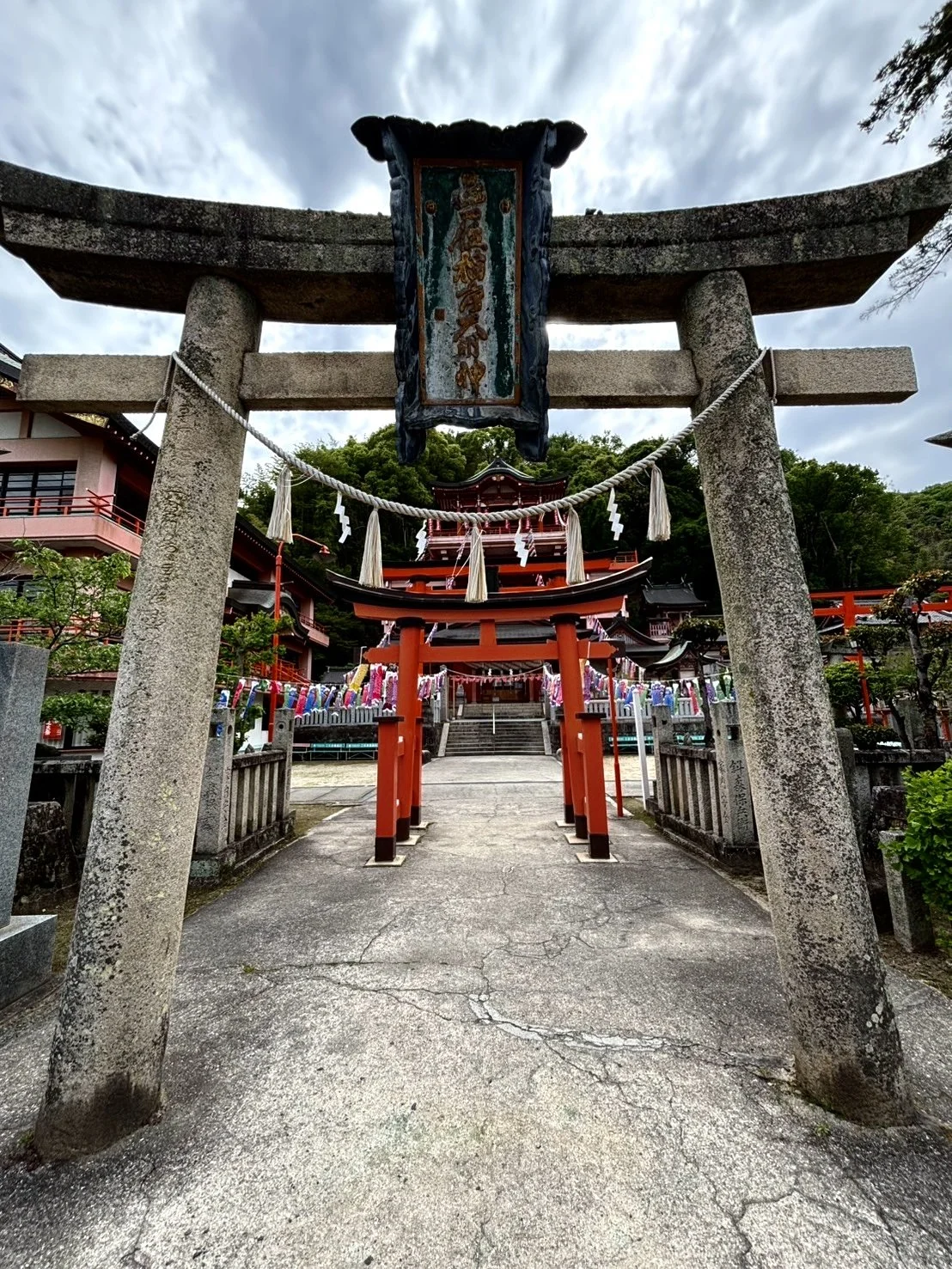
Upon checking the next bus back, if we didn’t catch that, we’d have to wait two hours for the next one, which would mean missing our train, so I had all of five minutes at Kusado Inari Shrine, the five-story pagoda of Myoo-in being just a few minutes too far to reach in time.
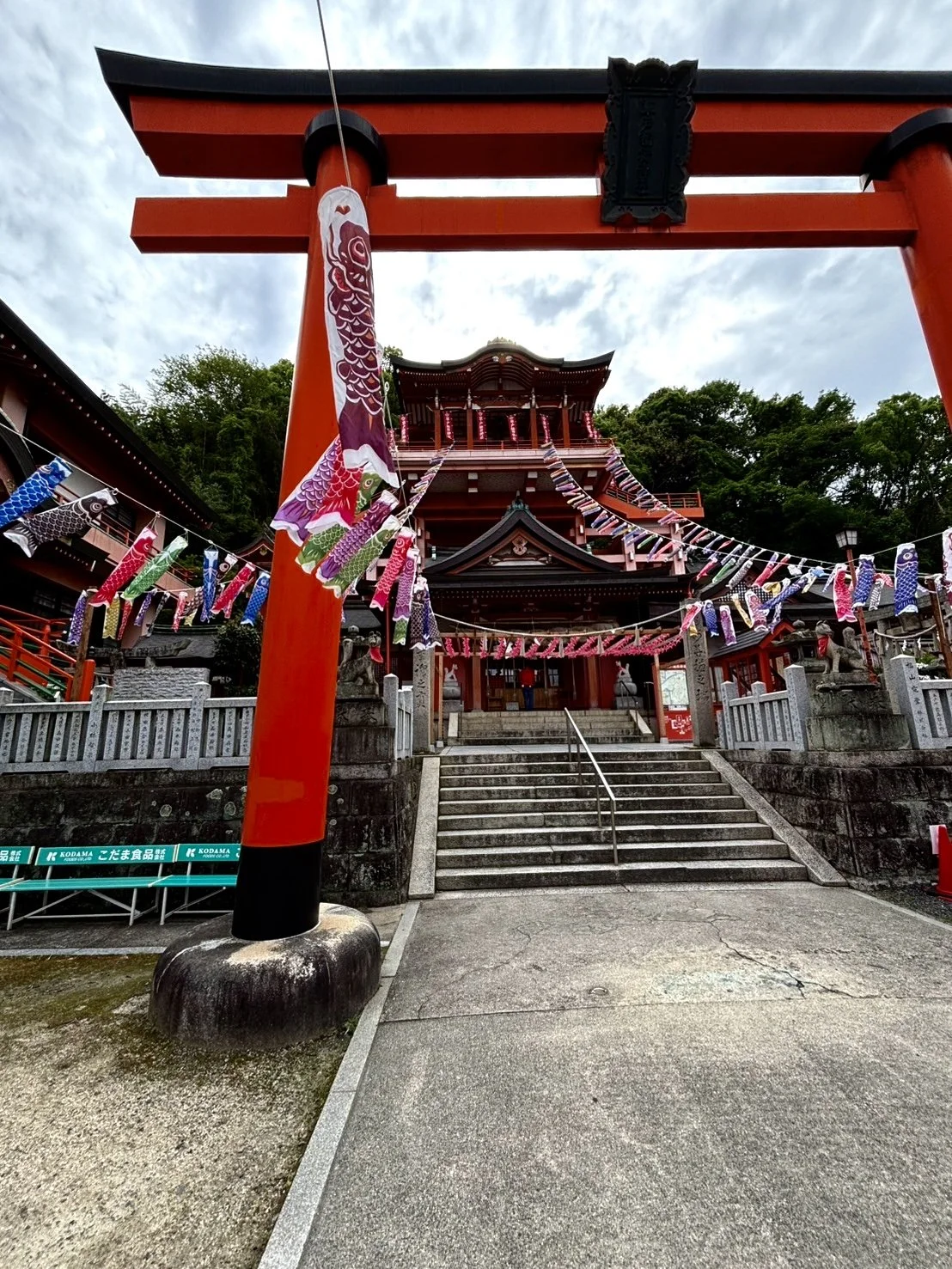
For the handful of minutes I was there, Kusado Inari reminded me of a miniature golf course, what with the rainbow Koi wind socks streaming from every point and the proud orange paint job.
Alas, we caught the bus back. As if to taunt us for our timeliness, it was running late.
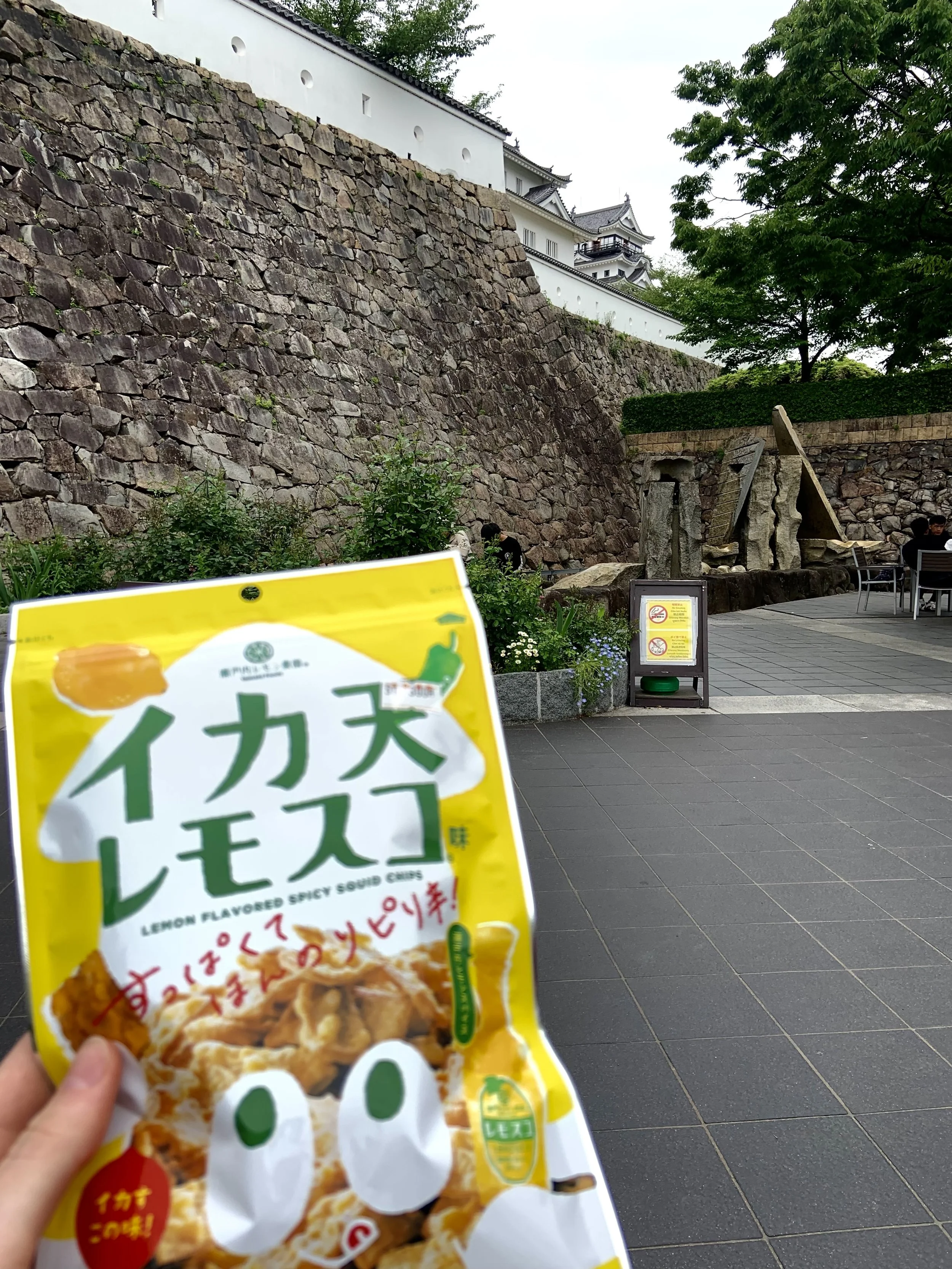
Thirty minutes remained, giving us enough time to pick up my husband’s bag from the coin locker and enjoy the last of the lemon snacks—spicy lemon squid chips—in the park just beneath Fukuyama Castle. And who would’ve thought, they might have been my favorite of the lemon treats.
The train came, and we headed for home, utterly content with the last four days and sad to leave it all behind.
See you again, Shikoku
This is a trip I’ll remember for a lifetime, and I feel as if I’ve left a little piece of my heart somewhere on Ikuchijima. If you’ve read my writing over on Medium, you’ll know that I’ve been prioritizing living life offscreen as much as possible this year, and nowhere have I felt so present than on the islands of Setouchi.
Most of all, I loved the moments of rest built in and discovered along the way, be it napping on the beach, watching Friends in the hotel room at night, or snacking on all things lemon with a delicious view of the sea before me. My trips are often rushed and on a dime, and I didn’t take the luxury of pausing for granted.
So long for now, Shikoku. I’ll be back soon.
Access and Helpful Resources:
Getting to the Shimanami Kaido
To do the Shimanami Kaido, you must first get to Onomichi Station, which can be accessed via the Tokaido-Sanyo Shinkansen line from Shin-Osaka Station.
I recommend staying the night before in Onomichi to enjoy the city. And if you can make it during festival season, all the better! We stayed at Hotel Beacon right inside the station, which is perfect for a quiet, mid-tier accommodation.
Everything in Onomichi is centered around Onomichi Hondori. Both Senko-ji and the Cat Alley are just off to the left. The entrance to the shopping street is just across from Onomichi Station.
Also right across from Onomichi Station is the ferry you’ll take to Mukaishima, the starting point for the Shimanami Kaido. The ferries run every twenty minutes or so, but it’s small and priority is given to students, so be sure to line up early.
Shimanami Kaido Bike Rental
We rented our bikes from Onomichi Ekimae Bike Rental and dropped them off at i.i.imabari! cycle station. You can reserve your bikes on the official Shimanami Kaido website. It is possible to reserve on the day, but they are first-come, first-served, so I highly recommend booking about three months in advance. If my trials and tribulations didn’t already spur you, the e-bike is the best choice unless you have cycling shorts with adequate cushioning. The e-bike will run you 8000 yen per day, while the city bike costs 3000 yen.
Shimanami Kaido Courses
My husband and I chose to do the full course, which is about 75 kilometers, with an extra 15 or so kilometers tacked on for detours. Many of the sightseeing spots are a bit out of the way, so expect to cycle well over the 70-75 kilometer figure you’ll see online. You can simply follow the blue line, which has markers for every kilometer. There are also maps on the official site and the app, Bicycle Navitime, to help guide the way.
Two courses will bring you to the islands not on the standard route (Yugejima, Sashima, and Iwagijima): the short course and the island explorers course.
Accommodations Along the Shimanami Kaido
No matter your fitness level, splitting the Shimanami Kaido up and staying overnight is your best course of action for fully enjoying the experience. If I had to do it over again, I might stay another night at one of the glamping places on Hakatajima, where you can cycle the perimeter on the island explorers course. If you’re just doing two days, however, Ikuchijima is the best place to stay overnight, as there is more to do and plenty of restaurants and accommodations to choose from.
Getting Back From the Shimanami Kaido
Once you’ve made it to Imabari, venturing down to the onsen town of Matsuyama via the limited express is a popular option. We took the direct bus from Imabari to Fukuyama, which takes an hour and a half. From Fukuyama Station, you can either take the Shinkansen home or take the bus down to Tomo Ko (Tomonoura) for a fun half-day trip.
If you have the time, I suggest staying in Shikoku for longer. In Imabari, you can do some temple-hopping as part of the Shikoku 88 Temples Pilgrimage, which is much easier if you can rent a car or dedicate the day to riding the bus around.
No matter how you end your trip, the Shimanami Kaido is absolutely worth doing at least once in your lifetime. If you have any questions I haven’t answered, please feel free to ask in the comments below. Have fun and safe travels!
Planning on traveling to Japan? Sign up to get notified every time I post a new story. Like my work? Consider buying me a chai! Thank you so much for reading and supporting my work here at Koyo Travels.
